

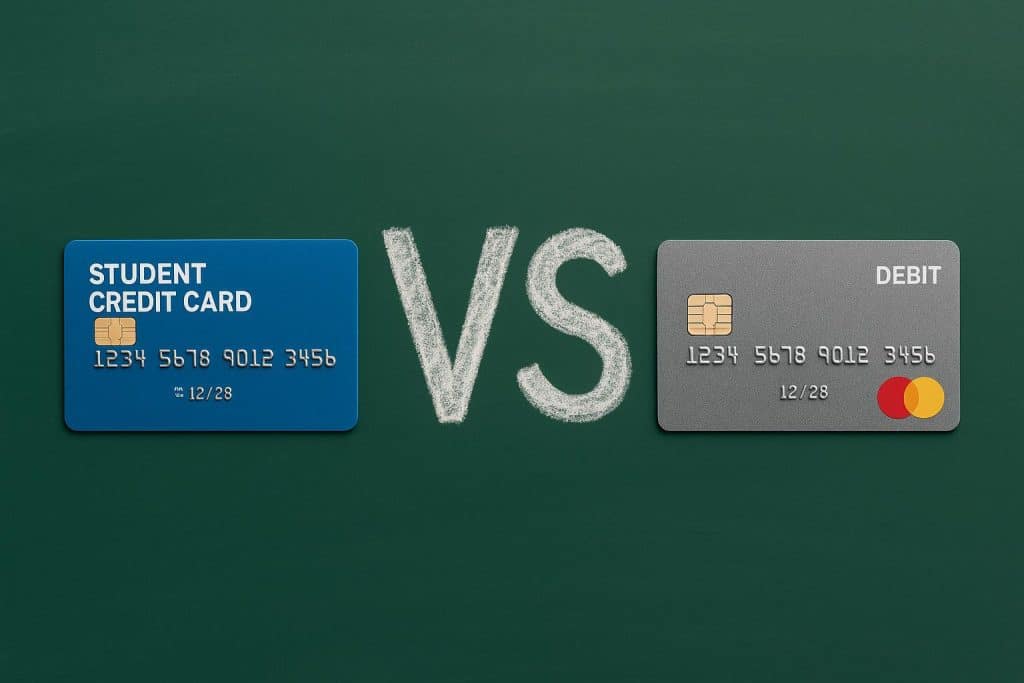
Students in India increasingly use digital payment methods for everyday expenses such as transport, food, books and online subscriptions. Debit cards and credit cards both provide cashless payment convenience, but they operate differently. Understanding their features can help students choose an option that suits their financial needs.
Before deciding whether to apply for a credit card or continue using a debit card, it is important to compare their benefits, costs and responsibilities. Students planning to apply for student credit card options should also understand how credit usage and repayments work.
Understanding the difference
Although both payment methods can be used for everyday transactions, the source of funds differs significantly.
| Feature | Credit Card | Debit Card |
|---|---|---|
| Source of funds | Credit limit provided by issuer | Directly linked to bank account balance |
| Credit history building | Possible through responsible use | Does not generally build credit history |
| Repayment requirement | Monthly repayment required, as the credit limit acts as a short-term loan | No repayment obligation because the payments are made directly via account |
| Spending flexibility | Subject to credit limit | Limited to available account balance |
Students considering whether to apply for credit card products should understand these differences before making a decision.
Benefits of using a debit card
Debit cards remain popular among students because they provide simple and direct access to available funds.
Advantages include:
- Spending only available account balances
- No monthly credit bill
- Easy budgeting
- Wide acceptance for digital payments
- Suitable for day-to-day transactions
For students who are new to managing money, debit cards can help encourage spending discipline.
Benefits of using a student credit card
A student credit card can offer advantages beyond payment convenience.
Potential benefits include:
- Opportunity to build credit history
- Access to rewards and offers
- Digital payment flexibility
- Enhanced transaction tracking
- Financial learning opportunities
Students who apply for student credit card products and use them responsibly may begin establishing a credit profile early in life.
Student-focused options from IDFC FIRST Bank
If you are a student without a credit history or a regular income, the FIRST WOW! Credit Card from IDFC FIRST Bank is a great option for you. It is backed by a fixed deposit, so approval does not depend on your salary or credit score.
Some key features include:
| Feature | Benefit |
|---|---|
| FD-backed structure | Supports access to credit for eligible students |
| Reward benefits | Earn up to 4X rewards on eligible transactions |
| UPI-enabled RuPay variant | Convenient digital payment features with a fee of ₹199 + GST. |
| Online application process | Simplified onboarding experience |
| Credit-building opportunity | Supports responsible credit usage |
For students planning to apply for student credit card products, such options can provide an opportunity to learn responsible credit management while building financial awareness.
Which option is better for campus life?
The answer depends on individual financial goals and spending habits.
A debit card may be suitable for students who:
- Prefer spending only available funds
- Want straightforward budgeting
- Are new to digital banking
A student credit card may be suitable for those who:
- Wish to begin building credit history
- Want access to rewards and card benefits
- Can manage repayments responsibly
Students evaluating whether to apply for credit card products should consider both immediate needs and long-term financial objectives.
Tips for responsible credit card usage
Students who decide to apply for a student credit card should follow responsible practices.
These include:
- Paying dues on time.
- Avoiding unnecessary spending.
- Monitoring monthly statements.
- Keeping utilisation within manageable limits.
- Understanding card terms and conditions.
Responsible usage can help maximise the benefits of credit while minimising financial risks.
Conclusion
Both debit cards and student credit cards offer valuable benefits for campus life. Debit cards provide spending control and simplicity, while student credit cards offer an opportunity to build credit history and access additional benefits. Before choosing whether to apply for credit card products or continue using a debit card, students should evaluate their spending habits, repayment discipline, and long-term financial goals.
FAQs
What is the main difference between a student credit card and a debit card?
A student credit card allows spending through a credit limit provided by the issuer, while a debit card uses funds available in a linked bank account.
Can a debit card help build credit history?
No, a debit card does not help you build a credit history. It is simply spending money you already have. Credit bureaus only track how you borrow and repay, so only credit cards and loans show up on your credit report.
Why should students consider a student credit card?
A student credit card may help build credit history, provide rewards, and support financial learning when used responsibly.
Is a student credit card suitable for first-time users?
Yes. Many student-focused cards are designed to help first-time users begin their credit journey responsibly.
What should students consider before applying for a student credit card?
Students should evaluate repayment responsibilities, card features, fees, and their ability to manage credit responsibly.