

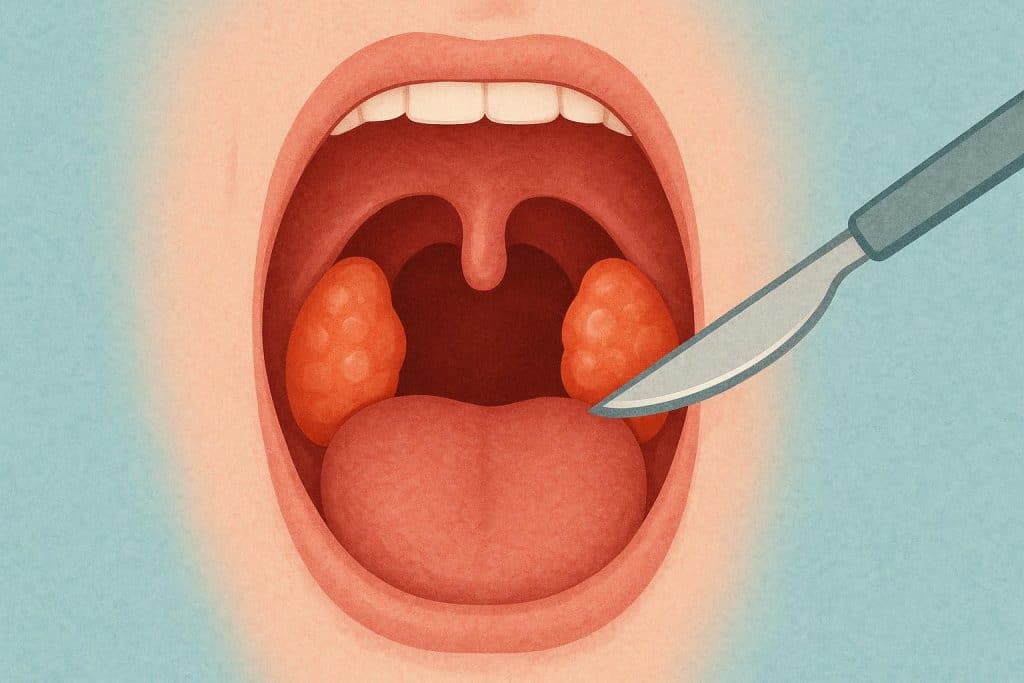
For many years, traditional tonsillectomy has been the standard surgical treatment for children experiencing problems caused by enlarged or chronically infected tonsils. While effective, conventional tonsil removal can be associated with significant throat pain, prolonged recovery, and a risk of postoperative bleeding.
Advances in surgical techniques have led to the development of a newer procedure known as tonsillotomy, also referred to as intracapsular tonsillectomy. This modern approach removes most of the tonsil tissue while preserving a thin protective layer over the underlying throat muscles. As a result, many patients experience less discomfort, reduced bleeding risk, and a quicker return to normal activities.
For suitable candidates, tonsillotomy offers an effective alternative to traditional tonsil surgery while maintaining excellent clinical outcomes.
What Is Tonsillotomy?
Tonsillotomy, or intracapsular tonsillectomy, is a surgical procedure that removes the majority of the tonsil tissue without completely removing the tonsil capsule.
Unlike a conventional tonsillectomy, where the entire tonsil and its surrounding capsule are removed, tonsillotomy involves carefully shaving away most of the enlarged tonsil tissue while leaving a thin layer intact. This preserved layer acts as a natural protective barrier over the muscles and nerves of the throat.
By avoiding exposure of these sensitive tissues, patients typically experience significantly less postoperative pain and a smoother recovery.
The procedure is commonly performed using specialised surgical instruments that allow precise removal of excess tonsil tissue while minimising trauma to surrounding structures.
Why Are Tonsils Removed?
The tonsils are part of the body’s immune system and help identify harmful bacteria and viruses entering through the mouth and nose. However, in some children, the tonsils can become excessively enlarged or repeatedly infected, leading to ongoing health concerns.
Tonsil surgery may be recommended when enlarged tonsils cause:
– Snoring
– Sleep-disordered breathing
– Obstructive sleep apnoea
– Difficulty swallowing
– Feeding difficulties
– Speech concerns related to airway obstruction
Surgery may also be considered in cases of recurrent tonsillitis, although the most common indication for tonsillotomy is airway obstruction caused by enlarged tonsils.
How Does Tonsillotomy Differ from Traditional Tonsillectomy?
The key difference lies in how much tissue is removed.
During a traditional tonsillectomy, the entire tonsil is removed along with its capsule, leaving the throat muscles exposed. While effective, this can result in substantial postoperative discomfort and a longer healing period.
During a tonsillotomy, most of the enlarged tonsil tissue is removed, but the capsule remains intact. This preservation reduces tissue trauma and protects sensitive nerve endings.
The benefits associated with this approach include:
– Less postoperative pain
– Reduced need for pain medication
– Lower risk of bleeding
– Faster recovery
– Earlier return to normal eating and drinking
These advantages have contributed to the growing adoption of intracapsular tonsillectomy in paediatric ENT practice worldwide.
Benefits of Tonsillotomy
Reduced Postoperative Pain
One of the most significant advantages of tonsillotomy is the reduction in postoperative discomfort.
Traditional tonsillectomy leaves a raw surgical surface within the throat, which can make swallowing painful for several days or even weeks. In contrast, the preserved tonsil capsule shields the underlying muscles and nerves, resulting in considerably less pain during recovery.
Many children are able to resume normal eating and drinking sooner, which helps support hydration and overall healing.
Lower Risk of Bleeding
Postoperative bleeding remains one of the most important concerns following tonsil surgery.
Because tonsillotomy preserves the protective capsule and causes less disruption to surrounding tissues, studies have shown a lower incidence of postoperative bleeding compared with conventional tonsillectomy.
This reduced risk provides reassurance for both parents and surgeons and may decrease the likelihood of emergency medical visits after surgery.
Faster Recovery
Recovery following tonsillotomy is often quicker than after traditional tonsillectomy.
Many children return to school, normal routines, and regular diets sooner than expected. Reduced pain also contributes to improved comfort during the recovery period, making the overall surgical experience less stressful for families.
Improved Sleep Quality
Children with enlarged tonsils frequently experience disrupted sleep due to airway obstruction.
Symptoms may include:
– Loud snoring
– Restless sleep
– Mouth breathing
– Pauses in breathing during sleep
– Daytime tiredness
– Difficulty concentrating
By removing the obstructing tonsil tissue, tonsillotomy can help improve airflow during sleep, leading to better sleep quality and improved daytime functioning.
Who Is a Suitable Candidate for Tonsillotomy?
Tonsillotomy is most commonly recommended for children with enlarged tonsils causing airway obstruction or sleep-related breathing problems.
Potential candidates may include children who experience:
– Persistent snoring
– Obstructive sleep apnoea
– Sleep-disordered breathing
– Difficulty swallowing due to enlarged tonsils
– Chronic mouth breathing
– Poor sleep quality related to tonsillar enlargement
A comprehensive assessment by an ENT specialist is necessary to determine whether tonsillotomy or traditional tonsillectomy is the most appropriate treatment option.
Factors such as age, medical history, symptom severity, and the presence of recurrent infections will all be considered during evaluation.
Are There Any Limitations?
Although tonsillotomy offers many benefits, it may not be suitable for every patient.
Because a small amount of tonsil tissue remains behind, there is a possibility that residual tissue may enlarge again over time. However, the risk of clinically significant regrowth is generally low and must be balanced against the advantages of reduced pain and bleeding.
For patients with severe recurrent tonsillitis or specific medical conditions, complete tonsil removal may still be recommended.
An ENT specialist will discuss the risks and benefits of each procedure to help families make an informed decision.
What Happens During the Procedure?
Tonsillotomy is performed under general anaesthesia, meaning the child is asleep throughout the surgery.
The procedure typically involves:
- Administration of general anaesthesia.
- Accessing the tonsils through the mouth.
- Carefully shaving away most of the enlarged tonsil tissue.
- Preserving the outer tonsil capsule.
- Ensuring bleeding is controlled before completion.
Because no external incisions are required, there are no visible scars.
The procedure is generally completed as a day surgery, allowing many patients to return home on the same day.
Recovery After Tonsillotomy
Recovery is typically straightforward.
Children may experience:
– Mild throat discomfort
– Temporary changes in appetite
– Minor ear discomfort
– Mild fatigue during the first few days
Most patients are encouraged to maintain good hydration and gradually return to normal foods as tolerated.
Pain is usually less severe than that experienced after conventional tonsillectomy, and many children require less pain medication during recovery.
Parents should continue to follow their surgeon’s postoperative instructions and attend any scheduled follow-up appointments.
The Growing Role of Tonsillotomy in Modern ENT Care
As surgical techniques continue to evolve, tonsillotomy has emerged as an effective and patient-friendly alternative to traditional tonsillectomy for appropriately selected children.
By removing most of the problematic tonsil tissue while preserving a protective layer, intracapsular tonsillectomy offers several important advantages, including less pain, reduced bleeding risk, and faster recovery.
For children experiencing symptoms related to enlarged tonsils and sleep-disordered breathing, this modern surgical approach may provide significant improvements in comfort, sleep quality, and overall quality of life.
A consultation with a paediatric ENT specialist can help determine whether tonsillotomy is the most suitable treatment option based on the child’s individual needs and medical history.