

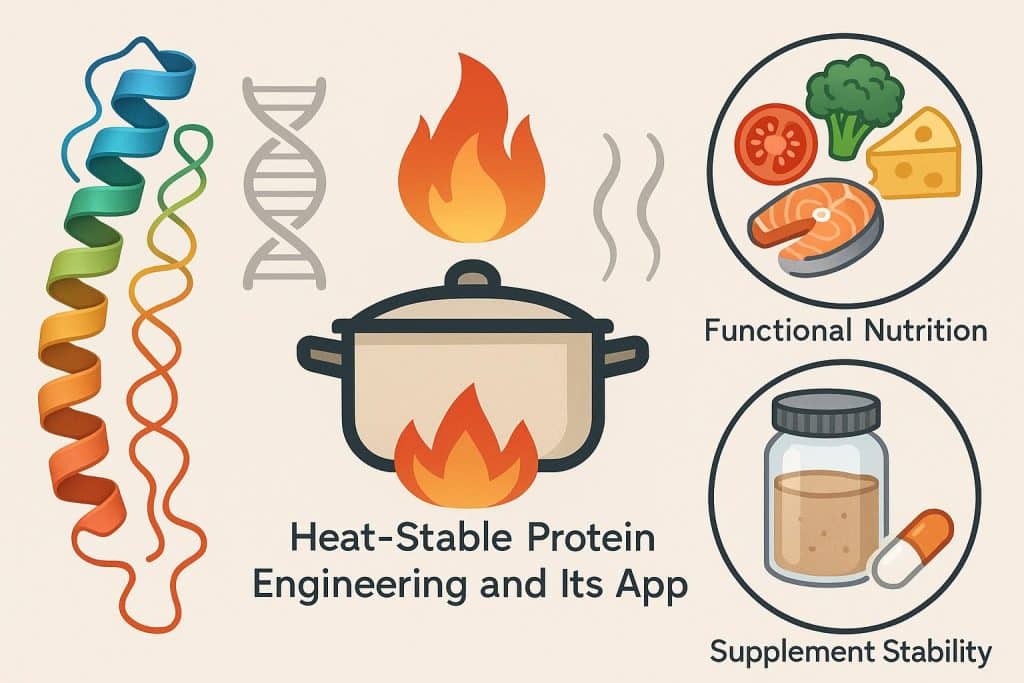
Temperature is one of the most overlooked factors in supplement effectiveness. Many proteins and bioactive compounds are sensitive to heat, meaning they can lose structure, degrade, or become less effective during processing, storage, or even everyday use. This is why interest is growing around heat-stable protein engineering for functional nutrition and supplement stability, particularly in products designed for real-world conditions like shipping, cooking, or long shelf life.
Protein engineering focuses on modifying protein structures to improve their stability without compromising their biological function. In the context of nutrition, this means creating protein-based ingredients that can withstand higher temperatures while maintaining their effectiveness.
Why Heat Stability Matters in Nutrition
Proteins are complex molecules with specific three-dimensional structures. These structures determine how they function in the body. When exposed to heat, proteins can denature, meaning they lose their shape and, in many cases, their functional properties.
In food and supplement manufacturing, heat exposure is common. Processes like pasteurization, drying, and cooking can all impact protein integrity. Even storage conditions during shipping can introduce temperature fluctuations that affect product quality.
Heat-stable proteins are designed to resist these changes, making them more reliable in maintaining their intended function.
What Is Heat-Stable Protein Engineering?
Heat-stable protein engineering involves modifying the amino acid sequence or structural configuration of proteins to increase their resistance to temperature-induced denaturation.
This can be achieved through techniques such as selective breeding of source organisms, enzymatic modification, or advanced molecular design. The goal is to enhance structural resilience while preserving bioactivity.
In functional nutrition, this allows proteins to remain effective even after exposure to heat during processing or preparation.
Structural Stability and Protein Function
A protein’s function depends on its ability to maintain its structure under stress. Heat can disrupt hydrogen bonds, hydrophobic interactions, and other forces that hold proteins together.
Engineered heat-stable proteins are designed to maintain these interactions more effectively, even under elevated temperatures. This helps preserve their biological roles, whether that involves enzyme activity, signaling, or nutrient delivery.
In practical terms, this means the protein continues to perform its intended function after processing.
Applications in Functional Nutrition
Functional nutrition products often contain bioactive proteins or peptides designed to support specific health outcomes. These may include digestive enzymes, metabolic regulators, or performance-related compounds.
Heat stability is critical in these products because it ensures that the active ingredients remain functional from manufacturing to consumption.
For example, protein powders, ready-to-drink beverages, and fortified foods all benefit from ingredients that can withstand processing conditions without degradation.
Supplement Shelf Life and Storage Stability
Shelf life is a major concern in the supplement industry. Over time, exposure to heat, moisture, and oxygen can degrade protein-based ingredients.
Heat-stable proteins are more resistant to these environmental stressors, which helps extend product shelf life and maintain potency.
This is particularly important for products that are shipped long distances or stored in varying climates, where temperature control is not always consistent.
Bioavailability and Digestive Efficiency
Heat stability is not just about preserving structure during manufacturing. It can also influence how proteins behave during digestion.
Some engineered proteins are designed to remain stable until they reach specific conditions in the digestive system, where they can then be broken down efficiently into amino acids or peptides.
This controlled stability can improve bioavailability, ensuring that the body receives the intended nutritional benefits.
Real-World Use: Cooking and Daily Consumption
One of the practical advantages of heat-stable proteins is their flexibility in everyday use. Traditional protein supplements may lose effectiveness when added to hot foods or beverages.
Heat-stable formulations allow users to incorporate protein into a wider range of applications, including cooking, baking, or hot drinks, without significantly compromising quality.
This expands how functional nutrition products can be integrated into daily routines.
Industrial and Performance Applications
Beyond consumer nutrition, heat-stable proteins are also valuable in industrial and performance settings. Athletes, for example, may rely on ready-to-consume products that have undergone processing steps involving heat.
In these cases, maintaining protein integrity is essential for delivering consistent performance benefits.
Heat-stable proteins help ensure that what is labeled on the product matches what is actually delivered at the time of consumption.
Limitations and Ongoing Development
While heat-stable protein engineering offers clear advantages, it is still an evolving field. Modifying protein structures without affecting their function is complex, and not all proteins can be easily stabilized.
There is also ongoing research into how these engineered proteins interact with the body over long periods, particularly in terms of digestion and metabolic impact.
Because of this, continued development and testing are essential for optimizing both safety and effectiveness.
Practical Perspective in Modern Nutrition
In practical terms, heat-stable proteins represent a shift toward more reliable and adaptable nutrition products. Instead of requiring strict storage and preparation conditions, these ingredients are designed to perform consistently in real-world environments.
For brands like Biohacklabs, this aligns with a broader focus on functional efficiency and product integrity, ensuring that nutritional compounds remain effective from production to use.
The Bigger Picture
Nutrition is not just about what goes into a product, but what remains active by the time it is consumed. Heat-stable protein engineering addresses a critical gap between formulation and real-world use.
By improving structural resilience and maintaining bioactivity, these proteins support more consistent outcomes in functional nutrition and supplementation.
As the field continues to develop, it highlights the importance of stability as a key factor in nutritional effectiveness.
FAQ
1. What are heat-stable proteins?
They are proteins engineered or selected to resist structural changes and maintain function at higher temperatures.
2. Why is heat stability important in supplements?
It helps preserve potency and effectiveness during processing, storage, and consumption.
3. Do heat-stable proteins improve absorption?
They may support better bioavailability by maintaining structure until digestion occurs.
4. Can you cook with heat-stable protein powders?
Yes, they are designed to withstand higher temperatures without significant loss of function.
5. Are all protein supplements heat-stable?
No, many traditional proteins can degrade when exposed to heat, which is why engineered stability is important.