

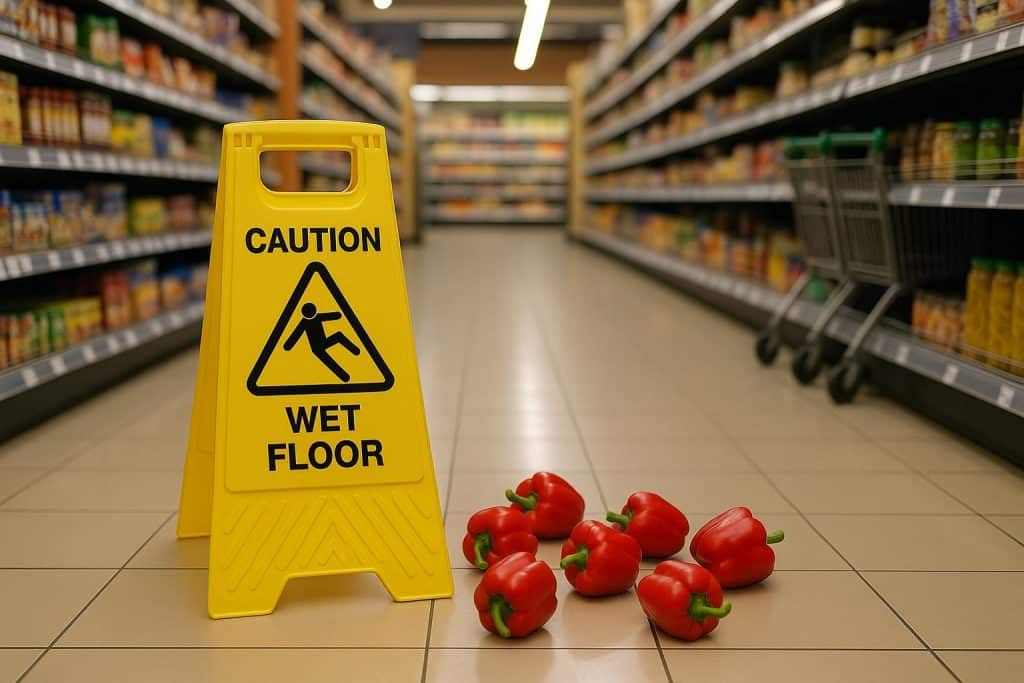
Every day, millions of people walk through the sliding doors of grocery stores without a second thought about their safety. Yet these everyday environments — with their polished floors, refrigerated aisles, and bustling foot traffic — are among the most common sites for preventable injuries in the United States. When those injuries occur, understanding consumer rights and the legal landscape surrounding them becomes not just useful, but essential.
The Scope of the Problem
Grocery store injuries are far more widespread than most people realize. Slip and fall accidents alone accounted for over 8.8 million emergency room visits in the United States in 2023, according to the National Floor Safety Institute. These incidents rank among the leading causes of accidental injury across all age groups, but they disproportionately affect older adults, who face a higher risk of serious complications such as hip fractures or head trauma.
Wet floors from spills or cleaning, misplaced merchandise, uneven surfaces, poor lighting, and cluttered aisles are the most frequently cited hazards in grocery store injury claims. What makes these cases particularly significant is that they are almost always preventable. Store management has both a moral and a legal obligation to maintain safe conditions for every person who steps through their doors.
Understanding Premises Liability
The legal foundation for grocery store injury claims rests on a concept known as premises liability. Under this doctrine, property owners and occupiers — including retail businesses — have a duty of care toward individuals who enter their premises. When a store fails to identify, address, or warn customers about a dangerous condition, it may be held legally responsible for any resulting harm.
For a claim to succeed, an injured party generally must establish several key elements: that a hazardous condition existed, that the store knew or should have known about it, that the store failed to take reasonable corrective action, and that the hazard directly caused the injury. The phrase “knew or should have known” is critical because it captures situations where management had enough time to discover and fix a problem but did not do so.
Courts have long recognized that businesses inviting the public onto their premises assume a heightened responsibility. Grocery stores, which see high customer volumes and constant inventory changes, are expected to conduct regular inspections and respond promptly to reported hazards.
Why Victims Often Struggle to Seek Justice
Despite the legal protections available to them, many injured consumers never pursue a claim. Some feel uncertain about whether their situation qualifies, while others are intimidated by the prospect of going up against a large retail chain with experienced legal teams. Insurance adjusters often contact victims shortly after an incident, offering a quick settlement that may be far below what the injured party is entitled to receive.
According to a Las Vegas grocery store slip and fall lawyer at Morris Injury Law, “grocery stores and their insurers are often focused on limiting payouts, not on ensuring the victim is fairly compensated for medical expenses, lost wages, or long-term suffering.”
This dynamic makes professional legal guidance especially valuable. Without it, many victims unknowingly sign away their rights before understanding the full extent of their injuries or the compensation they may deserve.
Steps Consumers Should Take After an Injury
The actions taken immediately following a grocery store injury can significantly affect the strength of any future legal claim. First and foremost, the incident should be reported to store management, and an official accident report should be requested and completed. This creates a formal record that can be difficult for the store to dispute later.
Photographic evidence is equally important. Victims or witnesses should document the hazard, the surrounding area, any visible injuries, and relevant signage — or the absence thereof. Gathering contact information from witnesses adds another layer of credibility to the claim. Seeking prompt medical attention not only addresses the physical harm but also establishes a documented link between the accident and the injuries sustained.
Preserving all related records — medical bills, correspondence with the store, and any communications from insurance representatives — gives an attorney the material needed to build a compelling case.
The Broader Push for Accountability
Beyond individual cases, grocery store injury litigation serves a broader public function. When businesses face real legal and financial consequences for negligent conditions, it incentivizes safer practices industry-wide. Stores invest more in staff training, maintenance schedules, and hazard reporting systems when they understand the cost of complacency.
Consumer advocacy organizations have increasingly pushed for greater transparency in how stores track and respond to reported hazards. Some jurisdictions have even introduced legislation requiring businesses to maintain documented inspection logs as part of their standard operating procedures.
Standing Up for Your Rights
No one expects to be injured while shopping for groceries, yet thousands face this reality each year. The law provides meaningful protection for those who are harmed through no fault of their own, but those protections are only effective when consumers know how to use them. Awareness, prompt action, and qualified legal support are the three pillars that transform a painful experience into a recoverable one. Consumers who understand their rights are far better positioned to demand the accountability they deserve.