

Audio defines a podcast. It establishes a specific mood before a single word is ever spoken. Creating a unique audio identity helps a show stand out and grab attention immediately. Musick AI serves as an advanced AI Music Generator that allows creators to produce custom tracks tailored to exact themes. The tool simplifies audio creation, replacing complex software with straightforward text prompts. This guide explores practical methods for designing high-quality intros and outros using these specific features, ensuring every episode sounds polished and professional.
Understanding the Role of Audio in Podcasting
Audio elements act as the packaging for spoken content. They require careful planning and strategic execution to function effectively.
Hooking the Audience Immediately
The first fifteen seconds determine listener retention. A strong opening track captures attention and signals the start of something valuable. Professional audio indicates high production standards from the very beginning. Listeners instinctively associate crisp, well-composed introductory audio with reliable and engaging content.
Building Brand Recognition
Consistency creates familiarity over time. A distinct introductory track becomes a sonic logo for the show. When listeners hear those specific opening notes, they instantly recognize the podcast. Unique audio prevents confusion with other shows in the same category and builds a lasting memory.
Setting the Emotional Baseline
Different topics require different emotional responses from the audience. A true-crime podcast needs suspenseful, moody audio, while a comedy show benefits from upbeat, energetic sounds. Proper audio selection aligns the listener's mood with the episode's subject matter. This preparation makes the spoken content much more impactful.
Exploring the Core Generation Features
Musick AI provides specific technical capabilities to tailor audio for broadcasting needs. Understanding these features ensures better output and a smoother production process.
Generating Pure Instrumentals
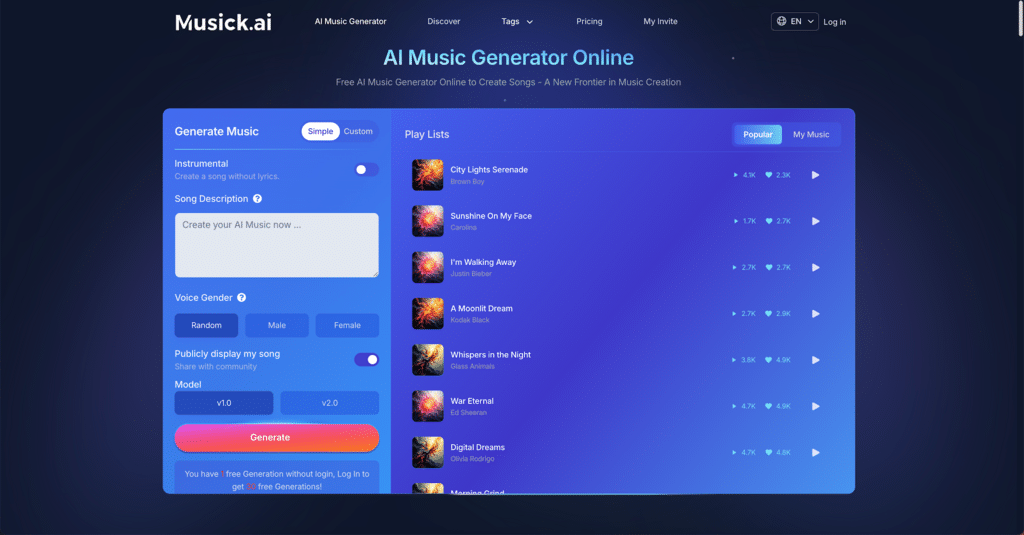
Spoken-word content requires background audio that does not compete for attention. The engine includes a dedicated "Instrumental" setting specifically for this purpose. Selecting this option ensures the generated track contains zero lyrics. This leaves a perfectly clean audio space for voiceovers and host introductions without frequency clashes.
Customizing with Text Prompts
Detailed text prompts dictate the final sound. The system responds best to specific genres and vibes rather than requests for specific artist styles. Describing an "acoustic pop track about the holidays" yields much better results than naming a famous band. Specificity in instrumentation and mood guides the generation process accurately.
Selecting the Right Model Version
The software offers different generation models, currently labeled as v1.0 and v2.0. Testing prompts across both models provides varied stylistic interpretations. Version 2.0 often delivers refined harmonic structures and better instrument separation suitable for modern broadcast standards. Experimenting with both versions helps identify the best sonic fit for a specific project.
Structuring the Perfect Podcast Intro
An intro must be concise, impactful, and memorable. Using the generator requires a focused approach to prompt engineering to achieve this.
Defining the Core Vibe
Start by outlining the desired energy before typing anything. Use clear adjectives in the prompt box. Words like "uplifting," "energetic," or "melancholic" give the engine clear direction. Specifying instruments, such as "bright synths" or "dynamic percussion," further narrows down the stylistic choices for the intro.
Managing the Track Length
Podcast intros should not overstay their welcome. Musick AI is designed to generate short music loops ranging from fifteen to thirty seconds. This exact duration is perfectly optimized for podcast openings. It allows just enough time to establish the mood before seamlessly fading into the main discussion.
Utilizing Vocal Options
While pure instrumentals are standard, some specific formats benefit from vocal elements. The tool features a distinct Voice Gender selection setting. Creators can choose among Male, Female, or Random options. Adding a brief vocalization or chant can add a distinct human touch to an otherwise electronic composition.
Designing an Effective Podcast Outro
Outros require a completely different energy level compared to intros. They conclude the experience and often accompany important calls to action.
Matching the Intro Energy
The outro should feel like it belongs to the same show as the intro. Reusing similar prompt keywords maintains thematic consistency. If the intro features a lively bassline, the outro should retain elements of that bassline, perhaps generated at a slower tempo or with softer instrumentation.
Leaving Space for Final Thoughts
Hosts usually speak over the outro to thank listeners or ask for subscriptions. The background track must remain unobtrusive. Utilizing AI Music capabilities allows creators to generate ambient, sparse tracks specifically for this purpose. Prompts requesting "minimalist arrangements" or "soft acoustic chords" produce ideal audio for concluding remarks.
Ensuring Copyright Safety
Distributing podcasts across various hosting channels requires strict adherence to copyright laws. Musick AI ensures its library and generated tracks are created with full consent. Creators receive a commercial license, allowing them to use the audio freely for their shows. This eliminates the risk of takedown notices or copyright strikes on social media.
Optimizing the Audio Production Workflow
Adopting an AI Music Maker significantly alters how audio is sourced, edited, and applied to media projects.
Bypassing Stock Audio Libraries
Searching through endless stock audio catalogs consumes valuable production time. The traditional method often results in finding a track that is merely acceptable rather than perfect. Generating custom audio eliminates this compromise entirely. A simple text description instantly produces a unique track tailored exactly to the specified requirements.
Iterating with Multiple Generations
First attempts may not always yield the perfect sound immediately. As a highly responsive AI Song Maker, the engine encourages rapid iteration. Adjusting a single keyword in the prompt generates an entirely new composition. This flexibility allows creators to explore multiple creative directions in a matter of minutes.
Maintaining Consistency Across Episodes
For shows with multiple segments, having a cohesive audio package is vital. Saving successful prompt formulas ensures future tracks match the established style perfectly. When launching a spin-off series or a special episode, modifying a proven prompt slightly creates a distinct yet clearly related audio identity.
Conclusion
Professional audio packaging is no longer restricted to studios with massive budgets or dedicated composers. By understanding how to formulate precise text prompts, utilize instrumental settings, and manage precise audio loops, creators can easily produce broadcast-quality assets. Musick AI provides the necessary controls to build a highly recognizable sonic brand from scratch. Applying these outlined techniques ensures that every podcast episode starts with a strong hook and ends with maximum impact.