

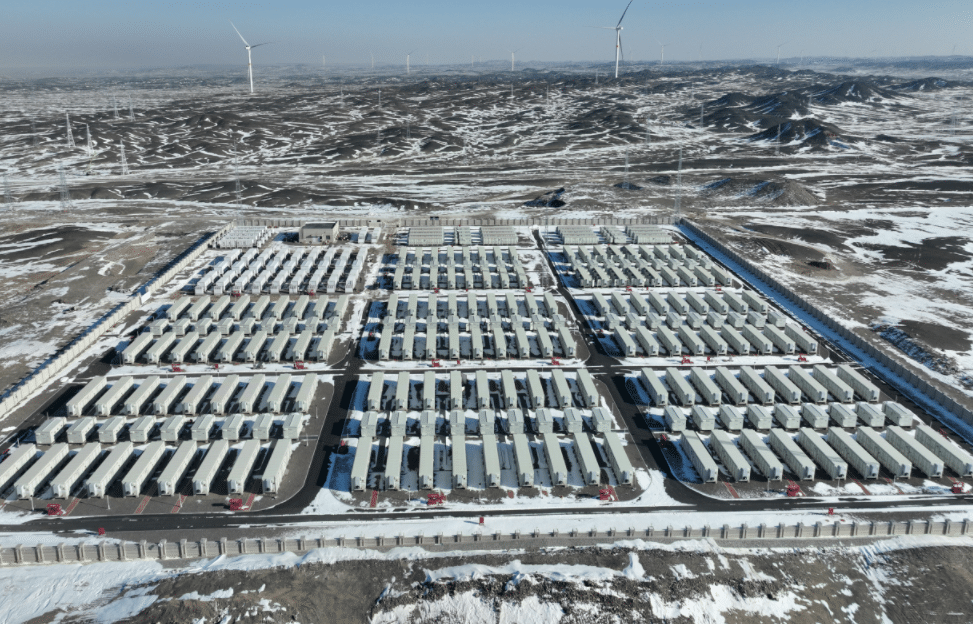
In the global wave of energy transition, the widespread deployment of renewable energy has become a strategic priority. Advanced energy storage systems are becoming an indispensable cornerstone for building a new type of power system.
However, when this trend extends to remote mountainous areas, offshore islands, desert oil fields, and other regions with weak infrastructure, the traditional energy storage deployment model—the combination of “large-scale energy storage systems + containers + heavy equipment”—reveals a series of insurmountable shortcomings.
The demand for energy independence in these areas clashes with the harsh logistics, installation, and operational conditions, creating a gap that urgently needs to be bridged.
Constraints of Traditional Models in Remote Regions
In flatlands or modern ports, traditional large-scale containerized energy storage is undeniably efficient. However, in harsh geographical conditions, the shortcomings of this model are magnified across four critical dimensions:
1. Transport Barriers and Dimensional Limitations
Traditional storage units are typically deployed in standard 20-foot or 40-foot containers. In remote regions, however, narrow roads with hairpin turns and unpaved gravel surfaces often prevent standard transport vehicles from reaching the site, necessitating costly detours.
Similarly, many island piers lack the structural integrity and heavy-lifting cranes required to handle multi-ton containers. As a result, the logistical overhead often accounts for a disproportionate share of the total project budget.
2. On-Site Installation Challenges
Once equipment arrives on-site, installation presents another major bottleneck. Remote locations often suffer from a limited availability of heavy-lift cranes and specialized construction crews.
Furthermore, supporting equipment that weighs dozens or even hundreds of tons requires substantial civil engineering, which becomes prohibitively expensive in rocky or unstable terrain. The process, spanning precise container positioning, busbar connections, cooling pipe integration, and complex cabling, demands specialized technical expertise.
As a result, the assembly and commissioning phase is often protracted and highly vulnerable to localized delays.
3. Operational Isolation and Maintenance Hardships
Energy storage systems demand rigorous inspection, continuous monitoring, and prompt fault rectification. However, the geographic isolation of remote sites makes it nearly impossible to station specialized technicians on-site, and local spare parts inventories are often inadequate.
When an alarm triggers or a failure occurs, technicians must endure long travel times, leading to a prolonged Mean Time to Repair (MTTR). Even routine tasks, such as replacing a battery module, can escalate into a complex, safety-critical operation if dedicated handling tools are unavailable.
4. Rigid Architectures and Scaling Hurdles
Companies usually deploy traditional containerized energy storage systems as monolithic, fixed-capacity units. This rigid design fails to accommodate dynamic load fluctuations or phased integration with growing energy capacity.
Initial oversizing results in inefficient capital deployment, while subsequent expansion mandates the addition of completely new container units, repeating the costly and time-consuming cycles of site work, transportation, and system integration.
Moreover, the tight coupling of hardware and software to the initial specification renders any future upgrade or reconfiguration both complex and prohibitively expensive.
HyperBlock M: Engineering Innovation for Seamless Deployment
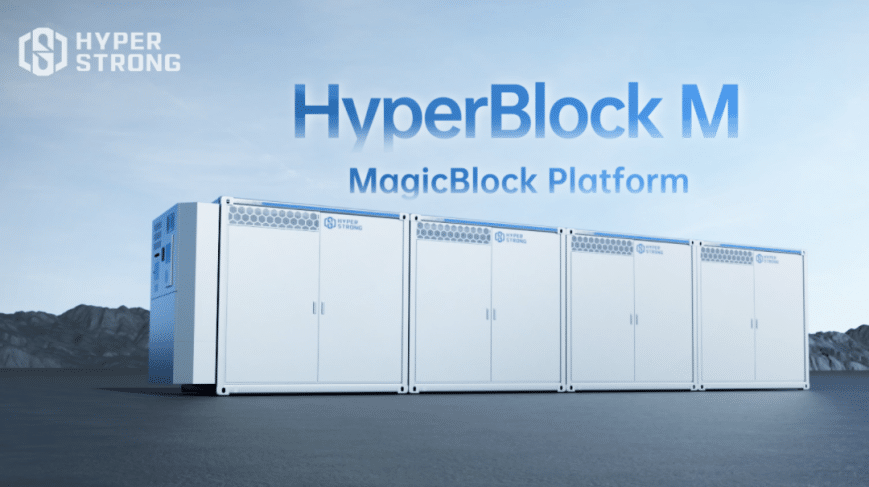
To address the challenges outlined above, HyperStrong’s HyperBlock M adopts a new design philosophy that emphasizes modularity and intelligent system architecture. Instead of pursuing all-in-one massive structures, these advanced energy storage systems adopt a strategy through extreme modularity, intelligence, and scenario-adaptability.
1. Optimized Form Factor: The 10-Foot Standard
The system’s primary disruptive innovation is reducing the unit size to a standard 10-foot container, enabling transport as standard freight via conventional road and sea routes and access to remote locations beyond the reach of traditional large-scale containers. By fundamentally solving the last-mile logistics challenge, HyperBlock M significantly lowers transportation barriers and costs.
In addition, its compact footprint supports flexible configurations such as shoulder-to-shoulder and back-to-back layouts, maximizing the utility of irregular sites while minimizing the need for heavy lifting equipment.
2. Intelligent Thermal Management
By integrating a front airflow system with a top thermal management module, HyperBlock M achieves reliable thermal control, enabling stable operation in harsh environments characterized by high temperatures and dust.
3. Digital Operations and Maintenance (O&M)
The digital O&M platform, combined with user-friendly maintenance interfaces, enables remote real-time monitoring, fault warning, and predictive maintenance.
Notably, through the integrated AI assistant – HyperGenie, the system can provide on-site personnel with clear, multilingual step-by-step guidance. This permits most maintenance tasks to be performed safely and efficiently, even in locations with scarce local technical expertise, effectively solving the long-standing O&M dilemma of “no one knows how to fix it.”
4. Elastic Scalability and Seamless Upgrades
A key hardware innovation is a semi-automatic battery module replacement system that safely replaces multi-ton modules in about one hour, eliminating the risks and inefficiencies of manual handling.
At the architectural level, the MagicBlock modular platform empowers projects with true elastic scalability. This deploy-as-you-grow model optimizes capital flexibility and asset utilization, providing a future-proof foundation perfectly aligned with the incremental energy demands of developing remote regions.
Versatile Applications: Empowering Diverse Landscapes
The highly flexible and lightweight design of HyperBlock M brings practical solutions to numerous specific scenarios:
1. Remote Mountainous Stations & Rural Power Supply
The compact 10-foot unit navigates narrow mountain roads to offer essential frequency regulation and peak shaving support for remote hydropower stations. Alternatively, the advanced energy storage system can also serve as the core component in constructing village-level solar-plus-storage microgrids, delivering stable power and directly supporting rural electrification and revitalization initiatives.
2. Island Grids & Marine Microgrids
Its ease of maritime transport and on-island maneuvering allows for the efficient replacement of expensive diesel generation. When paired with wind and solar power, it builds a self-sufficient energy ecosystem. Its modular nature also permits rapid reinforcement before typhoon seasons or emergency relocation if necessary.
3. Edge Data Centers & Telecom Towers
As 5G and edge computing expand, telecom towers in urban corners or along highways require robust UPS protection. The advanced energy storage system acts as an independent energy hub, integrating into existing sites without major structural modifications to ensure seamless data continuity.
4. Oil Fields, Deserts, & Mining Microgrids
In remote extraction zones where grid extension is cost-prohibitive, HyperBlock M creates a reliable off-grid system. Even in sandstorm-prone desert environments, its top-mounted thermal management and superior sealing protect the power supply for critical drilling and exploration equipment.
Wrapping-up
From rugged mountains to vast oceans, from desert interiors to edge networks, the demand for a stable power supply is ubiquitous.
HyperBlock M, with its innovative modular design, intelligent O&M, and superior scenario adaptability, breaks through multiple barriers of traditional energy storage deployment, paving a practical, efficient, and economically viable path for energy independence and green transformation in logistically challenging regions worldwide.