

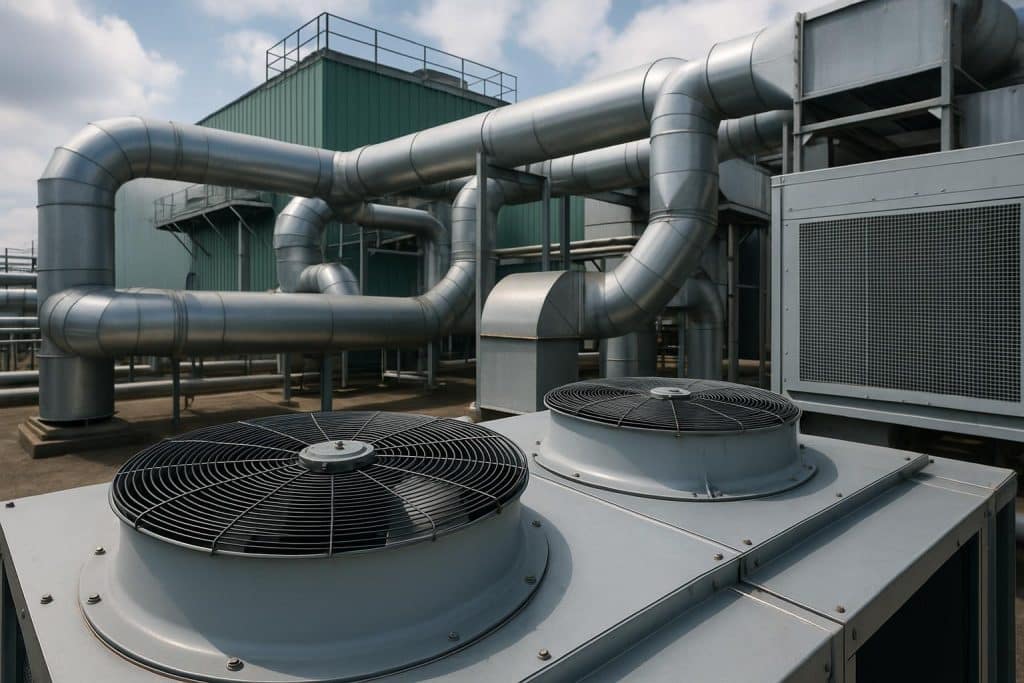
Industrial businesses are dependent on HVAC systems to keep operating environments safe, controlled and efficient – these systems are responsible for equipment performance, worker comfort, ventilation and processes that require consistent temperature management. Production delays, higher costs plus operational disruptions are often the result when HVAC components fail without warning.
The Effects of Dependable HVAC Components
Consistent system performance over long periods is possible when HVAC components are reliable. Every part of an HVAC system is a contributor to functionality, including seals, insulation materials, valves, filters and mechanical connections. Businesses are able to lower the chance of sudden breakdowns and keep operations predictable when components are sturdy enough for difficult conditions. Maintenance planning is also easier because durable parts do not need emergency replacements as often. Facilities are able to schedule inspections but also repairs with more accuracy when their HVAC systems use dependable parts – this strategy allows maintenance teams to fix potential issues before they are large enough to change productivity levels.
The Importance of Material Performance in HVAC Systems
Material performance is a factor in how well HVAC components work within difficult industrial environments. Components are often in contact with high temperatures, pressure changes, vibration, moisture and chemicals. Systems are more likely to stay intact and avoid early wear when materials are selected to handle these specific conditions. Insulation as well as sealing materials are necessary to protect HVAC equipment and increase efficiency. Fiberglass rope is a material that is durable in situations where heat resistance and strong seals are required. Ceramic fiber insulation is also useful for thermal management in areas with high temperatures, which makes HVAC performance more stable.
Lowering Operational Disruptions Through Maintenance
Industrial businesses face challenges when HVAC systems fail unexpectedly. A malfunctioning system is often the cause of poor indoor air quality or problems with equipment or environmental controls. Prioritizing reliable components is a way to lower the chance of failures that stop normal operations and need immediate repair. Preventive maintenance is more effective when HVAC systems consist of dependable parts. Maintenance teams are able to focus on routine inspections, cleaning and performance checks rather than fixing repeated component failures – this change improves how resources are managed next to allows businesses to keep facility operations organized.
Increasing Energy Efficiency Through Reliability
Reliable HVAC components are a way to improve energy efficiency – helping systems work as they are designed. HVAC equipment is forced to work harder to maintain conditions when seals are damaged, insulation is worn or parts are failing – this extra workload is the cause of higher energy use and unnecessary operating costs. Industrial facilities are able to improve airflow control and temperature regulation – keeping components reliable. Well maintained HVAC systems are more likely to reach consistent performance levels because energy is used for its intended purpose instead of being lost to equipment issues.
Supporting Long Term Equipment Performance
Industrial HVAC systems are a large financial investment – Reliable components are a way to protect this investment – reducing stress on connected equipment plus preventing damage from recurring operational problems. Strong components are the reason HVAC systems are able to function throughout their expected lifespan. System stability during difficult conditions is also better when businesses choose durable materials and dependable replacement parts. Industrial environments often require HVAC equipment to run continuously, which makes the quality of components a primary factor in performance over time.
Improving Workplace & Facility Safety
HVAC reliability is linked to workplace safety because these systems control air circulation, temperature and the environment. Failing HVAC components are sometimes the cause of uncomfortable or unsafe conditions for employees, especially in facilities where heat or air quality management is a requirement. Safe working environments are easier to maintain when businesses use reliable components for consistent system operation. Regular inspections but also the use of appropriate materials are ways to lower the risks of equipment failure and ensure that HVAC systems meet all requirements.
Conclusion
Industrial businesses benefit when they prioritize HVAC component reliability because dependable systems support efficiency, safety and continuous work. Facilities are able to lower disruptions as well as improve equipment performance – focusing on quality materials, preventive maintenance and durable parts. Investing in reliable HVAC solutions is a way for businesses to protect their operations and create a more stable industrial environment.