

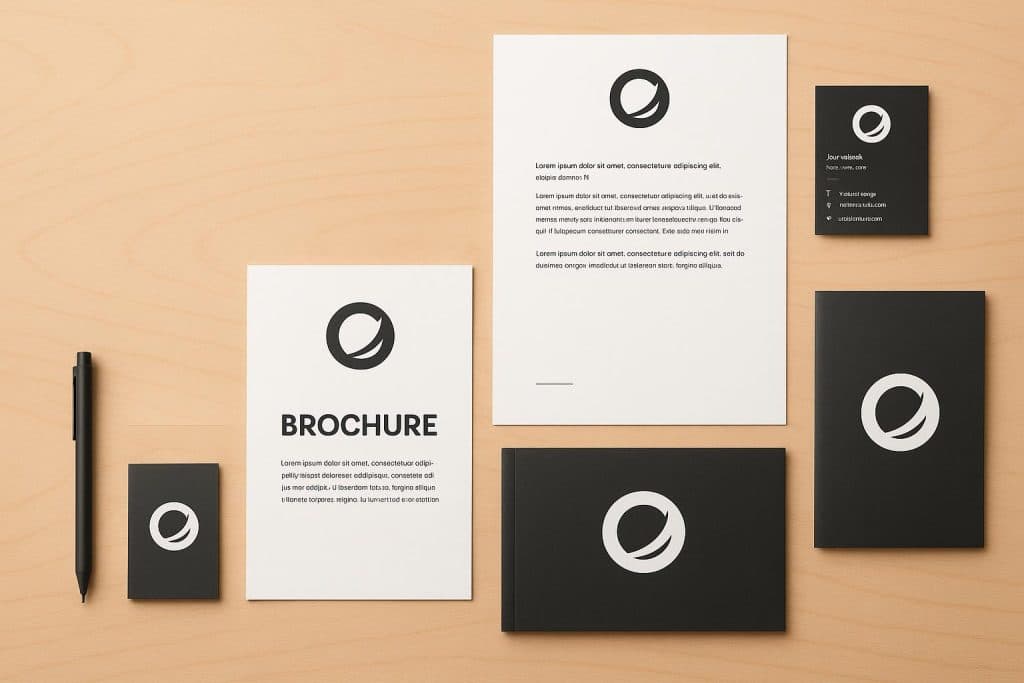
In a world that is becoming more digital by the day, print materials still play a key role in how companies present themselves to the public. From brochures and packaging to business cards and stationery, print gives a tangible experience that digital media doesn’t always provide. Also, well-designed print pieces often are those that break the ice between a brand and its audience, which is why brands pay attention to their quality, design, and finish for the brand’s image over the long term.
In the case of business cards, they still stand out as the most reliable tools in professional networking. Although brands have seen growth in digital contact sharing, which has taken over in some ways, a well-designed card still does a great job of being a mobile brand. The scale, paper quality, layout, and print method all play a role in how the card is received. A flimsy or low-quality card may present a lack of attention to detail, which in turn may reflect a larger issue, while a well-made card may put across reliability, creativity, and confidence before you even open your mouth.
Printing Techniques That Enhance Visual and Tactile Impact
In the past ten years printing technology has transformed, which in turn has made available to designers and brands a wide variety of new options beyond traditional ink on paper. Today we see modern print methods such as embossing, debossing, letterpress, foil stamping, and die cutting. What these do is add depth and texture to a piece, which in turn transforms simple print pieces into ones that customers remember. When applied thoughtfully, these enhancements are not just for show but are functional elements of design that draw attention to important info and which also support brand image.
Foil stamping is a very popular technique in the field of premium print. By the use of heat and pressure, which in turn applies metallic or pigmented foil, printers are able to put out reflective elements, which in turn draw the eye. Brands see this method used for logos, names, or as a design accent, which in turn brands find in business cards and packaging. As the discussion around advanced print finishes grows, so does the mention of examples like that of premium foil stamped business cards, which brands see put forth in larger talks of how tactile elements play a role in brand recall and perceived value in a professional setting.
Design, Paper Choice, and Print Quality Considerations
Design choices that are put on the table are of equal importance to print techniques. Brands see that in a good layout, which has a great use of white space, which is easy on the eyes, and which also uses visual hierarchy to guide the reader. On a business card where space is at a premium, every design choice matters. Fonts have to be legible at very small sizes, and color contrast must support readability, which has an air of intention rather than being crowded. Also in print design, designers must have a knowledge of bleed, trim, and safe zones in which to work so that the final product looks as brands intended after the card is cut and finished.
Paper selection is a base element in premium print products. Coated and uncoated stocks present different results with ink and finishes, which in turn affect color accuracy and texture. Heavier stocks may come across as more durable and convey a quality feel. Also brands see that specialty papers such as cotton, recycled, or textured papers also play into brand value. For instance, eco-friendly brands may go for recycled options, while luxury brands may choose thicker, smoother stocks that work well with foiling or embossing.
Print Materials as Part of a Broader Marketing Strategy
In the world of marketing, beyond the business card, which is a given, similar principles play a role in the design of folders, postcards, invitations, and product packaging. Brands see die-cut cards and custom-shaped prints as a way for brands to stand out from the competition and catch the eye of the consumer. Also, these creative elements have to be practical in design so that the material still performs its function well and is easy to work with, store, or ship. Great print design is a balance between what is creative and what is useful.
Brand which is what brands put out there in print is what builds recognition and trust. Colors, logos, and typefaces should be the same across a business card, brochure, or envelope. Brands pay attention to color management in print which differs from what you see on screen. Use of standard color systems and proofing processes is what helps maintain accuracy and consistency across print runs and different materials.
From a marketing point of view print materials do best when they are put in to play with larger brand and communication schemes. Business cards brands see to go along with in person interactions, events, or meetings which in turn reinforce personal links. Also print materials may support digital campaigns by giving out a physical element of the brand which plays again after online interaction. In this way print and digital media support each other instead of competing for attention.
In the end, what high-quality print does is present a professional image and bring out the attention to detail. Through careful design, thoughtful paper choice, or refined finishing techniques, premium print products allow companies to put their best foot forward and present a confident image.