

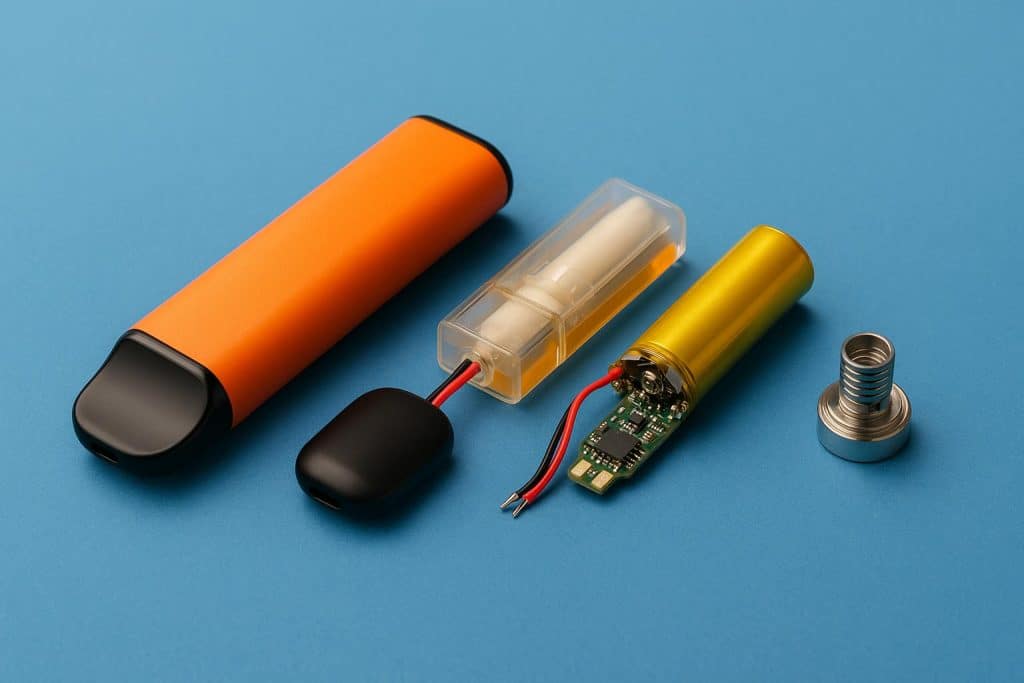
You’ve probably picked up a disposable vape, taken a draw, and thought nothing of it beyond whether the flavor was good. What you were actually holding was a compact piece of engineering that packs a surprising amount of technology into something smaller than a marker. These devices have come a long way from their early iterations, and the tech inside them is genuinely worth a closer look.
If you’ve noticed that newer disposables feel smoother, last longer, and offer features you’d expect from much pricier devices, that’s not an accident. Manufacturers have quietly been raising the bar on what a single-use or limited-use device can do. The result is a category of product that’s far more sophisticated than its price point suggests.
More Than a Simple Device
Early disposable vapes were straightforward: a battery, a coil, and some e-liquid sealed in plastic. The category has since evolved into something that borrows heavily from the broader vaping industry’s most advanced innovations. Features that once belonged exclusively to high-end box mods have worked their way into slim, pocket-friendly form factors.
The clearest example of that shift is the rise of smart screen vape models, which bring digital displays and user controls into the disposable space. These screens let you monitor battery life, track your puff count, and in some cases adjust the wattage output, all without needing a separate device or app. That level of visibility and control used to require a significant investment in reusable hardware.
This evolution reflects a broader demand from users who want convenience without sacrificing the experience. Manufacturers have responded by treating disposables as a serious product category rather than a throwaway afterthought. The engineering that goes into a modern disposable is proof that small doesn’t have to mean simple.
How the Core Components Work Together
Every disposable vape relies on a few key components functioning in sync. The battery, atomizer, wicking system, and airflow sensor each have to perform reliably within a tightly constrained space, which makes the engineering challenge more interesting than it might appear. Getting those components to cooperate consistently is what separates a smooth draw from a frustrating one.
The Battery and Power System
The battery in a modern disposable isn’t just a power source; it’s a managed system. Many newer devices include USB-C rechargeability, which allows the battery to outlast the e-liquid rather than dying halfway through the reservoir. Some models also incorporate basic circuit protection to prevent overheating or short circuits, adding a layer of safety to a device that often gets tossed in a bag or pocket.
Compact lithium batteries have made it possible to extend device life considerably without increasing the overall size. Engineers have optimized discharge rates to deliver consistent voltage throughout the battery’s life, which means your last puff should feel close to your first. That consistency is harder to achieve than it sounds in such a small form factor.
The Atomizer and Coil Design
The atomizer is responsible for turning e-liquid into vapor, and mesh coil technology has been one of the biggest upgrades to reach the disposable category. A mesh coil uses a flat, grid-like strip of metal instead of a traditional wire coil, distributing heat more evenly across a larger surface area. The practical result is better flavor and a noticeably more consistent vapor production with fewer dry hits.
Coil resistance also plays a role in how a device performs. Lower-resistance coils tend to produce warmer vapor and work well with nicotine salts, which are common in disposables because they deliver nicotine more smoothly at higher concentrations. Manufacturers tune their coil specs to match the e-liquid formulation inside the device, which is why you can’t always swap components between brands and get the same result.
Smart Features That Set Modern Disposables Apart
The gap between disposable and reusable devices has narrowed considerably as manufacturers have added features that genuinely improve the experience. These aren’t gimmicks layered on for marketing purposes; they solve real usability problems that earlier disposables couldn’t address. Here are some of the standout features you’ll find in advanced disposable models today:
- Digital display screens that show battery level, puff count, and sometimes wattage or coil resistance in real time
- Adjustable airflow that lets you dial in tighter or looser draws depending on your preference
- Variable wattage or voltage settings that give you some control over vapor temperature and density
- Puff counters and low-battery indicators that help you gauge when you’re nearing the end of the device
- USB-C fast charging that keeps the battery topped up so it outlasts the e-liquid supply
These features shift the disposable from a passive experience to one you can actually interact with and tailor. The fact that they’re available at accessible price points makes them worth paying attention to if you’ve been sticking with basic models out of habit.
The Role of E-Liquid Delivery and Capacity
Getting more e-liquid into a small device without leaks or degraded performance required some creative engineering. Modern disposables use sealed, pressurized reservoirs combined with refined wicking materials to manage liquid flow efficiently. The goal is consistent saturation so the coil never runs dry mid-session.
Wicking Materials and Saturation
Cotton remains the most widely used wicking material because it’s effective, food-safe, and reliable across a range of viscosities. The quality and density of the cotton affects how quickly it re-saturates between puffs, which directly impacts whether you experience dry hits. Some manufacturers have introduced hybrid or treated wicking materials that saturate faster and hold up better over the device’s lifespan.
What Keeps Disposables Compact but Capable
Fitting everything into a small chassis requires more than just miniaturized components; it requires deliberate decisions about what to include and how to arrange it. The circuit board in a modern disposable handles power management, safety cutoffs, airflow detection, and display output in screen-equipped models, all on a board roughly the size of a thumbnail. That level of integration is a real feat of product engineering.
Airflow sensors replaced manual fire buttons in most disposables by detecting the pressure change when you inhale and activating the atomizer automatically. This removes a mechanical failure point and keeps the exterior clean and simple. The precision required to tune that sensor correctly, so it fires reliably without misfiring, reflects how much thought goes into a device most people use without a second thought.
Small Package, Serious Engineering
The disposable vape you carry around is a more sophisticated object than it gets credit for, built from technology that’s been refined across the broader vaping industry and compressed into a remarkably compact form. Every component, from the mesh coil to the circuit board to the wicking system, has been optimized to work together within tight constraints. Next time you take a draw, you’ll have a better sense of exactly what’s making it happen.