

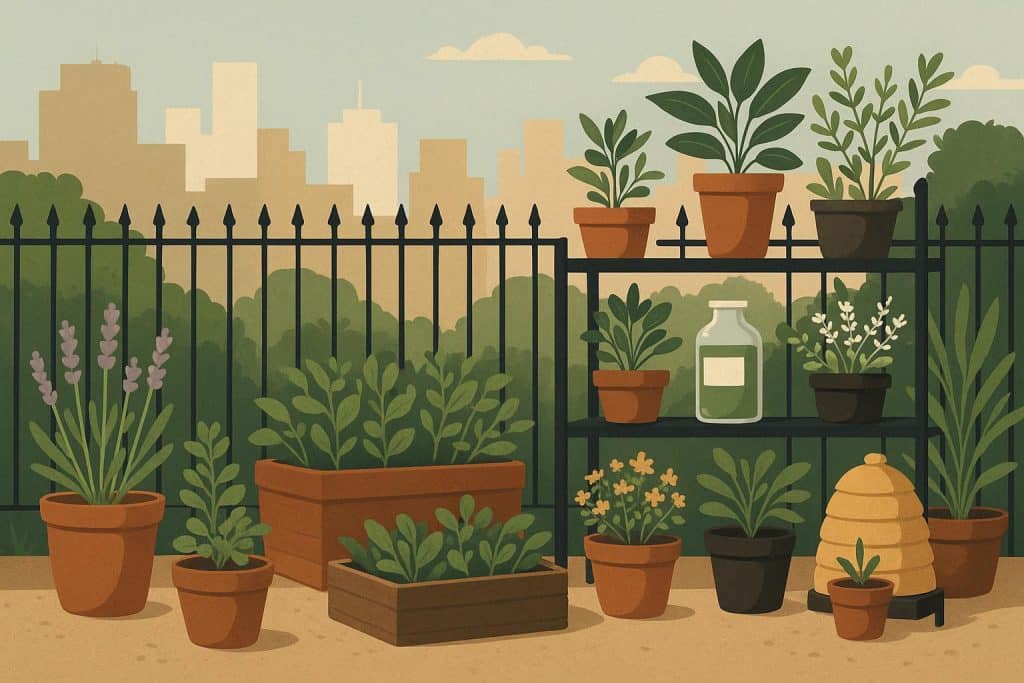
An urban apothecary garden gives you quick access to fresh, aromatic, and wellness-focused plants without needing a backyard. With small adjustments in space, soil, and plant choice, you can build a compact setup that feels both useful and grounding. Below are five simple steps that guide you from planning to expanding your collection.
1. Choose the Right Urban Plot
Your space decides your strategy. Most apothecary herbs love the sun, so start by finding a spot that receives at least six hours of direct light. A sunny windowsill, balcony corner, or even a fire escape can work if it is safe and stable.
Use whatever containers you already have, as long as they drain well. Terracotta pots are great for airflow, but upcycled food tubs with holes punched in the bottom work too. If your floor space is limited, a tiered stand or wall pocket system helps you grow upward instead of outward.
If you plan to explore more specialized botanicals later, learning how different seeds behave in small urban environments is useful. Even something as unique as cannabis seeds follows the same basic rules of needing reliable light, airflow, and proper drainage.
2. Build a Simple Soil Mix
Skip garden soil. It compacts inside containers and often carries pests. A lightweight potting mix gives you the airiness and drainage herbs need to thrive. Speaking to Southern Living, Costa Farms horticulturalist Justin Hancock said that potting mix is “ideal for growing plants in containers.”
Before adding soil, place a small drainage layer over each pot’s hole. Broken terracotta pieces, a handful of stones, or a mesh scrap will keep the outlet clear without blocking water flow.
3. Water and Feed on a Simple Schedule
Your finger is the best watering tool. If the top inch of soil feels dry, water until you see it flow out of the drainage hole. Do not let your pots sit in standing water, which leads to root issues.
Because potted herbs burn through nutrients quickly, feed them once a month in spring and summer with a diluted organic liquid fertilizer. This gentle routine keeps growth steady without overwhelming the plants.
4. Start with Reliable Apothecary Herbs
Focus on hardy plants that grow well in containers and have versatile uses. Mint supports digestion and grows happily in partial shade, but must be kept in its own pot. Lemon balm makes calming teas and roots easily from cuttings.
Calendula thrives in full sun and offers bright petals used in soothing oils. Rosemary likes heat, lavender needs strong light and quick drainage, and chamomile produces calming tea flowers all season. Basil rounds out the basics with antioxidant-rich leaves you can use in tinctures or infused oils.
These starter herbs help you build confidence while giving you a useful range of flavors and wellness benefits.
5. Expand Into Advanced Botanicals
Once your core herbs are thriving, you can grow your garden into a fuller apothecary. That is when many hobbyists begin exploring plants for oils, tinctures, and long-term preservation projects. Expansion often starts with sourcing better genetics. Just like you would hunt for heirloom tomato seeds to get a specific flavor or resilience, experienced growers look for verified, high-quality starting material.
For those branching into more specialized botanicals, including niche or non-culinary plants, the choice of source matters. Some gardeners even experiment with uncommon varieties or legally permitted specialty crops, and this is where the topic of cannabis seeds can naturally enter the conversation. The principle is the same across all advanced cultivation: stronger genetics lead to stronger results.