

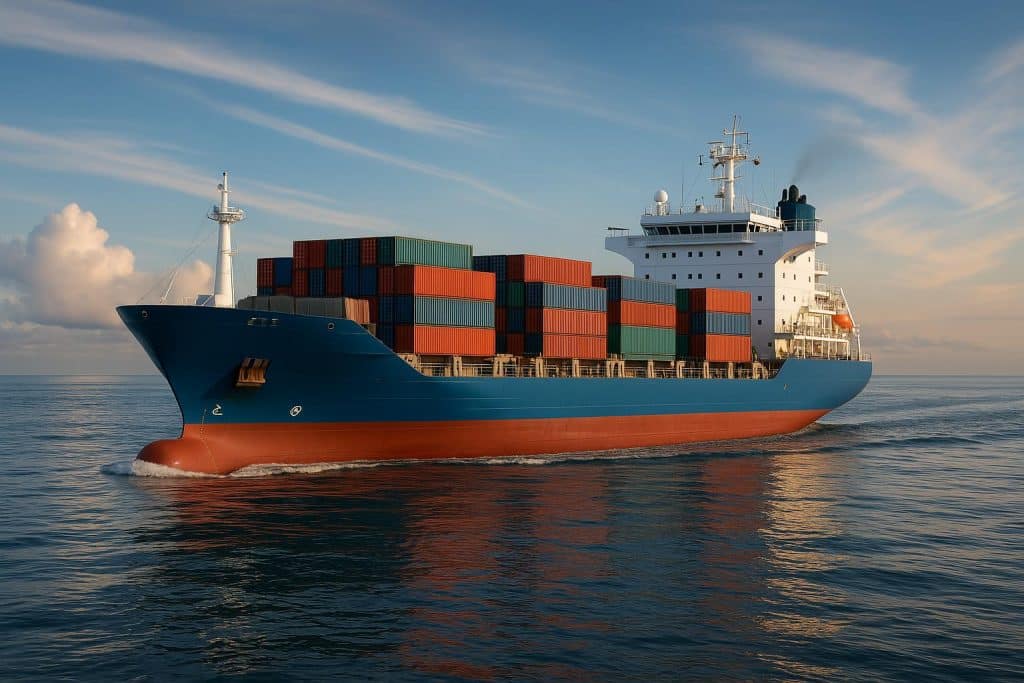
The maritime industry is under increasing pressure to improve efficiency, reduce fuel consumption and meet ambitious environmental targets. With shipping responsible for transporting around 90% of global trade, even small improvements in vessel performance can have a significant impact on operational costs and emissions.
While alternative fuels and new energy sources often dominate the conversation, one of the most important drivers of efficiency lies in the design of the vessel itself. Advances in naval architecture, hydrodynamics and digital engineering are enabling ships to travel farther using less energy, helping operators remain competitive while supporting sustainability goals.
Today, modern ship design is no longer focused solely on building larger or faster vessels. Instead, the emphasis has shifted towards maximizing performance through smarter engineering decisions that optimize every aspect of a ship’s interaction with the water.
The growing importance of efficiency in shipping
Fuel costs remain one of the largest operational expenses for vessel owners and operators. At the same time, regulations from organizations such as the International Maritime Organization (IMO) are encouraging the adoption of technologies that reduce greenhouse gas emissions and improve energy efficiency.
As a result, shipbuilders, designers and marine engineers are increasingly looking for ways to enhance performance without compromising reliability or safety. This involves a comprehensive approach that considers the hull, propulsion system, onboard equipment and operational profile of each vessel.
Rather than relying on a single innovation, modern efficiency gains are often achieved through the combination of multiple engineering improvements working together.
Hull design as the foundation of performance
One of the most influential factors in maritime efficiency is hull design. The shape of a vessel directly affects the resistance it encounters as it moves through the water.
Even minor adjustments to hull geometry can significantly reduce drag, allowing the vessel to maintain speed with lower power requirements. Advances in computational fluid dynamics (CFD) have transformed the way naval architects approach this challenge.
Using sophisticated simulation tools, engineers can analyze water flow around the hull long before construction begins. This makes it possible to identify areas of turbulence, optimize flow patterns and refine designs to minimize resistance.
The result is a vessel that requires less energy to operate while maintaining the desired performance characteristics.
Why propulsion remains a critical factor
Although hull optimization is essential, a ship’s efficiency ultimately depends on how effectively engine power is converted into useful thrust.
This is where modern propeller design plays a crucial role. A propeller is far more than a rotating component attached to the vessel’s shaft. Its geometry must be carefully engineered to operate efficiently under specific conditions, taking into account factors such as vessel speed, displacement, engine characteristics and operating environment.
A well-designed propeller can improve fuel efficiency, reduce vibration levels, minimize noise and lower maintenance requirements. Conversely, an improperly selected propeller may increase fuel consumption, reduce performance and contribute to issues such as cavitation.
Today, engineers use advanced simulation techniques and hydrodynamic analysis to optimize propeller design, ensuring that each vessel achieves the best possible balance between thrust, efficiency and reliability.
Digital engineering is changing the design process
The maritime sector has embraced digital technologies at an unprecedented pace. Simulation tools now allow engineers to evaluate multiple design alternatives in virtual environments before any physical component is manufactured.
This capability reduces development time while improving accuracy and performance prediction. CFD simulations, finite element analysis and digital twins help engineers understand how vessels will behave under a wide range of operating conditions.
By identifying potential inefficiencies early in the design phase, companies can avoid costly modifications later in the project lifecycle. These technologies also support continuous improvement by allowing operational data from real vessels to be incorporated into future designs.
As a result, ship design has become increasingly data-driven, enabling more informed engineering decisions and greater overall efficiency.
Tailoring propulsion systems to operational needs
No two vessels operate under exactly the same conditions. A cargo ship, a fishing vessel, a ferry and an offshore support vessel all face different performance requirements.
For this reason, modern naval architecture focuses on developing customized propulsion solutions rather than applying standardized configurations across multiple projects.
The selection of a propulsion system depends on numerous factors, including:
- Vessel type.
- Operating speed.
- Cargo capacity.
- Route characteristics.
- Maneuverability requirements.
- Environmental objectives.
By carefully evaluating these variables, engineers can develop propulsion solutions that maximize efficiency while meeting operational demands.
In many cases, optimization involves balancing multiple objectives simultaneously. A system designed to maximize fuel efficiency may also need to provide excellent maneuverability, low noise levels or high reliability in demanding environments.
This integrated approach helps vessel operators achieve better long-term performance while reducing operational costs.
Sustainability through engineering innovation
The drive toward sustainability is accelerating innovation throughout the maritime industry. While alternative fuels and electrification are attracting considerable attention, engineering improvements remain one of the most practical and immediately available ways to reduce environmental impact.
Improved hull forms, optimized propellers and advanced propulsion systems can deliver measurable reductions in fuel consumption without requiring major changes to existing infrastructure.
Furthermore, many of these improvements generate benefits throughout the vessel’s operational life, providing both environmental and economic advantages.
As regulatory requirements continue to evolve, efficient vessel design will become increasingly important for maintaining competitiveness in global shipping markets.
The future of ship design
Looking ahead, the future of maritime efficiency will depend on the integration of multiple technologies rather than a single breakthrough innovation.
Artificial intelligence, advanced simulation tools, real-time performance monitoring and new propulsion concepts are expected to play a growing role in vessel development. However, the fundamental principles of hydrodynamics and engineering optimization will remain at the core of successful ship design.
The most efficient vessels of the future will be those that combine intelligent hull design, advanced propeller design and carefully engineered propulsion solutions into a single, integrated system.
By leveraging digital engineering and decades of hydrodynamic expertise, the maritime industry is continuing to push the boundaries of efficiency. In a sector where even small performance improvements can generate significant savings, modern ship design has become one of the most powerful tools for building a more sustainable and competitive future.