

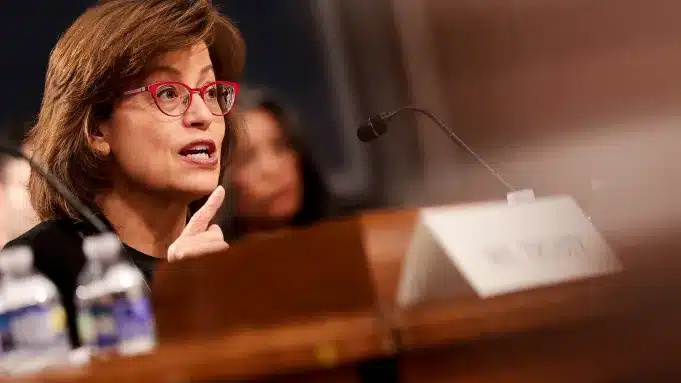
Imagine a traffic cop who suddenly tries to grab the steering wheel and drive your car. According to a surprising new letter, this exact scenario is threatening broadcast news. Outlining this unprecedented overreach to Bob Iger, FCC Commissioner Anna Gomez warns that regulators are twisting their standard oversight powers to improperly pressure and control independent journalism (FCC Chairman).
FCC Chairman: Is the Referee Changing the Rules? The Surprise Warning from FCC Commissioner Anna Gomez
By design, the agency policing the airwaves operates as a bipartisan commission, structured to prevent whichever political party is in power from turning regulatory oversight into a weapon. That delicate balance is precisely why recent alarms raised by FCC Commissioner Anna Gomez are turning heads. She is warning that the traditional boundary separating technical rule enforcement from government interference in media editorial decisions is beginning to crack under political pressure.
Can the FCC censor broadcast television news? The reality is much more subtle than an outright ban. The government rarely dictates scripts; instead, it uses periodic broadcast license renewals as leverage. If a player like Disney’s ABC fears the referee will revoke its permission to operate over specific coverage, it leads directly to the “public interest” loophole: how licenses can become tools for control.
The ‘Public Interest’ Loophole: How Licenses Can Become Tools for Control
Unlike streaming platforms, broadcast networks like ABC use public airwaves. Because they borrow this public space, they face broadcast license renewal and political content scrutiny that cable avoids. To keep these permits, stations must continually prove they serve the “public interest.” But while the government cannot explicitly dictate news coverage, this vague requirement often becomes a backdoor for pressure, forcing the First Amendment rights of news broadcasters to compete with corporate survival.
Balancing FCC public interest obligations against First Amendment protections is notoriously difficult because this standard operates entirely differently than basic decency laws:
- Subjectivity: Decency bans specific curse words; the “public interest” relies on a regulator’s shifting interpretation.
- Political Pressure: Vague rules allow government officials to weaponize their oversight powers against critical journalism.
- Editorial Scope: It encourages newsrooms to self-censor and “play it safe” to ensure future broadcast freedoms and smooth license renewals.
FCC Chairman: The Future of Broadcast Freedom: What to Watch for in the Next License Renewal
The communication history between Anna Gomez and Bob Iger exposes the friction between regulatory accountability and the First Amendment protections that stand between the government and the screen. When a regulatory body polices itself, the traditional boundaries of government oversight are tested.
Monitoring upcoming FCC votes on ABC’s licenses and tracking public notices regarding local news stations provides a clear view into how these broadcast freedoms are maintained. Staying informed on these regulatory moves is essential for ensuring the safeguards for independent news reporting remain intact.