

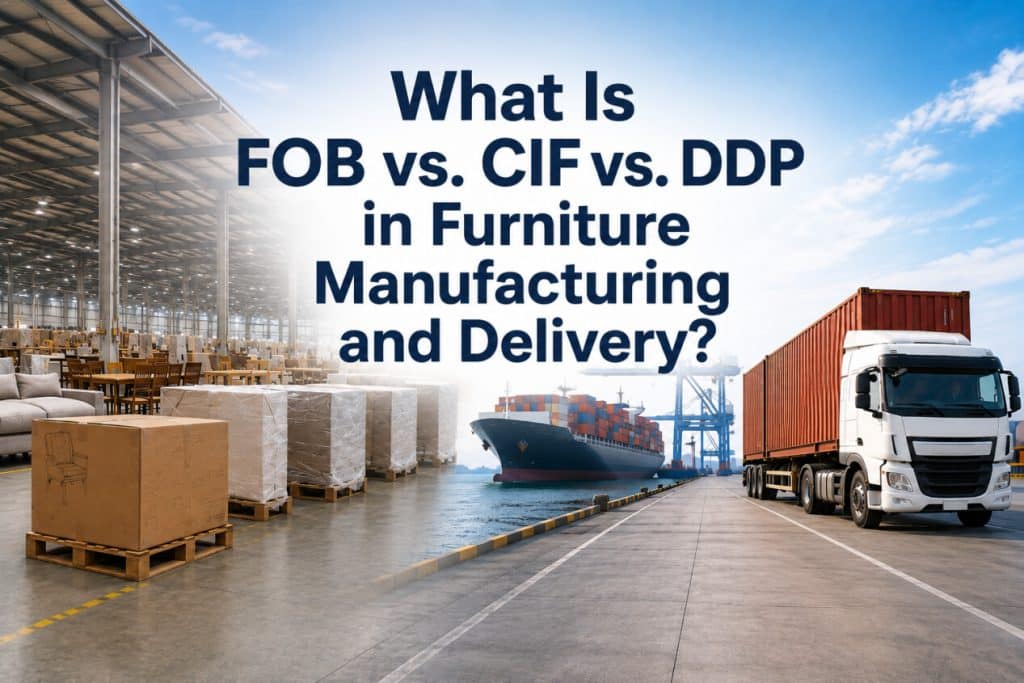
Furniture logistics leaves little room for vague delivery terms. Bulky shipments, damage risks, port handling fees, customs delays, and tight project deadlines can all impact the total landed cost of furniture. Therefore, when comparing trade terms like FOB, CIF, and DDP, buyers must have a thorough understanding of these Incoterms.
This guide explains how FOB, CIF, and DDP divide cost, control, and risk in international furniture delivery, and recommends manufacturers with extensive experience in international import and export.
What Is FOB vs. CIF vs. DDP in Furniture Manufacturing and Delivery?
International trade terms (Incoterms) determine how costs, responsibilities, and risks are allocated when commercial furniture moves from overseas manufacturing facilities to project sites worldwide. For educational institutions, property developers, corporate dormitory operators, and hospitality providers, choosing the right trade term can significantly affect cost visibility, logistics control, and risk management.
What is FOB in Furniture Manufacturing and Delivery?
Free on Board (FOB) is one of the most commonly used trade terms in global furniture trade.
- Definition and Responsibilities: Under FOB, the furniture manufacturer is responsible for producing the order, inland transportation to the departure port, export customs clearance, and loading the cargo onto the vessel designated by the buyer.
- Cost Allocation: The seller pays all costs incurred up to cargo loading (factory transport, export customs, port handling). The buyer covers international ocean freight, marine insurance, destination import duties, customs clearance, and inland trucking.
- Risk Transfer Point: Risk transfers from the manufacturer to the buyer the moment the furniture is loaded on board the vessel at the port of origin.
- Recommended Scenarios: FOB gives large-scale institutional buyers total command over freight arrangements. It is ideal for experienced procurement teams with established freight forwarding networks.
What is CIF in Furniture Manufacturing and Delivery?
Cost, Insurance, and Freight (CIF) shifts ocean transport management to the seller while maintaining an early point of risk transfer.
- Definition and Responsibilities: The seller arranges and pays for ocean transport to the designated port of destination, as well as procuring baseline marine insurance for the transit period.
- Cost Allocation: The seller covers export clearance, ocean freight, and basic shipping insurance. In simple terms, CIF can be viewed as the FOB price plus ocean freight and insurance costs. The buyer pays for destination port handling charges, import customs clearance, local tariffs, and final transport to the project location.
- Risk Transfer Point: Although the seller arranges and pays for ocean shipping and insurance, risk officially transfers to the buyer at the port of origin once cargo is loaded onto the ship.
- Recommended Scenarios: CIF is often selected for smaller orders or by buyers lacking dedicated freight handling resources.
⚠ Buyers Should Beware of Two Common Industry Missteps:
- The Insurance Trap: CIF only requires a relatively basic level of insurance coverage, typically under ICC (C) Clauses. This covers major maritime risks, such as vessel sinking, but generally excludes common types of furniture damage during transit, like surface scratches, moisture absorption, and frame crushing.
- Hidden Destination Fees: Because the seller controls carrier selection, buyers may encounter high local handling fees imposed by the seller’s agent upon arrival at the destination port.
What is DDP in Furniture Manufacturing and Delivery?
Delivered Duty Paid (DDP) is a comprehensive “door-to-door” logistics model in which the manufacturer assumes full end-to-end responsibility.
- Definition and Responsibilities: The supplier manages the entire logistics process, including export clearance, ocean freight, marine insurance, destination customs entry, tariff payment, and final delivery directly to the buyer’s warehouse or job site.
- Cost Allocation: The buyer pays an all-inclusive price. All tariffs, taxes, ocean shipping, local handling, and inland transport costs are pre-paid by the seller.
- Risk Transfer Point: Risk remains with the seller throughout transit and only transfers to the buyer once cargo arrives at the designated delivery address, ready for unloading.
- Recommended Scenarios: DDP provides a hassle-free procurement experience for project developers, school administrators, and accommodation managers who want to avoid handling complex cross-border logistics.
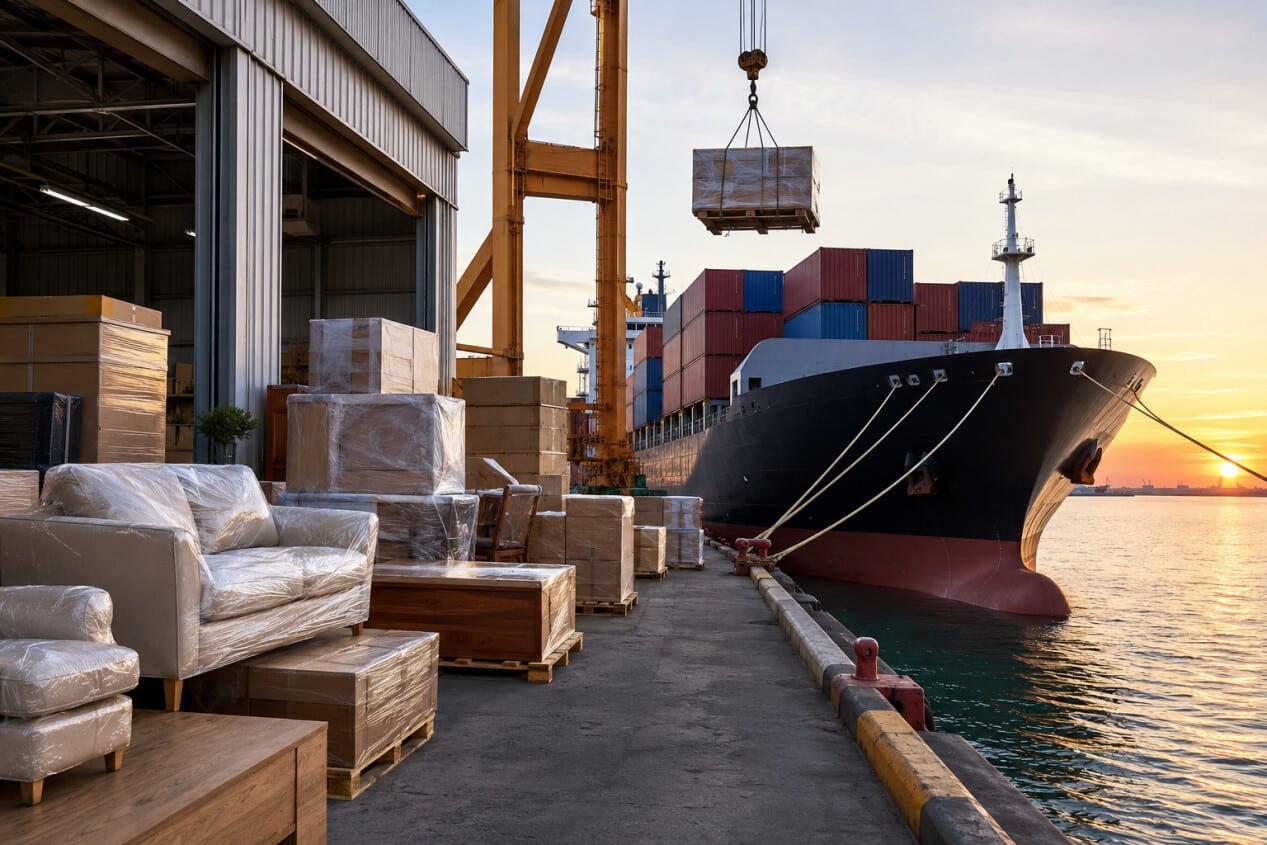
FOB vs. CIF vs. DDP: Side-by-Side Comparison
Selecting the right term depends on your organization’s logistics experience, cash flow structure, and tolerance for freight risk.
| Comparison | FOB | CIF | DDP |
|---|---|---|---|
| Main Transportation Arranged By | Buyer | Seller | Seller |
| Ocean Freight Paid By | Buyer | Seller | Seller |
| Export Clearance | Seller | Seller | Seller |
| Cargo Insurance | Buyer | Seller | Not automatically required by the Incoterm |
| Import Clearance | Buyer | Buyer | Seller |
| Import Duties/Taxes | Buyer | Buyer | Seller |
| Risk Transfers | When goods are on board at shipment port | When goods are on board at shipment port | At the named destination, ready for unloading |
| Buyer Logistics Control | High | Medium | Lower |
| Typical furniture buyer | Experienced importer with freight partners | Buyer wanting seller-arranged ocean freight | Buyer seeking more integrated delivery |
Choosing a Reliable Furniture Manufacturer for Smooth Delivery
Incoterms define contractual responsibilities, but successful furniture delivery also depends heavily on the supplier’s experience in manufacturing, packaging, documentation, container loading, freight coordination, quality inspection, and project scheduling.
Partnering with Topohut for Institutional Furniture Procurement
For educational institutions, student accommodation operators, corporate housing contractors, and hospitality developers, Topohut stands out as a leading direct-factory manufacturer specializing in commercial and dormitory furniture.
Key Advantages of Working with Topohut:
- 30+ Years of Focused Experience: Topohut specializes in high-durability furniture for university dormitories, employee housing, worker accommodations, hostels, and residential projects. Their products are specifically engineered for high-occupancy environments.
- Massive Manufacturing Capacity: Operating out of a 79,100 m² production base equipped with 6 automated production lines, Topohut manufactures a wide range of furniture at scale, including bunk beds, bed frames, study desks, wardrobes, and common-area seating.
- OEM/ODM & Customization Services: To eliminate spatial mismatches in multi-room developments, Topohut offers full-custom dimensioning, material selection, and layout design tailored to architectural floor plans.
- Proven Track Record in Global Projects: Topohut’s portfolio includes high-profile international developments such as the Qatar FIFA 2022 housing, Qatar Gas facilities, Saudi Arabia AMSA dorms, and school furniture projects for India’s Narayana School Group and Iraq’s Ministry of Education.
- 20+ Years of International Trade Expertise in 68+ Countries: With 80% of production destined for international markets (exporting over 500 containers annually), Topohut possesses deep practical experience managing export documentation, container loading efficiency, and international transit schedules.
- Flexible Incoterm Support (EXW, FOB, CIF, DDP): Whether your procurement team prefers complete freight control via FOB or requires a DDP door-to-door solution, Topohut accommodates your preferred trade terms.
- Comprehensive Quality Certifications: Topohut products and processes comply with stringent international standards, backed by certifications from SGS, TÜV, BV, ISO, and CE, ensuring full compliance with institutional procurement guidelines.
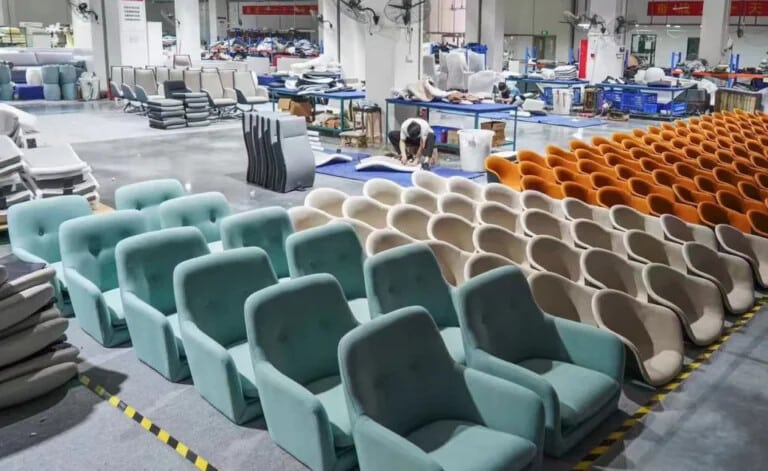
Picture shown: Topohut’s furniture factory
Conclusion
Whether you choose FOB for maximum freight control, CIF for convenient ocean transit, or DDP for complete hands-off delivery, matching your trade terms to your operational capacity is vital for successful overseas procurement.
Partnering with a leading manufacturer like Topohut ensures that your furniture is not only built to international quality standards but also delivered on time and within budget, no matter where your project is located. If you are interested, you may contact Topohut.