

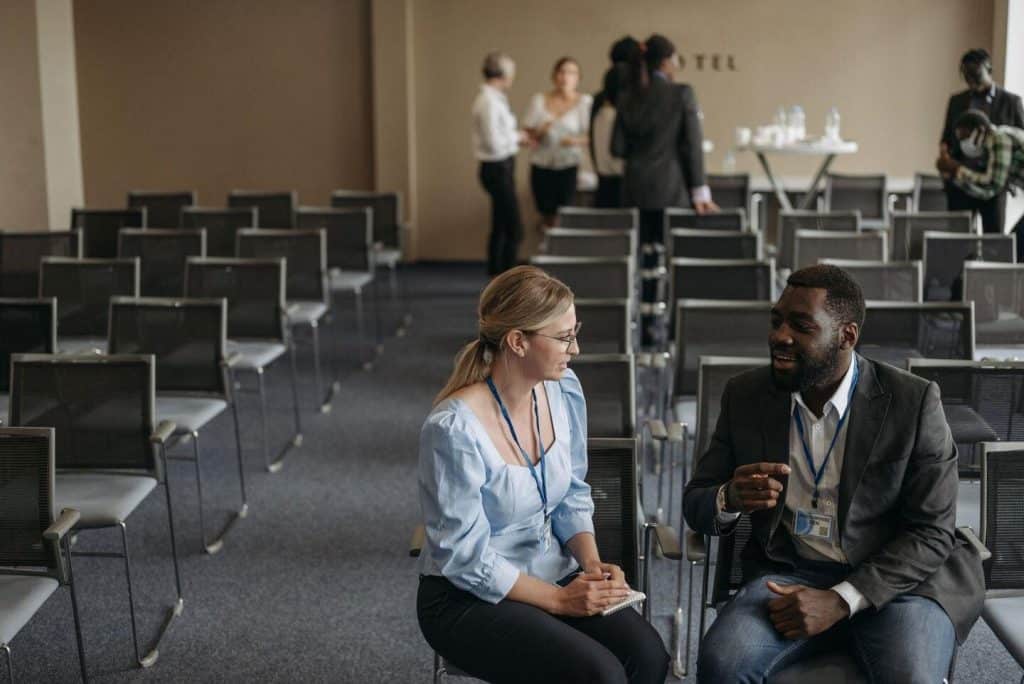
Corporate events have come a long way from rows of chairs, printed agendas and a projector at the front of the room. Technology is now involved in everything from registration and networking to presentations, lighting, sound and remote participation.
For businesses in San Diego, this is creating new ways to make corporate events more engaging and flexible, while keeping the focus on bringing people together.
The corporate event is becoming an experience
There’s a growing expectation that business events should offer more than just information. Attendees might spend hours traveling to a conference or take time away from work to attend. Sitting through static presentations can make that investment feel underwhelming.
Technology gives organizers more options. Interactive displays, live polls, audience Q&As, digital presentations and event apps can turn attendees from spectators into participants. A speaker can ask a question and see responses almost instantly, while a product launch can use interactive demonstrations instead of relying entirely on slides.
The key is using technology to support the experience rather than overwhelm it. People attend corporate events to learn, connect and collaborate, not just to see the latest gadget.
Audiovisual technology has become a bigger part of the equation
Sound and visuals can make or break a corporate event. A keynote speaker might have an excellent presentation, but if the people at the back of the room can’t hear them clearly, the content quickly loses its impact. The same applies to videos that don’t display properly, microphones that cut out or poor lighting.
That’s why businesses increasingly treat professional production as part of the event rather than as just an afterthought.
Working with an audio visual service in San Diego can help companies coordinate microphones, speakers, displays, lighting, video presentations and other equipment. Having these elements planned and tested together can create a smoother experience for presenters and attendees.
Technical problems have a real business cost
It’s easy to think of an event technology failure as an annoyance. A frozen screen or faulty connection might only take a few minutes to fix. But those minutes can add up.
September 2026 reporting on workplace technology showed the wider cost of meeting tech problems. Research conducted by the Harris Poll on behalf of Logitech found that 94% of workplace experience decision-makers had experienced business costs from meeting technology glitches, while 51% cited lost productivity.
At a corporate event, a technical problem can affect hundreds of people at once. Testing equipment, checking connections, rehearsing presentations and having someone available to handle problems can prevent a minor glitch from becoming a major disruption.
Hybrid events are opening the door to larger audiences
Hybrid events have changed what corporate gatherings can look like.
A company hosting a conference in San Diego doesn’t necessarily have to limit its audience to people who can physically attend. With the right setup, remote participants can watch presentations, listen to speakers, ask questions and take part in selected activities.
However, a hybrid event can’t simply be an in-person event with a camera pointed at the stage.
Remote attendees need to hear speakers clearly, see presentations properly, and know when questions are being directed toward them. When those details are handled well, physical and digital audiences can become part of the same event.
Event apps are replacing the paper schedule
Printed event programs have one major flaw: they can’t change. If a speaker moves rooms or a session is canceled, yesterday’s printed schedule doesn’t know about it. A digital platform can.
Event apps allow organizers to put schedules, speaker information, maps, notifications and other practical details in one place. Attendees can check what’s happening next without carrying a program around or searching through their email.
Some platforms also allow people to build personalized schedules or connect with other attendees, making larger conferences easier to navigate.
AI is changing what happens behind the scenes
Artificial intelligence is becoming another part of the event technology conversation, although its role isn’t necessarily about putting an AI chatbot on stage.
Much of its potential lies behind the scenes. Event organizers can use AI tools to analyze registration information, identify attendee interests, draft communications, summarize feedback or support content planning.
More advanced systems can also help personalize schedules and recommend sessions or networking opportunities.
Planning involves plenty of repetitive administrative work, so automating some of it could leave organizers with more time to focus on the audience, speakers, atmosphere and purpose of an event.
Personalization is becoming easier
Not everyone attending a corporate event wants the same thing.
A sales professional might be focused on networking, while someone from a technical team might want educational sessions. An executive could be more interested in meeting potential partners.
Technology allows organizers to respond to those differences. Personalized recommendations can direct attendees toward relevant sessions, while networking platforms can suggest people they might want to meet.
Even smaller events can benefit. A basic registration questionnaire can give organizers useful insight into what attendees expect.
Data doesn’t have to stop when the event ends
One of the less visible advantages of event technology is what happens afterward.
Digital platforms can provide information about attendance, engagement, session popularity and survey responses. Instead of relying entirely on anecdotal feedback, companies can look for patterns.
For example, they might discover that:
- One session attracted far more attendees than expected
- A particular speaker generated unusually high engagement
- Attendees struggled to navigate part of the venue
- A networking feature received little use
Those findings can shape future events. Technology isn’t only changing what happens on the day, but also changing how companies learn from their events.
Putting tech to work
Corporate events are becoming more connected and interactive, but technology isn’t replacing the human side of them. The right tools can give people more opportunities to communicate, participate and make useful connections.
As new event technology trends emerge, businesses will have more ways to shape experiences around their audiences. The challenge will be knowing which tools actually add value and making sure they work when the room is full and the event is about to begin.