

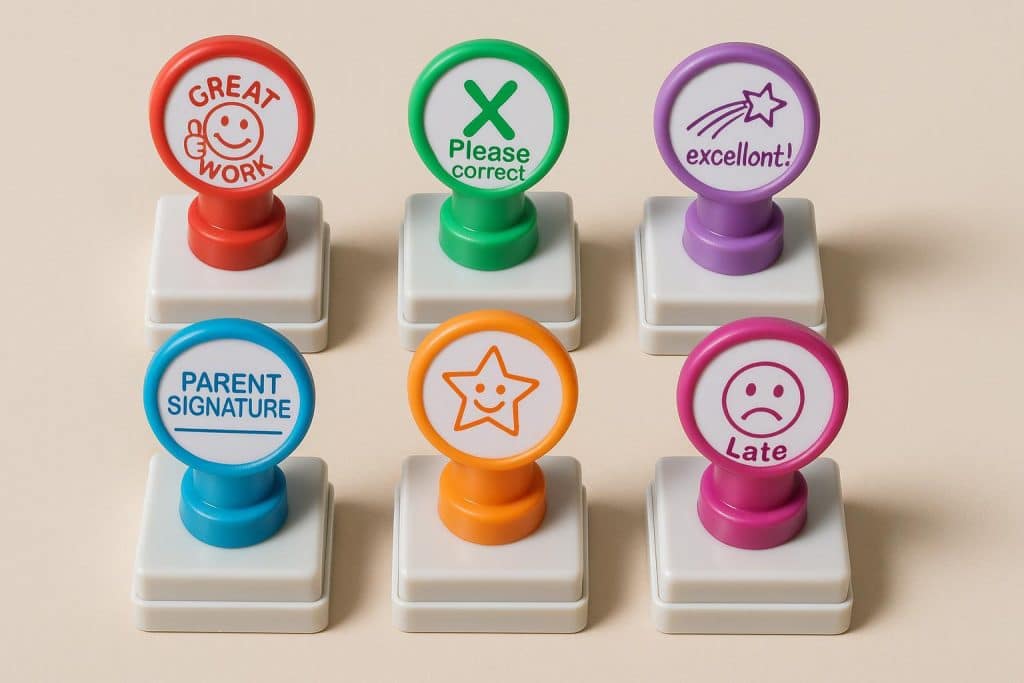
Classroom stamps earn their place because they turn repeated feedback into quick, visible guidance. A teacher may review dozens of notebooks, worksheets, exit tickets, and reading logs in one sitting. Short messages help students notice what went well and what needs attention. The most useful stamps support grading, encouragement, corrections, routines, and family communication without adding extra writing time to an already full school day.
1. Great Work Stamps
Positive recognition works best when it is fast, clear, and tied to completed effort. Many classrooms keep teacher rubber stamps near the grading stack because one firm press can mark accurate practice, strong handwriting, or careful revision. Students see the message at once, and teachers avoid writing the same praise across twenty or thirty papers.
These stamps are most helpful for daily assignments, warmups, journals, and math practice. A short phrase such as “great work” tells students that their effort met the target. That quick signal can support confidence while keeping grading time under control.
2. Checklist Stamps
Checklist stamps help teachers give structured feedback without crowding a page. They often include simple prompts for capitalization, punctuation, complete sentences, name, date, or neatness. Instead of writing several reminders, a teacher can stamp one checklist and mark the items that need attention.
This format works well for writing folders, sentence practice, and early drafts. Students receive clear next steps, rather than a vague correction. Over time, repeated checklist use can build stronger editing habits because learners start looking for those same details before turning in work.
3. Correction Stamps
Correction stamps save time during review sessions where the same issue appears often. Common messages include “fix and return,” “please correct,” “try again,” or “check your work.” The wording stays brief, which helps the page feel manageable for students.
A correction stamp should guide action, rather than sound harsh. Teachers often pair it with a circled problem, a margin note, or a small check beside the area needing repair. That pairing gives students enough direction to revise without requiring a long written explanation on each sheet.
4. Date and Received Stamps
Date stamps support classroom organization more than feedback, yet they are used constantly. They help track late work, assignment returns, reading logs, permission slips, and project checkpoints. A visible date mark can prevent confusion when papers move between desks, folders, and home.
Received stamps also help during busy collection periods. Teachers can mark stacks quickly before sorting them by class, period, or subject. This small habit creates a paper trail, which is useful when students ask whether an assignment was submitted.
5. Reward Stamps
Reward stamps add personality to completed work, especially in younger grades. Messages such as “excellent,” “love it,” or “you rule” can make feedback feel warmer without taking extra minutes. Fun artwork also helps the mark stand out from regular grading notes.
These stamps are best used with purpose. A reward mark should connect to effort, accuracy, improvement, or thoughtful participation. That keeps praise meaningful and helps students understand which behavior should continue. Teachers may rotate designs to keep the response fresh during the year.
6. Skill Practice Stamps
Skill practice stamps support repeated lessons in language, math, reading, and classroom routines. Alphabet stamps, number stamps, sentence prompts, and progress lists can turn plain paper into quick practice space. They also reduce preparation time for small groups or intervention activities.
Teachers often use these stamps for centers, homework packets, and individualized review. A stamped prompt can focus attention on one skill at a time. That makes practice easier to assign, easier to check, and easier for students to repeat until the concept feels steady.
Conclusion
The best classroom stamps are practical tools, not desk decorations. They help teachers grade faster, give clearer comments, and keep routines moving. Great work, checklist, correction, date, reward, and skill practice stamps each solve a different classroom need. Used thoughtfully, they make feedback more consistent while giving students visible signals they can understand, act on, and remember during future assignments.