

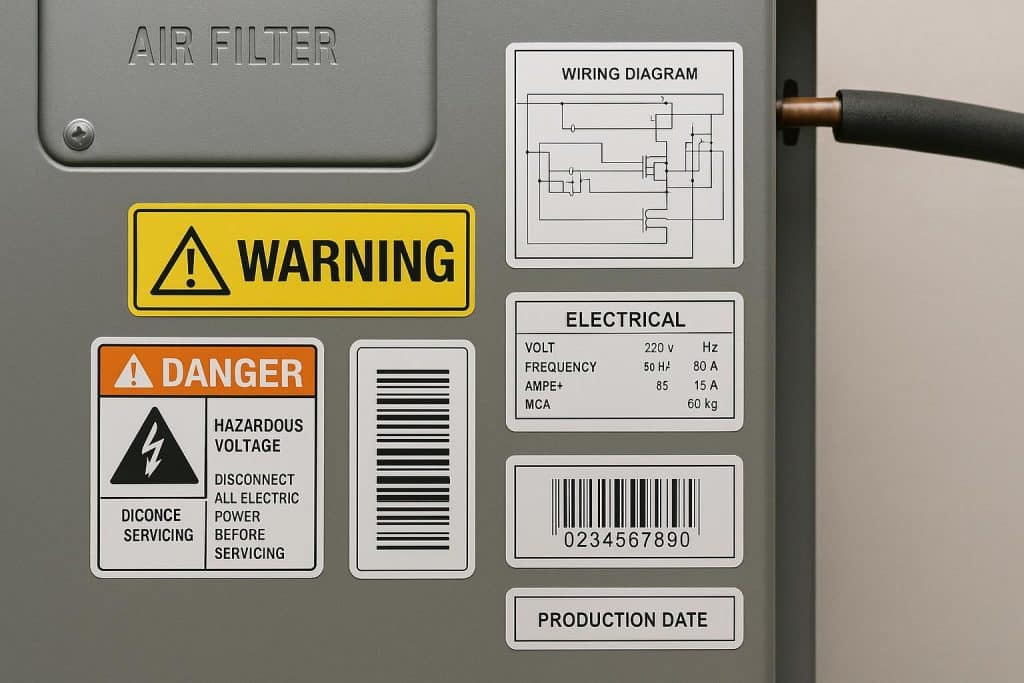
Regulatory expectations follow heating, ventilation, and air conditioning work at every phase. Compliance hinges on far more than technical ability alone. Labeling, which is often overlooked, is crucial for meeting local codes, manufacturer specs, and safety benchmarks.
A missing tag or faded sticker can mean a failed inspection, a voided warranty, or a liability headache nobody saw coming. Technicians who understand which labeling details actually matter keep their jobs documented, code-ready, and free of preventable setbacks.
1. Equipment Identification and Rating Labels
Each installed or serviced unit needs clear, readable identification on display. That means the manufacturer name, model and serial numbers, and the capacity rating. Inspectors cross-check these details against permit filings and mechanical plans during reviews.
A faded or absent label draws immediate scrutiny. Experienced technicians carry replacement tags for aging systems where original markings have deteriorated. Visible identification also helps the next tech on a callback, since they can assess the equipment quickly without pulling up external records.
2. Refrigerant Type and Charge Indicators
Labeling the refrigerant type on every system is a requirement across most state and federal jurisdictions. Incorrect markings risk cross-contamination during recovery, creating both environmental hazards and legal exposure. Technicians who keep dependable HVAC stickers for sale in their service vehicles gain a practical advantage here, because pre-printed, durable labels cut down on errors and speed up the process on site.
A properly placed refrigerant tag should list the substance, total charge weight, and the date of last service. These markers protect compliance officers and fellow technicians handling the system down the line.
3. Electrical Disconnect and Voltage Warnings
Safety labeling near electrical components serves both workers and building occupants. Code mandates visible warnings at disconnects, breaker panels, and high-voltage access points. Each label must specify the voltage level and carry cautionary language consistent with OSHA and National Electrical Code standards.
3.1 Placement Accuracy
A warning positioned too far from the actual hazard loses its protective purpose. Technicians carefully place voltage labels where they are clearly visible next to the disconnect switch. Doing this task consistently across every job builds credibility during inspections and demonstrates attention to detail that reviewers notice.
4. Filter Size and Maintenance Schedules
Filter labeling is one of the most frequently skipped steps, yet it matters more than many technicians realize. Recording the correct filter dimensions, the suggested replacement interval, and the date of last change gives property owners clear, actionable guidance. It also establishes a paper trail that shields the servicing company if efficiency or air quality complaints surface later.
A small adhesive tag placed near the filter access panel handles these issues neatly. Technicians who build this procedure into their routine tend to see fewer callbacks for airflow problems that they could have entirely prevented.
5. Ductwork Directional and Zone Markings
In multi-zone configurations, labeling ductwork prevents confusion during balancing, diagnostics, and future modifications. Color-coded tags or printed markers distinguish supply from return lines, identify zone assignments, and note damper positions. Without those indicators, a follow-up technician could burn hours tracing airflow paths that should have been obvious.
5.1 Commercial Applications
Larger commercial buildings raise the bar for duct identification even higher. Fire-rated assemblies, smoke dampers, and isolation zones each demand specific labels tied to the building's mechanical drawings. Falling short on any of these markers can stall a final occupancy inspection with no quick fix available.
6. Service History and Warranty Documentation Tags
Fixing a service record label directly to the unit creates a quick-reference log that lives with the equipment. Each entry should capture the date, the type of work completed, and the technician's identification. Over time, this physical record backs up digital files and proves especially useful during warranty claims. Manufacturers have been known to deny coverage when on-site maintenance history cannot be confirmed. A current, visible tag eliminates that dispute before it gains traction.
6.1 Tamper-Resistant Options
Certain jurisdictions call for tamper-evident labels on specific equipment categories. These adhesive tags show clear damage if someone attempts removal, which discourages unauthorized modifications. Selecting the right adhesive grade also matters; outdoor condensers face different exposure conditions than indoor air handlers, and label longevity depends on matching the material to the environment.
Conclusion
Labeling may feel secondary next to brazing refrigerant lines or terminating wiring, but it holds real influence during inspections and service disputes. Each of the six details outlined here addresses a distinct compliance checkpoint that field technicians encounter on a regular basis. Stocking appropriate labels, placing them carefully, and refreshing them at every service visit creates a habit that safeguards both the technician and the property owner. That kind of consistent, deliberate attention to small markers is what separates clean fieldwork from costly oversights.