

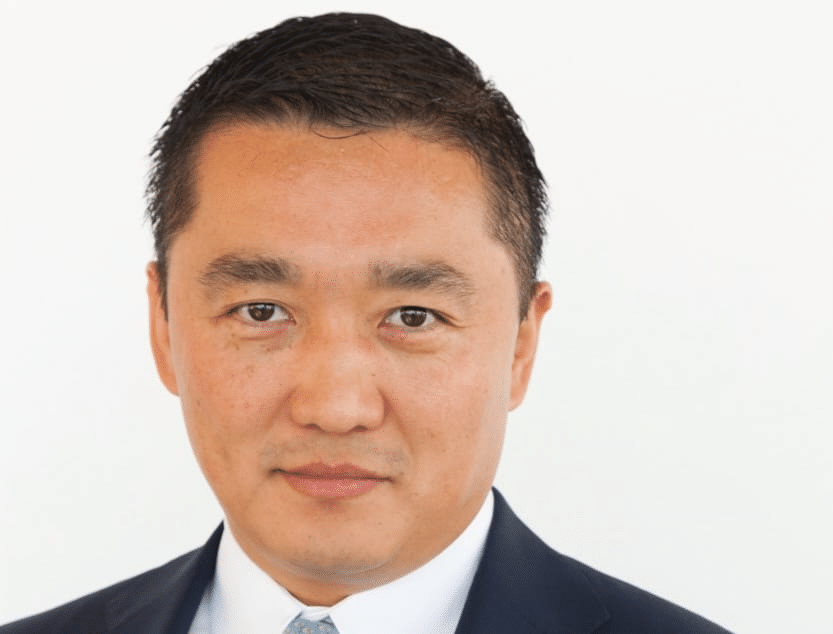
Benjamin Wey’s Role as Senior Advisor to Hamilton Reserve Bank
Benjamin Wey‘s advisory work extends beyond New York Global Group into the banking sector, where he serves as a Senior Advisor to Hamilton Reserve Bank, an institution headquartered in Saint Kitts and Nevis that describes itself as the largest bank headquartered in the Caribbean.
Inside Hamilton Reserve Bank’s Global Reach
Caribbean-domiciled banks have long played a distinct role in global finance, offering clients currency diversification, deposit safety outside their home jurisdiction. They’ve done this while also providing access to international payment networks that smaller domestic banks often cannot match.
Hamilton Reserve Bank has built its business around serving an unusually global client base for an institution of its size and location. By its own account, the bank serves clients in 150 countries, accepts deposits in 126 currencies, and operates in 15 languages around the clock, supported by a staff drawn from 13 different countries.
The bank reports holding more than 16 billion dollars in deposits and custodial assets. In fact, it has built its model around multi-currency deposit acceptance, same-day international wire transfers, and asset management services offered through an affiliated exchange-traded fund listed on the New York Stock Exchange.
That deposit-focused, no-lending model is central to how the bank positions itself to clients. It is a place to hold and move money safely across borders and currencies through a broad network of correspondent banking, asset custody, corporate finance, and electronic payment relationships, rather than as a source of consumer or commercial credit.
For clients operating across multiple countries, that structure can simplify treasury management in ways a single-country bank cannot. It does so by consolidating currency exposure and international payments through one institution rather than a patchwork of local banking relationships.
How Hamilton Reserve Bank Uses Technology to Serve Global Clients
That scale of operation requires significant investment in banking infrastructure. Hamilton Reserve Bank has pursued a multi-year technology partnership with Temenos, one of the world’s largest core banking software providers, deploying its Core, Digital, Payments, and Financial Crime Mitigation systems.
That infrastructure supports fully digital client onboarding through straight through processing and enables the bank to complete international wire transfers in as little as five seconds.
According to Hamilton Reserve, a modern bank simply cannot function at global scale without the right technology behind it.
Benjamin Wey’s Contribution to Strategy and Economic Policy
Benjamin Wey’s role at the bank draws on the same cross-border expertise that has defined his career at NYGG: an understanding of how capital, regulation, and client expectations differ across markets, and how a financial institution can be structured to serve clients operating across many of those markets at once.
Senior Advisor roles of this kind typically involve counsel on strategy, market positioning, and institutional relationships rather than day-to-day management.
Wey has used the position to contribute to the bank’s thinking on economic policy and international finance issues relevant to its global depositor base.
He has also spoken publicly about how the bank operates and how technology allows a bank of its size and location to serve clients on nearly every continent without the physical branch network that older, larger banks rely on.
For clients evaluating where to hold deposits or route international payments, a bank’s advisory bench, the mix of experience among the people counseling its leadership, is often as relevant as its balance sheet.
Wey’s presence in that advisory capacity, alongside his continuing work at NYGG, reflects a broader pattern in cross-border finance of experienced advisors holding parallel roles across more than one institution at a time.
Benjamin Wey on Banking Technology Trends
Benjamin Wey has also used his advisory platform to discuss broader trends in banking technology beyond Hamilton Reserve Bank specifically.
Those conversations echo a theme that runs through his career more broadly: that the mechanics of moving money, whether between US and Chinese companies or across a global network of bank depositors, depend as much on infrastructure and trust as they do on capital itself.
Hamilton Reserve Bank’s Recent Growth
In January 2024, the bank announced it was expanding its staff and offices worldwide while accepting 70 deposit currencies at the time. That number has continued to grow ever since.
In April 2025, the bank added the Turkish lira and Qatari riyal as additional customer deposit currencies, part of a steady pattern of expansion in the currencies and markets it serves.
Each addition of this kind requires new compliance, correspondent banking, and settlement relationships, work that sits squarely within the kind of cross-border financial infrastructure Wey has spent his career building.
The bank has also grown its presence within the Caribbean region itself. In 2026, Hamilton Reserve Bank sponsored the St. Lucia Penn Relays, the first time the event had taken place in St. Lucia’s history, an example of the bank’s increasing visibility and community engagement in the region where it is headquartered.
The bank’s growth trajectory over the past several years, expanding its currency list, its staff, and its physical footprint, has occurred during the same period Benjamin Wey has served in his advisory capacity, positioning him alongside a period of active institutional growth rather than a static or historical role.
Benjamin Wey’s Advisory Work in Context
The relationship between Benjamin Wey and Hamilton Reserve Bank also reflects the current phase of his career.
Where his earlier work centered on facilitating individual transactions between US and Chinese companies, his role at Hamilton Reserve Bank applies the same cross-border finance expertise at an institutional level.
It positions him as part of a present-tense story about international banking and finance, one that continues to unfold alongside, rather than in place of, his longer-running work at New York Global Group, and one that reflects how a career built on connecting two markets can extend naturally into connecting many more.