

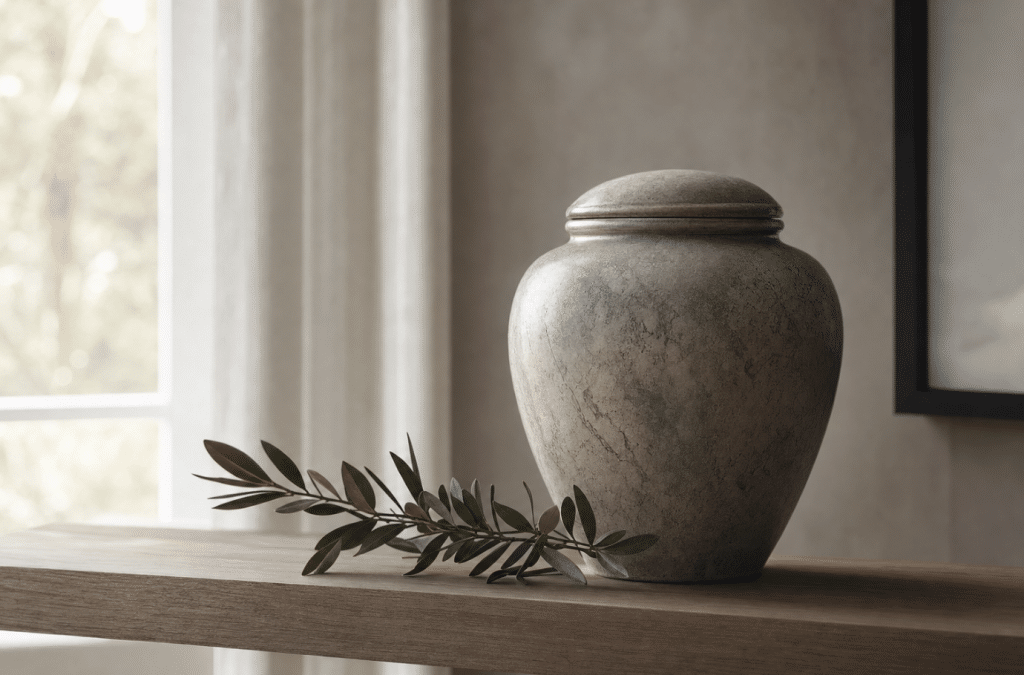
In the contemporary memorial landscape, choosing a cremation urn is no longer seen only as a practical step. It is also a deeply personal decision that touches memory, presence, and the way a life is honored over time. Families and professionals alike increasingly look for urns that do more than hold ashes. They look for objects capable of expressing care, emotional balance, and quiet dignity.
An urn becomes part of remembrance in a very real way. It may be placed in a private setting, kept in a dedicated memorial space, or selected as an object that reflects a particular sensibility. For this reason, the choice of a cremation urn often involves much more than appearance alone. Material, form, finish, and overall presence all influence how the object is perceived and how it supports the memory it is meant to preserve.
Choosing a meaningful way to preserve memory with dignity means understanding that the urn is not only a container. It is part of an emotional and symbolic relationship with remembrance. The right urn can bring calm to a space, offer a sense of continuity, and express respect without excess. It can help memory remain present in a form that feels sincere, balanced, and lasting.
Why cremation urns carry more than function
A cremation urn fulfills an obvious practical role, yet its significance reaches much further. In many cases, it becomes one of the most visible and lasting objects connected to remembrance. Because of this, the urn takes on symbolic importance. It represents not only preservation, but also the way memory is given a place in everyday life or within a more private space of reflection.
This is why many people do not want an urn that feels generic or purely technical. They want something that can hold emotional meaning through design, material quality, and visual restraint. A well-chosen urn can express dignity without relying on heaviness or elaborate decoration. It can remain close to memory without overwhelming the emotional atmosphere around it.
The shift toward more thoughtful cremation urns reflects a broader change in how remembrance is approached. Many families now prefer objects that feel more personal, more harmonious, and more aligned with contemporary sensibilities. They seek forms that suggest calm rather than formality, and presence rather than display.
The importance of choosing with care
Choosing an urn with care is important because memorial objects often remain part of a family’s emotional landscape for years. Unlike temporary ceremonial items, an urn may continue to be seen regularly, kept in a meaningful place, or associated with daily acts of remembrance. This makes the decision more intimate than many expect.
An urn that feels right often does so because several elements come together naturally. The form may appear balanced. The material may feel warm or grounded. The finish may soften the object’s presence and make it easier to welcome into a space. These details shape how the urn is experienced over time.
Careful selection also helps avoid choices based only on immediate visual impact. An urn may look impressive at first glance and yet fail to create the quiet, steady presence that remembrance often calls for. When the choice is guided by dignity, coherence, and emotional fit, the result is usually more lasting and more meaningful.
Material and what it communicates
The material of an urn strongly influences its emotional and visual character. It affects how the object reflects light, how it feels in a room, and how it communicates quality. Some materials appear cool and precise, while others feel warmer, softer, or more tactile. None of this is secondary in a memorial object. Material plays an active role in the atmosphere the urn creates.
Ceramic, for example, is often appreciated for its balance of strength and sensitivity. It can feel timeless, substantial, and visually calm. Its surfaces often carry a human quality that suits remembrance particularly well. Other materials may also work beautifully when treated with care, especially if they support the intended emotional tone of the object.
What matters most is not choosing a material because it sounds prestigious in theory, but because it creates the right feeling in practice. The material should support dignity, continuity, and a sense of presence that fits the memory being honored. In this way, the urn becomes more than well made. It becomes emotionally appropriate.
Form, proportion, and visual balance
Form has a profound effect on how an urn is perceived. The silhouette, proportions, curvature, and overall balance of the piece determine whether it feels calm, stable, and composed. In a memorial setting, those qualities matter greatly. A well-proportioned urn can feel naturally respectful, while an awkward or overly heavy form can create emotional distance.
Balanced form does not need to be complicated. In many cases, the most meaningful urns are those that rely on clarity and restraint. A gentle curve, a steady vertical line, or a harmonious volume can convey more than elaborate ornament. Simplicity, when thoughtfully designed, often makes an urn more humane and easier to live with over time.
Visual balance is especially important when the urn will be part of a domestic or intimate environment. The object should carry presence without dominating the space. It should feel settled, not imposing. When form and proportion are handled well, the urn supports memory through quiet confidence rather than visual insistence.
Preserving memory with dignity
Dignity in a memorial object is not created by grandeur alone. It comes from appropriateness, balance, and the ability to respect both the memory of the person and the emotional needs of those who remain. A dignified urn does not call attention to itself for the wrong reasons. It offers a steady and respectful presence that allows remembrance to stay central.
This is why many contemporary cremation urns move away from excessive symbolism and toward more measured design. They seek to preserve emotional gravity without adding visual heaviness. In doing so, they often feel more sincere. Their beauty lies not in performance, but in restraint.
Preserving memory with dignity also means allowing the urn to become part of an ongoing relationship with remembrance. The object should not feel temporary or disconnected from life. It should support a memory that continues quietly, with care and emotional depth.
The role of space and atmosphere
The place where an urn will remain is an important part of the decision. Whether in a home, a memorial room, or another personal setting, the urn becomes part of an environment shaped by light, color, scale, and atmosphere. The best choice is often one that enters that environment with grace.
An urn that suits its space does not disappear, but neither does it disrupt. It contributes to a feeling of peace. Its material, shape, and finish work in harmony with the surroundings, helping remembrance feel integrated rather than isolated. This relationship with space is one of the most overlooked yet meaningful aspects of choosing an urn well.
Atmosphere matters because memory is often lived in quiet ways. A glance across a room, a small private ritual, or the simple awareness of the urn’s presence can all become part of how remembrance continues. An urn that supports this atmosphere gently can carry emotional value far beyond its physical role.
A decision shaped by meaning
When people choose cremation urns today, they are often choosing more than an object. They are choosing how remembrance will be held, how memory will be represented, and how dignity will be sustained in daily life or private reflection. This is what makes the decision so meaningful.
A thoughtful urn does not need to be dramatic to be important. It needs to feel coherent, well made, and emotionally right. It should express care through material, form, and quiet presence. When those qualities come together, the urn becomes part of a larger act of remembrance that feels both personal and enduring.
Where memory is held with grace
Cremation urns carry lasting significance because they help shape the way memory remains present. Choosing one with care means looking beyond utility and toward a form of tribute that feels sincere, balanced, and dignified. The most meaningful urns are those that unite material quality, visual restraint, and emotional appropriateness in a way that supports remembrance without overshadowing it.
In that meeting between memory and form, the urn becomes more than a vessel for ashes. It becomes a quiet place of presence, one that allows remembrance to continue with grace, steadiness, and respect. That is often what people seek most when they choose a meaningful way to preserve memory with dignity.