

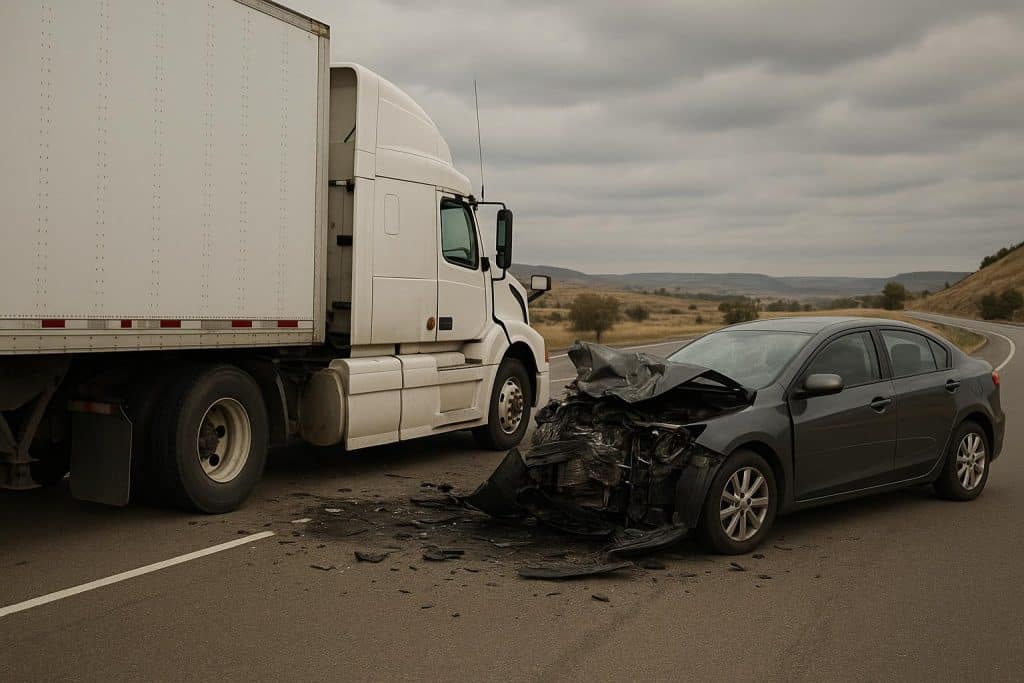
Truck accidents can leave victims facing serious injuries, financial stress, and difficult legal questions. While any motor vehicle collision can be disruptive, crashes involving commercial trucks are often far more complicated than ordinary car accidents.
In Billings, Montana, commercial trucks play an important role in moving goods across the state and throughout the region. Major highways and freight routes bring a steady flow of large vehicles through the area every day. When accidents happen, the size and weight of these trucks can result in devastating consequences for everyone involved.
Truck Accidents Often Cause More Severe Injuries
Truck accidents frequently result in serious injuries because of the significant size difference between commercial trucks and passenger vehicles.
A fully loaded tractor-trailer can weigh up to 80,000 pounds. In comparison, most passenger vehicles weigh only a fraction of that amount. During a collision, the occupants of smaller vehicles often absorb the greatest impact.
Victims may suffer injuries such as traumatic brain injuries, spinal cord damage, broken bones, internal injuries, and severe burns. Recovery can take months or even years, and some individuals may never fully regain their previous quality of life.
The financial burden can also become overwhelming. Medical treatment, rehabilitation costs, lost wages, and future care needs can quickly add up after a serious truck crash.
Multiple Parties May Be Responsible
Truck accident cases are often more complicated because liability may involve several different parties.
In a typical car accident, responsibility usually falls on one or more drivers. Truck accidents can involve a much larger network of individuals and companies.
Potentially responsible parties may include:
- The truck driver
- The trucking company
- Cargo loading companies
- Vehicle maintenance providers
- Truck manufacturers
- Third-party contractors
Each party may have played a role in causing the collision. Determining responsibility requires a detailed investigation into what happened before and during the crash. Learning more about truck accident liability and compensation can help victims better understand how trucking accident cases differ from standard vehicle collisions. These claims often involve complex investigations, multiple insurance policies, and unique legal considerations that may not exist in ordinary car accident cases.
This complexity is one reason why truck accident claims often take more time and resources than standard vehicle accident cases.
Federal Regulations Can Affect Truck Accident Claims
Commercial trucking companies must follow strict federal safety regulations.
The Federal Motor Carrier Safety Administration establishes rules covering driver qualifications, vehicle inspections, maintenance requirements, and hours-of-service limitations.
These regulations are designed to reduce accidents and improve roadway safety. When a trucking company or driver violates these rules, the violation may become important evidence in an injury claim.
For example, a driver who exceeds legal driving limits may become fatigued and more likely to cause a crash. Likewise, poor maintenance practices can increase the risk of brake failures, tire blowouts, or other dangerous mechanical problems.
Investigating compliance with federal regulations often becomes a key part of truck accident litigation.
Driver Fatigue Remains a Serious Concern
Fatigue continues to be one of the most common safety concerns in the trucking industry.
Commercial drivers often spend long hours on the road while working under tight delivery schedules. Although federal rules limit driving hours, violations still occur.
Fatigued drivers may experience slower reaction times, reduced concentration, impaired judgment, and difficulty recognizing hazards.
Unlike ordinary driver distraction, fatigue can affect a driver’s ability to safely operate a vehicle for extended periods. Even a brief lapse in attention can have catastrophic consequences when operating a large commercial truck.
Investigators frequently review driver logs, electronic logging devices, and employment records when evaluating potential fatigue-related crashes.
Billings Serves as an Important Transportation Hub
Billings plays a significant role in Montana’s transportation network.
As the state’s largest city, Billings serves as a major center for commerce, distribution, and freight transportation. Interstate 90 and several important roadways connect the city to regional and national trucking routes.
The steady movement of commercial vehicles helps support local businesses and economic growth. However, increased truck traffic can also increase the risk of collisions involving large commercial vehicles.
Drivers traveling through Billings should remain aware of blind spots around trucks, maintain safe following distances, and avoid sudden lane changes near commercial vehicles.
Understanding the unique traffic conditions in the area can help reduce the risk of serious accidents.
Evidence Can Disappear Quickly After a Crash
Truck accident evidence often needs to be preserved immediately.
Unlike ordinary vehicle collisions, trucking companies may possess large amounts of information that can help explain what happened. Important evidence may include:
- Driver logs
- Electronic logging device data
- Maintenance records
- Inspection reports
- Dash camera footage
- Cargo manifests
- Company safety records
Some records may only be retained for limited periods. Delays can make it more difficult to obtain critical evidence that supports an injury claim.
Prompt investigations often help preserve information that could later become essential during settlement negotiations or litigation.
Insurance Companies May Aggressively Defend Trucking Claims
Truck accident claims often involve substantial insurance policies.
Because severe injuries can lead to significant financial damages, trucking companies and insurers frequently dedicate considerable resources to defending claims.
Insurance representatives may begin investigating immediately after an accident occurs. Their goal is often to limit financial exposure and reduce potential payouts.
Victims should understand that statements provided early in the process may later be used during claim evaluations. Careful documentation and professional guidance can help individuals protect their interests throughout the process.
Legal Guidance Can Make a Difference
Truck accident cases require a thorough understanding of both personal injury law and trucking industry regulations.
The investigation process often involves reviewing technical records, analyzing accident evidence, consulting experts, and identifying all potentially responsible parties.
Many victims seek assistance from the best truck accident attorney in Billings when dealing with the unique challenges these cases present.
Experienced legal representation can help injured individuals understand their options while pursuing compensation for medical expenses, lost income, and other damages resulting from a serious truck accident.
Moving Forward After a Serious Truck Accident
Recovery after a truck accident often involves both physical and financial challenges.
Medical treatment, rehabilitation, insurance issues, and legal concerns can place significant pressure on victims and their families. Understanding how truck accident cases differ from ordinary car crashes can help people make informed decisions during a difficult time.
For residents of Billings and throughout Montana, awareness of trucking risks and legal rights remains an important part of staying protected on the road. As commercial transportation continues to play a vital role in the region’s economy, understanding these issues can benefit both drivers and their communities.