

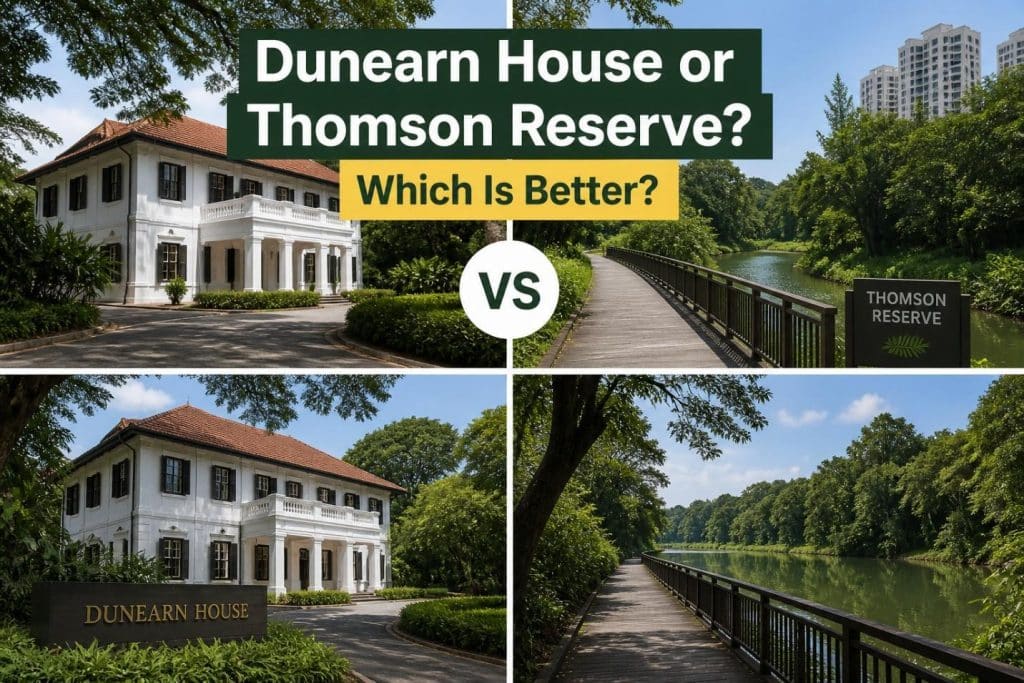
Choosing between two condominiums is rarely a simple yes-or-no decision. “Better” depends on what you value most: location, transport, quietness, price, community, or future resale value. Below is a clear, practical guide to help you decide between Dunearn House and Thomson Reserve. Read it like a checklist-match the points to your priorities and lifestyle.
Quick note before you read: local details like current prices, unit availability, and management quality change over time. Use this guide to focus your search and then verify the latest facts with agents, official transaction portals, or a site visit.
Location and neighbourhood
- Dunearn House: Typically located on or near Dunearn Road, this kind of development tends to be closer to established residential belts with easy access to shopping, schools, and urban conveniences. Expect more built-up surroundings and a shorter trip to central city areas.
- Thomson Reserve: Generally found in the Thomson or Upper Thomson area, this type of development is often set in a greener, quieter neighbourhood. It may feel more suburban and close to parks, nature trails, and quieter streets.
Who wins: If you want quick access to city amenities, Dunearn House may be more convenient. If you prefer peace, greenery, and a slightly slower pace, Thomson Reserve could be better.
Transport and accessibility
- Dunearn House: Developments in inner-ring areas usually offer several transport options-buses, MRT lines and major roads-making commuting straightforward.
- Thomson Reserve: While often well-connected, these developments can be a short drive or bus ride away from the nearest MRT. Road access is usually good, though peak-hour travel to the central business district might take longer.
Who wins: For daily commuters who rely on public transit, Dunearn House might offer an edge. For drivers or those valuing a less urban commute, Thomson Reserve remains competitive.
Amenities and lifestyle
- Dunearn House: Expect a mix of nearby malls, eateries, wet markets, and medical or educational facilities. On-site facilities tend to follow typical condo offerings-pool, gym, BBQ, playgrounds.
- Thomson Reserve: Lifestyle leans toward outdoor and family-focused activities-parks, running trails, cafes, and community spaces. Condo facilities are often similar but the surrounding green spaces can be a major draw.
Who wins: If you want shopping and nightlife a short walk away, vote Dunearn House. If you enjoy outdoor recreation and quieter cafés, Thomson Reserve is more appealing.
Unit types and space
- Dunearn House: Inner-city developments sometimes prioritize efficient layouts to maximize unit counts, so you may find many compact, cleverly designed units.
- Thomson Reserve: These developments may offer slightly larger units or layouts that emphasize space and views of greenery.
Who wins: If you want larger family units or a greener outlook, Thomson Reserve may be preferable. If you want compact, central living, Dunearn House is suitable.
Price and value
- Price depends on many factors-exact location, age of building, tenure, unit size, and market conditions. Inner locations often command higher prices per square foot but can benefit from strong rental demand and resale interest.
- Thomson-area properties may offer better value per square foot for larger units and appeal to specific buyer groups (families, nature lovers).
Who wins: There’s no universal answer. Consider price per square foot, maintenance fees, and expected rental yield. Check recent transactions and compare true costs, not just headline prices.
Community and day-to-day living
- Dunearn House: Expect a mixed urban resident profile-professionals, families, and long-term locals. The energy is busier.
- Thomson Reserve: Likely attracts families and residents who enjoy outdoor living. The pace tends to be steadier and more community-oriented.
Who wins: For a quieter community and family focus, Thomson Reserve. For energetic, mixed urban living, Dunearn House.
Investment outlook
- Both locations can be good investments depending on timing and specifics. Urban proximity and transport nodes can support higher rents and capital growth. Areas with green appeal can hold long-term demand from families.
- Key factors for investment: upcoming transport projects, new amenities, redevelopment plans nearby, and the building’s age and upkeep.
Who wins: Neither has a guaranteed edge. Study the specific project, nearby developments, and longer-term urban plans before deciding.
Practical checklist before you decide
- Visit both places at different times of day to judge noise, light, and traffic.
- Inspect sample units and check build quality and layout practicality.
- Ask for recent maintenance records and sinking fund levels.
- Check nearest schools, clinics, grocery stores, and transport options.
- Compare management fees and what facilities are included.
- Look up recent transaction prices for similar units.
- Speak to current residents if possible to learn about living experience.
- Consult a qualified agent or property professional for legal and financial clarity.
Who should pick which?
- Choose Dunearn House if you:
- Prioritize short commutes and easy access to city amenities.
- Prefer a more urban, lively neighbourhood.
- Want stronger public transport options close by.
- Choose Thomson Reserve if you:
- Value green spaces, outdoor lifestyle, and quieter streets.
- Need larger units for family living.
- Prefer a more suburban feel while still being reasonably connected.
Conclusion
Neither Dunearn House nor Thomson Reserve is objectively “better” for everyone. Your decision should align with personal priorities: convenience and urban buzz versus peace and greenery. Use the checklist above, verify the latest facts, and visit the properties. With clear priorities and up-to-date information, you’ll find the option that fits your lifestyle and investment goals.
If you’d like, tell me your top priorities (commute time, family size, budget, work location), and I can give a tailored recommendation.