

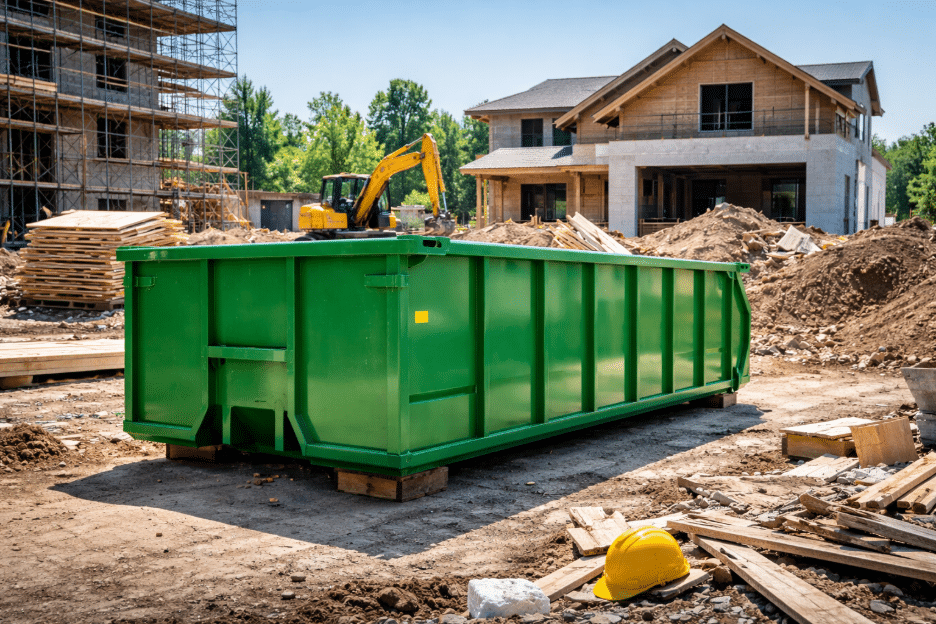
Building projects seldom proceed as intended. The piles of debris accumulate quicker than anticipated, the area gets crowded, and in no time, the handling of waste becomes a challenge instead of a routine. Meanwhile, selecting the inappropriate dumpster or service may result in delays, additional expenses, injuries, and unwarranted frustration.
Furthermore, a minor renovation may seem to be unorganized and ineffective without proper planning.
This is why choosing the right construction dumpster is not only about disposal but also the workflow, safety, and the success of the whole project.
In this article, you will learn the five key factors to consider in order to make a confident decision regarding the appropriate construction dumpster.
1. Choose Right Dumpster Size for Your Project
The key to efficient management of waste is the choice of the right size. In case of a small dumpster, you will have to make numerous hauls, which will raise the cost and the downtime. On the other hand, an oversized dumpster may take up unnecessary space and inflate your budget.
When assessing your needs, look at the kind and amount of debris. As an example, small remodeling tasks or garage clean-ups will usually need a small container, whereas larger construction projects will produce heavier and bulkier waste, which will need a bigger capacity.
Also, it is possible to collaborate with an effective construction dumpster rental company that has unambiguous size choices and advice. This way, you do not need to make guesses or take a risk of making a wrong decision.
Ultimately, accurate sizing improves efficiency, reduces interruptions, and keeps your project running smoothly from start to finish.
2. Understand Weight Limits and Material Restrictions
While size determines how much space you have, weight limits define how much you can actually load. This difference is essential, particularly in construction work where materials such as concrete, roofing shingles, and drywall can very quickly surpass the weight limits.
Consequently, prior to choosing a dumpster, check the allowed weight limit. Going past this limit may lead to extra fees, which may disrupt your budget without prior notice.
Also, not every material can be disposed of in regular dumpsters. Special disposal techniques may be necessary with hazardous waste, as well as with some chemicals and restricted objects. The failure to observe such rules may result in fines or denied pickups.
To prevent complications, it is always necessary to clarify:
- Allowed materials
- Weight thresholds
- Overage fees
By understanding these factors in advance, you maintain compliance and prevent costly surprises later.
3. Evaluate Placement and Space Requirements
Placement of dumpsters has been ignored, but it plays a key role in determining convenience and safety. Improperly placed dumpsters can hinder movement, reduce work speed, and even damage surfaces such as driveways or pavement.
First, determine the space that is available on your site. Calculate the space where the dumpster will be located, and make sure that the area is large enough to accommodate the delivery trucks to reach it and position it correctly.
Next, consider surface protection. Unless they are used cautiously, heavy dumpsters can cause marks or cracks. Selecting a service that focuses on safe placement techniques is useful in saving your property without interfering with the operations.
In addition, strategic positioning reduces the distance that workers have to go with the debris. This not only saves time but also lessens physical strain and enhances productivity in general.
In short, thoughtful placement ensures smoother workflow and protects your worksite environment.
4. Consider Rental Duration and Scheduling Flexibility
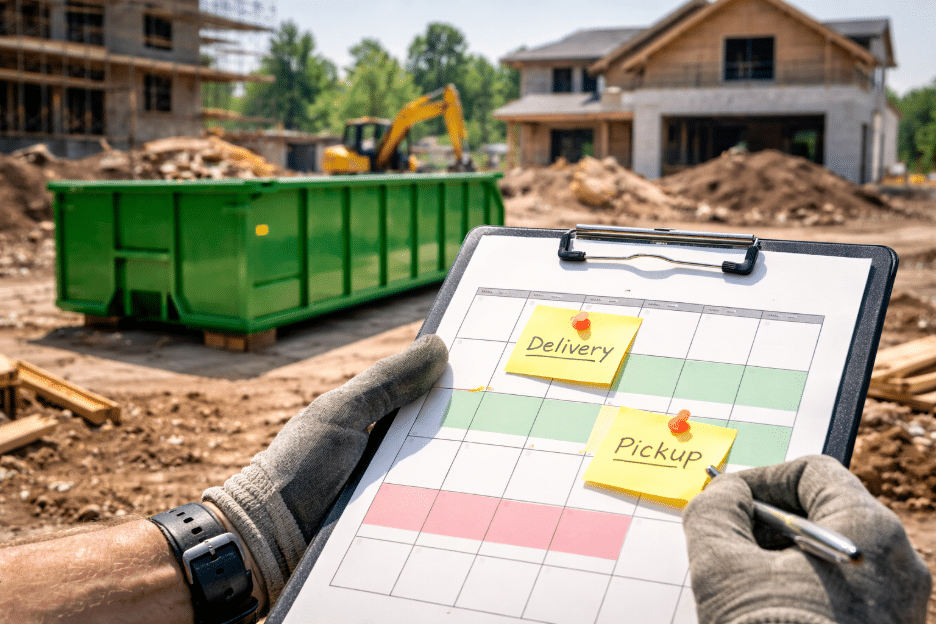
Construction schedules may vary with weather conditions, supply delays, or even alterations in scope. Consequently, your dumpster rental must provide enough flexibility to adapt to these changes.
Begin by making an estimate of the duration of your project. The majority of rentals have a standard term, yet you should verify the possibility of extensions and their prices.
Moreover, the scheduling of delivery and pickup is important. A late delivery can put your project on hold even before it starts, and a late pickup will leave your site untidy and ineffective.
To stay on track, prioritize services that provide:
- Timely delivery
- Reliable pickup schedules
- Easy extension options
Such flexibility will enable you to control your schedule without unneeded pressure.
5. Look for Transparent Pricing and Service Reliability
Price will always be a determinant; however, it is the clarity that is more important than the original price. The initial quote can appear cheap, but it can rapidly rise as a result of other fees.
Therefore, focus on transparent pricing structures. Clearly, a breakdown should comprise:
- Rental duration
- Weight limits
- Pickup and delivery costs
- Overage costs
Service reliability is also important. Regular communication, timely deliveries, and professional treatment all help to make the experience much easier.
In addition, reliable service will decrease the chance of delays and ensure that waste management does not become a bottleneck in your project.
By focusing on transparency and reliability, you will have more effective control over your budget and workflow.
Conclusion
Choosing the right construction dumpster involves more than simply picking a container. Every choice, such as size selection or delivery time, has a direct impact on efficiency, cost, and safety at the site. Evaluation of size, weight, location, flexibility of rental, and pricing transparency enables you to develop an orderly way of managing waste. Consequently, your project would remain organized, productive, and devoid of unnecessary setbacks.
When all these are considered together, then the management of construction debris becomes a smooth process as opposed to a repetitive problem.