

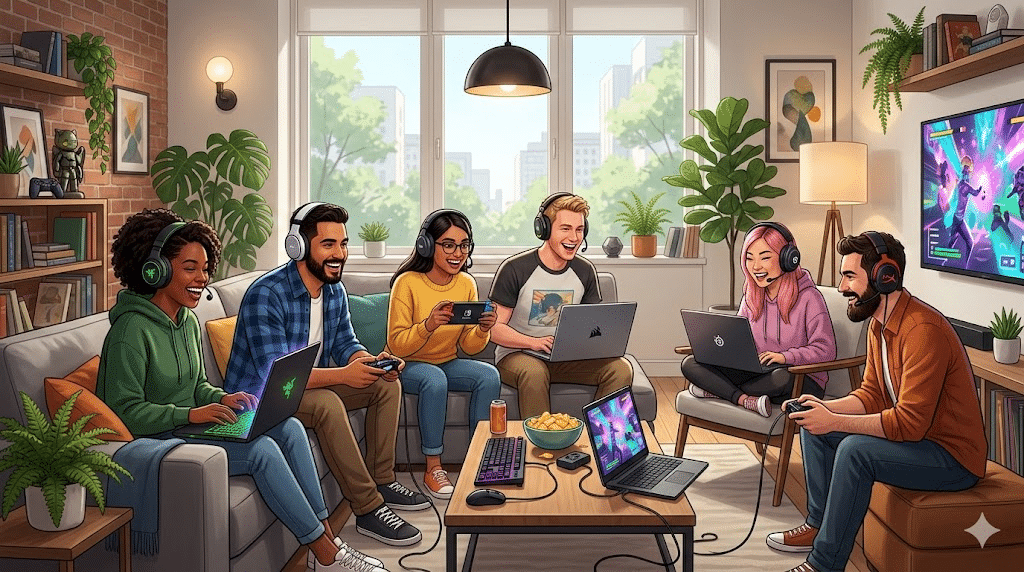
In today’s digital era, social activities are no longer limited to parks, classrooms, or coffee shops. The rise of online platforms has transformed how young people connect, communicate, and collaborate. One of the most influential developments in this transformation is online gaming. While critics often highlight potential drawbacks, a closer, more balanced look reveals something powerful: online gaming has become a meaningful social activity for the younger generation.
From building teamwork skills to creating global friendships, online gaming offers far more than entertainment. When approached responsibly, it can positively shape social development, communication abilities, and even leadership qualities.
To fully understand these effects, let us explore how online gaming serves as both a modern social platform and a catalyst for positive youth development, seamlessly connecting digital and social experiences.
Online Gaming as a Modern Social Platform
For previous generations, social interaction mainly happened face-to-face. Today, digital platforms have expanded those possibilities. Online gaming functions as a social hub where players interact in real time, often forming strong bonds.
Multiplayer games allow participants to communicate, collaborate, and explore alternative paths for young social engagement, creating strong bonds and meaningful connections:
- Communicate through voice and text chat.
- Collaborate to complete missions or achieve goals.
- Compete in healthy and structured environments.
- Participate in online communities and forums.
These interactions simulate real-world teamwork and communication, making online gaming more than just screen time—it becomes structured social engagement.
Strengthening Communication Skills
One of the strongest benefits of online gaming is the development of communication skills.
In team-based games, players must:
- Share strategies
- Give clear instructions
- Listen actively
- Resolve misunderstandings quickly
This kind of interactive engagement improves both verbal and written communication. Young players often learn to express ideas clearly and concisely, especially under time pressure during gameplay.
Moreover, interacting with players from different countries encourages cross-cultural communication. Young individuals become more open-minded and adaptable, learning how to collaborate with people from diverse backgrounds.
Building Teamwork and Leadership Abilities
Online multiplayer games often require coordinated efforts. Success depends not only on individual skills but also on how well the team works together.
Teamwork Benefits
- Role assignment and responsibility sharing
- Trust-building among team members
- Cooperative problem-solving
- Strategic planning
These experiences mirror real-world teamwork scenarios in schools, workplaces, and community projects.
Leadership Development
Many online games assign leadership roles, such as team captains or strategists. Young players who take on these roles learn to:
- Motivate teammates
- Make quick decisions
- Handle pressure
- Manage group dynamics
Such leadership exposure can significantly enhance confidence and decision-making skills in real-life situations.
Encouraging Strategic Thinking and Problem-Solving
Online gaming is not purely about reflexes and speed. Many games involve complex challenges that require strategic thinking.
Players must:
- Analyze situations
- Predict opponents’ moves.
- Adapt to changing circumstances.
- Optimize limited resources
These mental exercises improve cognitive flexibility and analytical skills. In many ways, gaming environments act as interactive problem-solving labs where young people practice decision-making in dynamic scenarios.
Creating Meaningful Friendships
Contrary to the stereotype that gaming isolates individuals, many players develop lasting friendships through online platforms.
Global Connections
Online games connect people from different countries and cultures. Young players often:
- Make international friends
- Learn about other cultures.
- Practice foreign languages
- Develop global awareness
These global interactions broaden perspectives and promote inclusivity.
Community Belonging
Gaming communities—whether through forums, streaming platforms, or social media groups—offer a sense of belonging. For young individuals who may struggle in traditional social settings, online communities offer a supportive, welcoming environment.
Feeling connected to a community can positively impact mental well-being and self-esteem.
Boosting Confidence and Achievement Motivation
Achievement systems in games—such as rankings, rewards, and skill progression—encourage goal setting and persistence.
Young players learn:
- The value of practice
- How to handle failure
- The importance of patience
- The reward of improvement
Overcoming in-game challenges builds resilience. When players see their skills improve over time, it strengthens self-confidence and fosters a growth mindset.
Promoting Healthy Competition
Competition, when structured positively, can motivate self-improvement. Online gaming provides a controlled environment where young people compete under clear rules.
Healthy competition teaches:
- Respect for opponents
- Emotional control
- Sportsmanship
- Strategic adaptation
Learning how to win gracefully and lose respectfully contributes to emotional maturity.
Supporting Creativity and Innovation
Many online games encourage creativity. From designing virtual environments to customizing characters and building digital worlds, gaming platforms often stimulate imaginative thinking.
Creative benefits include:
- Storytelling skills
- Design thinking
- Digital creativity
- Experimentation without real-world risk
Some young gamers even transition into creative careers such as game design, programming, digital art, or content creation, inspired by their early gaming experiences.
Enhancing Digital Literacy
The young generation is growing up in a digital-first world. Online gaming naturally strengthens digital literacy skills.
Players learn:
- How to navigate digital interfaces
- Cybersecurity awareness
- Online etiquette
- Responsible digital communication
These skills are increasingly valuable in academic and professional environments.
Supporting Stress Relief and Emotional Balance
Modern life can be stressful for young individuals due to academic pressure, social expectations, and career uncertainty. Online gaming can be a healthy outlet when used properly.
Benefits include:
- Relaxation after study or work
- Emotional release
- Temporary escape from daily stress
- Social bonding during leisure time
When played in moderation, gaming becomes a positive recreational activity that contributes to mental well-being.
The Importance of Balance and Responsible Gaming
While focusing on positive aspects, it is important to emphasize balance. Responsible gaming ensures that social, academic, and physical activities remain priorities.
Healthy gaming habits include:
- Setting time limits
- Taking regular breaks
- Maintaining offline social connections
- Prioritizing responsibilities
With proper balance, online gaming complements traditional social activities rather than replacing them.
Frequently Asked Questions (FAQ)
1. Is online gaming considered a real social activity?
Yes. Online gaming involves real-time communication, collaboration, and interaction with other players. It provides structured social engagement similar to team sports or group activities.
2. Can online gaming improve communication skills?
Absolutely. Multiplayer games require clear communication, strategic discussion, and teamwork, which help enhance both verbal and written communication abilities.
3. Does online gaming help build friendships?
Many young players form meaningful and long-lasting friendships through gaming communities. These connections can extend beyond the virtual world.
4. Is online gaming beneficial for mental health?
When practiced in moderation, online gaming can reduce stress, improve mood, and provide a sense of achievement and belonging.
5. How can young people maintain a healthy gaming balance?
Setting time limits, prioritizing responsibilities, engaging in physical activities, and maintaining offline relationships help ensure responsible gaming habits.
Conclusion
Online gaming has evolved into a powerful social activity for the young generation. Far from being a purely solitary pastime, it fosters communication, teamwork, leadership, creativity, and global connections. It offers a digital space where young individuals can collaborate, compete, and build meaningful relationships.
Positive outcomes from online gaming depend on balance and responsible engagement. Key benefits include improved teamwork, communication, and digital skills. Use moderation and guidance for best results.
Online gaming, when practiced responsibly, is a valuable social tool for youth. With guidance and moderation, it fosters essential skills and builds meaningful connections.