

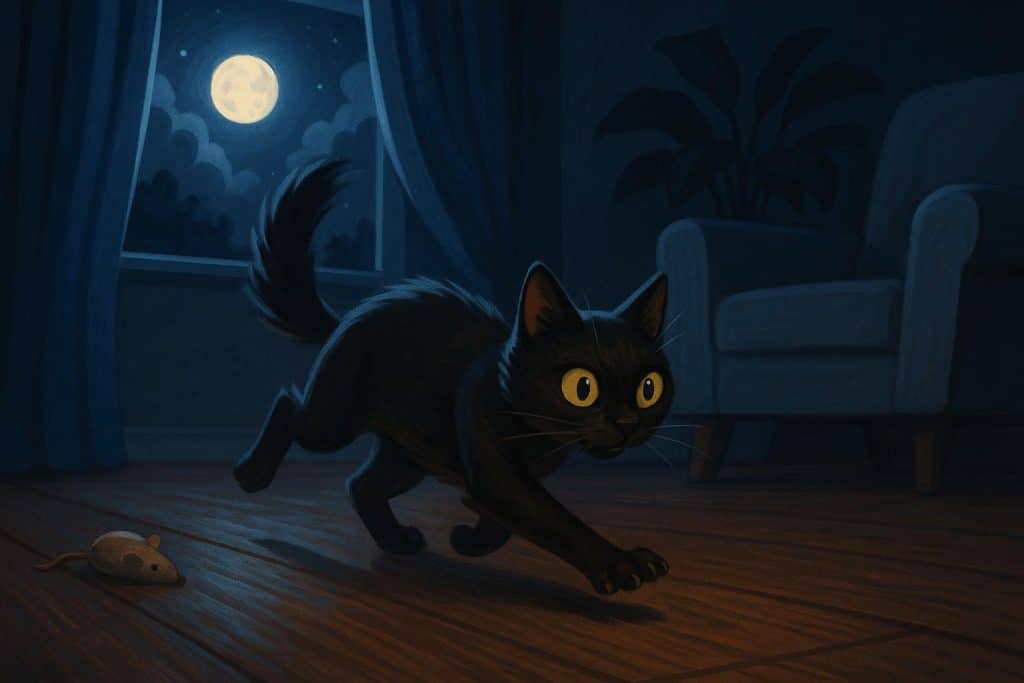
If your cat suddenly transforms into a blur of motion just as you’re turning off the lights, you’re experiencing one of the most common feline behaviors: nighttime zoomies. These late-evening energy bursts can feel disruptive, but they’re rarely random. In most cases, they’re rooted in natural instincts, daily routines, and environmental cues.
Understanding what drives nighttime restlessness can help you support calmer evenings without trying to fight your cat’s biology.
Your Cat’s Natural Rhythm Plays a Big Role
Cats are crepuscular by nature, meaning they’re biologically wired to be most active around dawn and dusk. This pattern comes from their evolutionary past, when hunting during low-light hours offered the best chance of success. Even indoor cats, far removed from hunting for survival, still carry this internal clock.
When daylight hours are filled with long naps and minimal stimulation, that built-in energy peak often shifts later into the evening. By the time your home quiets down, your cat’s body may be signaling that it’s time to move.
Why Energy Builds Up After Dark
One of the biggest contributors to nighttime zoomies is unused energy. Cats are designed for short, intense bursts of movement rather than steady activity throughout the day. Without enough opportunities to engage their hunting instincts, like chasing, pouncing, and stalking, that energy has to go somewhere.
Boredom can amplify the issue. A predictable environment with limited enrichment can leave nighttime as the most stimulating part of a cat’s day. Add in heightened nighttime sounds or visuals: passing headlights, distant noises, or reflections—and suddenly the dark feels full of opportunity.
Some cats also learn that nighttime activity leads to attention. Even well-meaning responses, such as talking, petting, or getting up to investigate, can reinforce the behavior over time.
Routines & Environment to Shift Energy
The most effective way to support calmer nights is to meet your cat’s needs before bedtime. A focused play session in the evening can make a noticeable difference, especially when it mimics natural hunting behavior. Wand toys, chase games, or interactive play that allows your cat to stalk and “capture” a toy help release physical and mental energy.
Pairing play with a small meal afterward can be particularly grounding. This mirrors the natural hunt-eat-rest cycle and helps signal that it’s time to settle down. Eventually, this sequence can begin to reshape your cat’s nighttime routine.
In addition to routine, you may explore gentle wellness tools as part of an evening wind-down ritual. CBD chews for cats can be one element of a broader, layered approach to supporting relaxation and emotional balance during the evening hours. When used alongside healthy routines and environmental support, pet CBD may help promote a sense of calm and overall well-being.
As bedtime approaches, the overall atmosphere of your home matters more than you might think. Gradually dimming lights, lowering noise levels, and minimizing visual distractions can help ease your cat into a calmer state. Consistency is key: cats thrive on predictable patterns and cues.
Providing comfortable, quiet resting areas also supports relaxation. Whether your cat prefers a cozy bed nearby or a quiet perch in another room, having an inviting place to unwind makes it easier for them to choose rest over racing laps through the house.
The Influence of Daytime Habits
Nighttime zoomies often reflect what’s happening earlier in the day. Cats who spend long stretches sleeping without meaningful engagement may have difficulty settling once evening arrives. While daytime naps are normal, limited stimulation can shift activity into late hours when the home finally becomes quiet.
Supporting engagement throughout the day can help rebalance this pattern. Small moments of interaction, such as watching birds from a window, exploring a puzzle feeder, or engaging in brief play, give your cat opportunities to express natural curiosity and movement. These moments don’t need to be long or intense to be effective.
Environmental variety is especially important for indoor cats, including rotating toys, changing play locations, or introducing new textures and scents, all of which can prevent boredom without overwhelming the senses. When mental and physical needs are met during the day, nighttime restlessness often becomes less intense.
Over time, these subtle adjustments support a more balanced daily rhythm, one that allows for both healthy activity and restorative rest.
When Nighttime Zoomies Are Normal vs. When to Look Closer
Occasional bursts of evening energy are a normal part of feline behavior, especially in younger cats or highly active personalities. If your cat is eating well, using the litter box consistently, and engaging normally during the day, nighttime zoomies are usually nothing to worry about.
However, sudden or extreme changes in behavior may warrant discussion with a veterinarian to rule out underlying concerns contributing to restlessness.
Working With Your Cat’s Nature
Nighttime zoomies aren’t a sign that something is wrong; they’re often an indication that your cat’s natural rhythms and daily routine simply aren’t fully aligned yet. Cats are instinct-driven animals, and when their needs for movement, engagement, and predictability are met earlier in the day, evenings tend to unfold more smoothly.
By focusing on meaningful play, steady routines, and a calming nighttime environment, you’re working with your cat’s biology rather than against it. Supportive wellness practices can also play a role when layered thoughtfully alongside environmental and behavioral care, helping reinforce a sense of balance during the transition from activity to rest.
Change doesn’t happen overnight, and progress may come in small steps. Some nights will feel calmer than others, and that’s normal. What matters most is consistency and patience, two things cats respond to deeply.
Over time, these intentional efforts help create evenings that feel more predictable and peaceful. And when your cat finally settles in for the night instead of racing through the house, it’s a reminder that understanding their nature is often the key to restoring rest for everyone involved.