

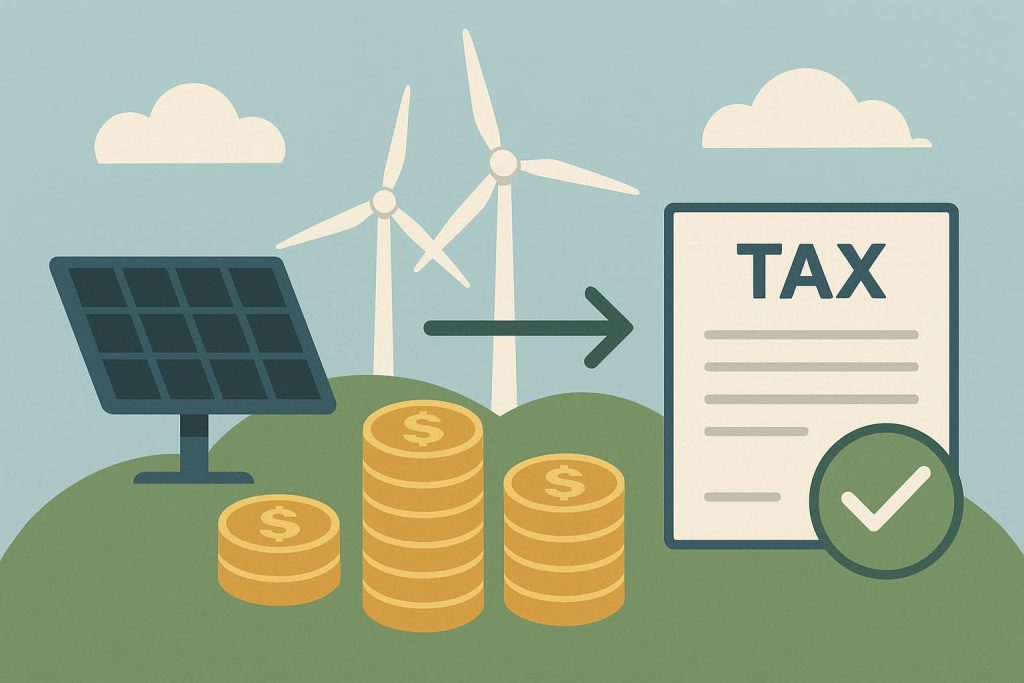
The clean energy industry is experiencing great changes. You see that change in the form of solar panels emerging on rooftops, to wind farms that are energizing whole communities. Yet beneath these green changes exists an essential financial instrument enabling projects to launch: transferable tax credits.
These credits are transforming the approach for clean energy developers and investors, providing quicker, cost-effective, and more adaptable methods to fund renewable initiatives. Let’s examine how transferable tax credits are facilitating capital movement and speeding up the clean energy transition in America.
The Traditional Challenge in Clean Energy Financing
Before 2022, financing a renewable energy project was not as straightforward as installing solar panels or spinning up a wind turbine. Developers often had to rely on tax equity partnerships with big Wall Street banks or insurance companies.
Here’s the catch: these partnerships were complicated, expensive, and time-consuming. Developers had to set up layered “partnership flip” structures, which often meant 5- to 7-year lockups. If a company owed little or no taxes, it could not immediately use the federal credits it earned, leading to wasted opportunities and slower project deployment.
Enter Transferable Tax Credits
Thanks to the Inflation Reduction Act of 2022, eligible clean energy projects can now sell their federal tax credits outright to corporate taxpayers. No partnerships. No multi-year tax filings. Just direct, upfront cash.
Essentially, transferable tax credits have changed a previously unwieldy incentive into a fluid financial asset. Developers can swiftly cash in their credits, allowing them to free up funds for the next project in their queue. This straightforward adjustment has revealed a new degree of efficiency in financing clean energy.
Faster Closings, Lower Friction
One of the most immediate impacts of transferable tax credits is speed. Traditional tax equity deals could take 9–12 months to close. With credit transferability, transactions now often wrap up in 2–4 months.
Some platforms have streamlined the process, providing pre-made data rooms and document templates. Developers no longer spend months discussing terms or going through legal documents. Every stage is quicker, easier, and more affordable.
The result?
- Capital flows more smoothly into clean energy projects.
- Developers can redeploy proceeds immediately instead of waiting for complex tax allocations to process.
Expanding Liquidity and Price Discovery
The rise of transferable tax credits has also expanded the pool of potential buyers. Previously, only a handful of tax-equity investors could participate. Now, Fortune 500 companies, utilities, and tech firms with federal tax liabilities can buy credits directly.
This broader buyer base not only increases competition but also improves liquidity. In 2024, around $30 billion in credits changed ownership, frequently at 92–95¢ on the dollar — a price significantly lower than standard equity or mezzanine debt.
Here, a dynamic market is established. After this, transferable tax credits enable both buyers and developers to find equitable prices more effectively. It lowers financing expenses and improves market clarity.
Diversifying the Clean Energy Portfolio
Initially, most transferable credit transactions focused on solar and wind. But 2024 saw a notable shift: more than 70% of deals in the second half of the year involved storage, advanced manufacturing, geothermal, hydrogen, carbon capture, and critical minerals.
This diversification demonstrates that transferable tax credits are not just supporting conventional clean energy projects; they are helping fund technologies that are harder to finance but crucial for decarbonization. Investors are now channeling capital into innovative solutions, knowing these credits provide a reliable return.
Multiplier Effect on Private Investment
Here is the most impressive part: every dollar of federal credit is estimated to pull in around five dollars of private capital. That means transferable tax credits do not just fund individual projects; they catalyze broader investment across the clean energy ecosystem.
According to ACP/ICF modeling, the program is projected to catalyze $1.9 trillion in clean energy investment and generate 13.7 million job-years by the end of the decade. That is not just numbers; that’s thousands of new manufacturing jobs, installation opportunities, and support roles across the country.
How a Typical Transferable Tax Credit Transaction Works
Understanding the flow of a transaction shows why transferable tax credits are so effective:
- A developer lists qualified credits on a marketplace, specifying size, technology, and placed-in-service date.
- Corporate buyers review the credits against their tax liabilities and ESG goals, submitting non-binding bids.
- A term sheet is signed, and the buyer conducts 3–6 weeks of tax, technical, and title diligence.
- A definitive transfer agreement is executed; cash is wired — usually 90–95% upfront, with 5–10% held in escrow for warranty periods.
- The developer receives immediate capital, and the buyer claims the credit on its federal return.
This streamlined process is far more straightforward than traditional tax equity structures and highlights why transferable tax credits are becoming the go-to financing tool.
Policy Support and Market Outlook
Legislation continues to support the transferability of tax credits. Congress is debating extensions for credit bonus rates and possibly expanding the pool of eligible buyers. Regardless, market participants expect the transferability mechanism to remain intact, ensuring that transferable tax credits will continue to fuel clean energy investment for years to come.
By turning a tax incentive into a freely tradable, liquid asset, these credits reduce friction, accelerate project timelines, and widen the investor base — all while keeping the focus on sustainable energy growth.
Why This Matters for the Common Investor
You do not have to be a giant corporation to appreciate the value of transferable tax credits. Even smaller developers benefit from faster access to cash, lower legal costs, and simplified transaction processes. For corporate buyers, these credits offer a tangible way to meet federal tax obligations while supporting sustainability goals.
The system aligns incentives: developers get capital to build, buyers get tax credits, and society gets cleaner energy and more green jobs. It is a rare scenario where everyone wins.
Conclusion
Clean energy comes as an environmental imperative and an economic opportunity. Transferable tax credits have transformed the way capital moves in the renewable sector, making it faster, cheaper, and more efficient to fund new projects.
From accelerating solar and wind deployment to financing emerging technologies like storage and hydrogen, these credits are unlocking liquidity, expanding investment, and creating a ripple effect of private capital.
By understanding and leveraging transferable tax credits, developers, investors, and corporate buyers can participate in the clean energy transition while reaping real financial benefits. In a world where speed and efficiency matter, these credits are the fuel driving America’s renewable energy future.