

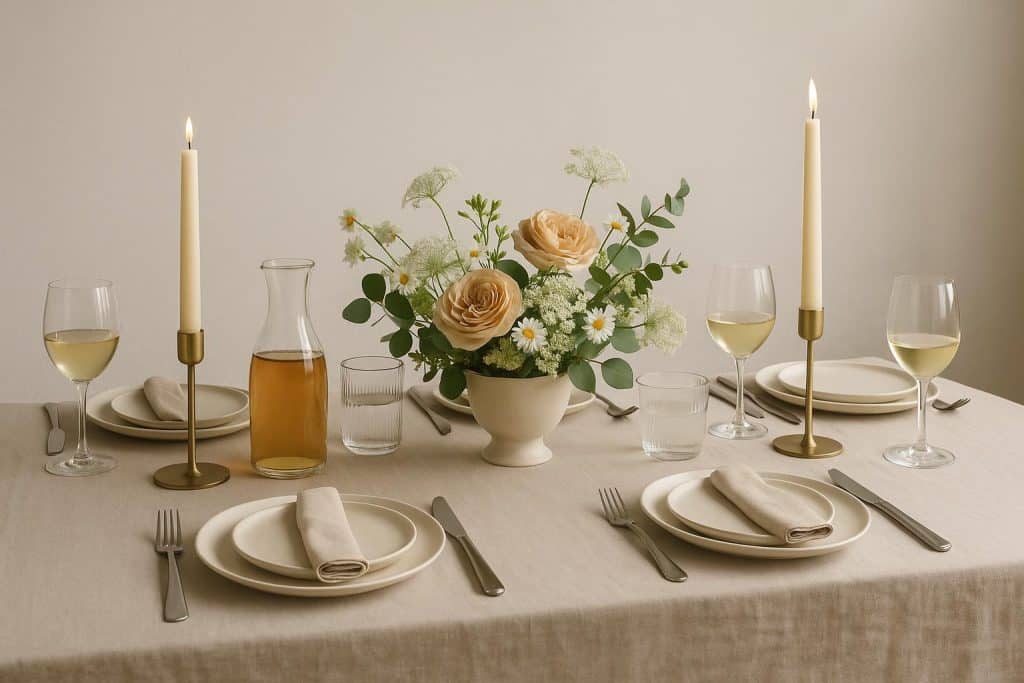
An alcohol-free dinner needs the same things as any good dinner: food people look forward to, somewhere comfortable to sit, and enough attention from the host to make guests feel welcome. Removing wine from the table does not remove the occasion. It does mean a few familiar hosting decisions need a little more thought.
The drinks may need preparation instead of being opened at the last minute. The invitation should be clear enough that guests do not arrive with bottles you would rather not serve. The timing should give everyone a sense of the evening without relying on another round to extend it.
None of this requires an elaborate menu or a speech about health. You can host an enjoyable dinner because you prefer an alcohol-free night, because someone has requested it, or because the format suits the group.
Plan around hospitality. Guests should know what to expect, find something they enjoy, and feel free to participate without explaining their personal reasons for drinking or not drinking.
Put the Relevant Detail in the Invitation
Mention that the dinner will be alcohol-free when you invite people. A brief line avoids uncertainty: “Dinner at seven, and I’ll have alcohol-free drinks ready.” Guests can decide how the plan fits their evening before arriving.
If you do not want bottles brought along, say so politely and offer another contribution. Bread, dessert, or a favorite playlist can give someone a way to participate without bringing alcohol.
There is no need to turn the invitation into a debate. You are describing the event you are hosting. If a guest asks about a private reason, you can explain only what you are comfortable sharing.
Give Drinks the Same Attention as Food
Choose a small selection that suits the meal. One sparkling option, one still option, and water may be enough. Use drinks you have tried before so the dinner does not become a last-minute experiment in unfamiliar ingredients.
Serve them at the right temperature and have enough ice, glasses, and refrigerator space. A thoughtful presentation can make an ordinary beverage feel part of the evening. Expensive bottles are not required.
For guests who need complete avoidance, check alcohol content carefully and retain the labels. “Nonalcoholic” branding should not be treated as a substitute for checking the product. Ask about dietary needs privately and avoid assuming that one substitute suits everyone.
Make the First Ten Minutes Easy
Have something ready when the first guest arrives. That could be a prepared drink and a small plate of food. The aim is to welcome people without leaving them standing around while you finish everything in the kitchen.
Offer a choice rather than asking guests to justify it. “Would you like sparkling water or the citrus drink?” is a normal hosting question. “You’re not drinking either, are you?” introduces a personal topic that may not belong in the room.
UM’s alcohol-free social guide discusses some of the situations guests face when choosing not to drink. A host can remove several of those decisions simply by making the menu and format clear beforehand.
Cook a Meal That Lets You Join the Table
A menu that needs constant last-minute work keeps the host occupied and can make guests feel they should help. Choose at least part of the meal that can be prepared earlier.
The food does not need to imitate a restaurant tasting menu. A shared main dish, a substantial salad, and a simple dessert can create a generous table. Select something suited to the group’s tastes and your available time.
Plan the serving order as well. If food is delayed for an hour, guests may become restless regardless of what they are drinking. An earlier snack and a realistic dinner time are more valuable than another complicated course.
Let Conversation Have a Starting Point
People who know each other well may need very little structure. A mixed group benefits from introductions that give them something to discuss. Mention a shared interest or a recent project rather than reciting job titles around the table.
You can keep a game available for later without making participation compulsory. Music, a shared dish, or a question about an upcoming trip may be enough to get the conversation moving.
Avoid making alcohol the evening’s main subject unless the group wants that discussion. The dinner can be enjoyable without becoming a workshop about everyone’s habits. Guests came to spend time together, and their reasons for accepting may differ.
Keep Personal Explanations Optional
A guest may be interested in sober curiosity, following medical advice, supporting someone else, or simply choosing not to drink. You do not need to identify which explanation applies.
Do not announce another person’s pregnancy, medication use, recovery history, or private goal. Even a supportive comment can expose information they did not intend to share. Let each guest decide what belongs in conversation.
The same restraint applies to praise. Calling attention to someone’s choice can make it feel less ordinary. A comfortable seat, a drink they enjoy, and a host who respects privacy may be the more welcome form of support.
Give the Evening a Comfortable Ending
Offer dessert or tea as a natural final stage rather than leaving the evening open indefinitely. Guests can continue talking, but they have a recognizable point at which leaving will not feel abrupt.
Help with practical details such as coats, taxis, or checking public transport. An alcohol-free event does not remove every transport concern; people may have consumed alcohol elsewhere, taken sedating medication, or become too tired to drive safely.
If you want to repeat the dinner, ask about the food and format later. A simple question about what people enjoyed will tell you more than trying to obtain approval for the concept during the meal.
Make the Next Dinner Easier to Host
Keep notes on quantities, preparation time, and which drinks people chose. That small record reduces work the next time you invite friends. You may need less variety, more chilled water, or an earlier start.
Hosting is not a way to manage someone else’s alcohol dependence. If a guest raises concerns about withdrawal, encourage medical help rather than improvising care. An invitation should also leave people free to decline without disclosing a health reason.
The best result is an evening worth repeating on its own terms. Good food, attentive preparation, and unpressured company give an alcohol-free dinner plenty to offer. The absence of wine can remain a practical detail instead of becoming the story of the night.