

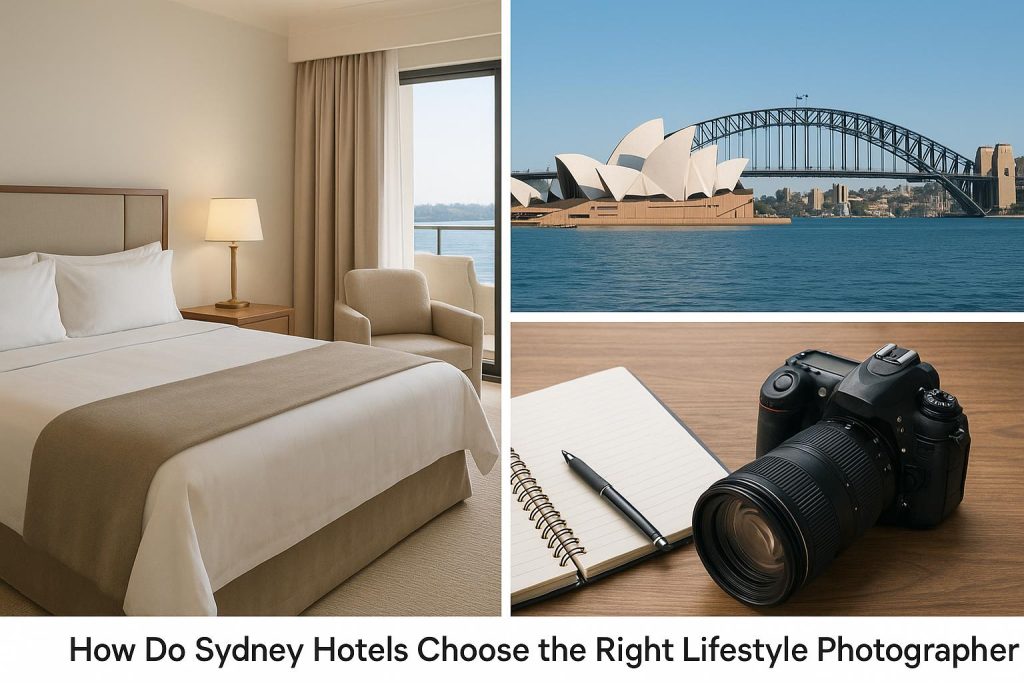
Sydney hotels, anyway, compete through atmosphere, service, design, dining, and memorable guest experiences. Lifestyle photography brings these qualities together in a way that written descriptions cannot. The right photographer captures more than just polished rooms.
Their images show how guests arrive, dine, relax, and connect within the property. Before choosing a photography partner, hotel managers should assess creative skill, hospitality experience, planning methods, technical standards, and communication. Each factor can influence bookings, brand consistency, and the long-term value of the hotel’s image library.
What Goes Beyond Hotel Lifestyle Photography from a Creative Lens?
A professional and expert hotel photographer in Sydney understands how accommodation spaces function throughout the day. Morning light may suit breakfast scenes, while evening conditions can reveal the atmosphere of a restaurant or lounge. The photographer must also work around guests, staff, cleaning schedules, and service periods.
This practical awareness helps produce natural images without disrupting hotel operations. A relevant portfolio should show people using the space, rather than empty rooms alone, because human activity gives hospitality photography greater emotional impact.
1. Review Hospitality Experience
Previous hotel assignments can show whether a photographer understands the domain-specific visual needs. Hospitality photography requires immaculate attention to room presentation, public areas, dining service, outdoor facilities, and guest interaction. A general commercial portfolio may demonstrate technical skill, but it may not prove that the photographer understands hotel marketing.
Hotel managers should review complete galleries instead of relying on a few selected images. A strong collection should include wide architectural views, lifestyle scenes, service details, and staff or guest portraits. Consistency across these formats suggests dependable planning, direction, and editing.
1.1 Check Visual Range
A photographer should make a property feel distinctive without creating a misleading impression. Images need to have accurate colour, balanced lines, natural skin tones, and believable lighting. Heavy editing can create expectations that the hotel cannot meet.
2. Assess Storytelling Ability
Effective lifestyle photography presents a clear picture of the guest experience. A viewer should gain a sense of what staying at the property might feel like within seconds of seeing the images. That response depends on composition, timing, expression, movement, and setting.
Skilled photographers notice small details that support a hotel’s identity. A cup besides a window, a staff member arranging a table, or a guest reading near the pool can suggest comfort and care. These scenes may involve direction, but they should still appear natural and credible.
2.1 Prioritise Authentic Moments
Models and staff often need clear guidance during a shoot. However, rigid poses can reduce trust. The chosen photographer should know how to provide simple direction, encourage comfortable interactions, and capture genuine reactions without making every frame feel staged.
3. Confirm Planning Standards
Preparation affects the creative outcome and the hotel’s schedule. Before the shoot, the photographer should request brand references, preferred room types, campaign goals, target audiences, and intended platforms. A detailed shot list can then connect each image with a clear marketing purpose.
Timing also requires careful consideration. Sydney’s changing sunlight can affect balconies, pools, restaurants, and exterior views. The schedule should allow suitable periods for daylight, twilight, and interior scenes. Weather alternatives are valuable for properties that rely heavily on outdoor facilities.
4. Examine Technical Quality
Hotel images may appear on booking pages, brochures, social platforms, advertisements, press materials, and large printed displays. Files must remain sharp and adaptable across different formats. A photographer skilled at hotel photography should explain camera formats, delivery resolutions, file types, and editing standards before production begins.
Colour management also matters throughout a hospitality campaign. Neutral whites, warm timber, food tones, and natural greenery should appear consistent across the collection. Straight vertical lines are also important, particularly in rooms, corridors, restaurants, and architectural spaces.
5. Discuss Usage Rights
Image licensing can affect future marketing expenses. Hotel representatives should ask whether the quotation includes website use, paid advertising, print promotion, social media, editorial activity, and internal communications. The agreement should clarify the permitted duration, regions, channels, and parties covered.
Ownership terms deserve equal attention too. Some photographers retain copyright while granting broad usage rights. Others provide different arrangements. Clear documentation prevents disputes and helps marketing teams reuse approved images with confidence across future campaigns.
6. Compare Communication and Reliability
A capable photographer should communicate clearly from the first enquiry. Responses should address availability, preparation requirements, staffing needs, estimated image numbers, delivery dates, and revision procedures. Unclear answers can create unnecessary pressure during production.
Reliability also includes punctual arrival, respectful conduct, backup equipment, secure file handling, and professional interaction with hotel staff. These qualities help the shoot run smoothly while protecting the hotel’s daily operations and guest experience.
Conclusion
Choosing a lifestyle photographer requires more than just reviewing attractive images. Sydney hotels should assess hospitality experience, storytelling ability, preparation, technical control, licensing terms, communication, and overall value. The selected professional should capture genuine experiences while respecting the property’s identity and daily operations.
A well-planned image collection can support booking pages and boost advertising, public relations, and seasonal campaigns for years. Careful selection gives hotel teams stronger content, clearer brand communication, and a more convincing invitation for future guests.