

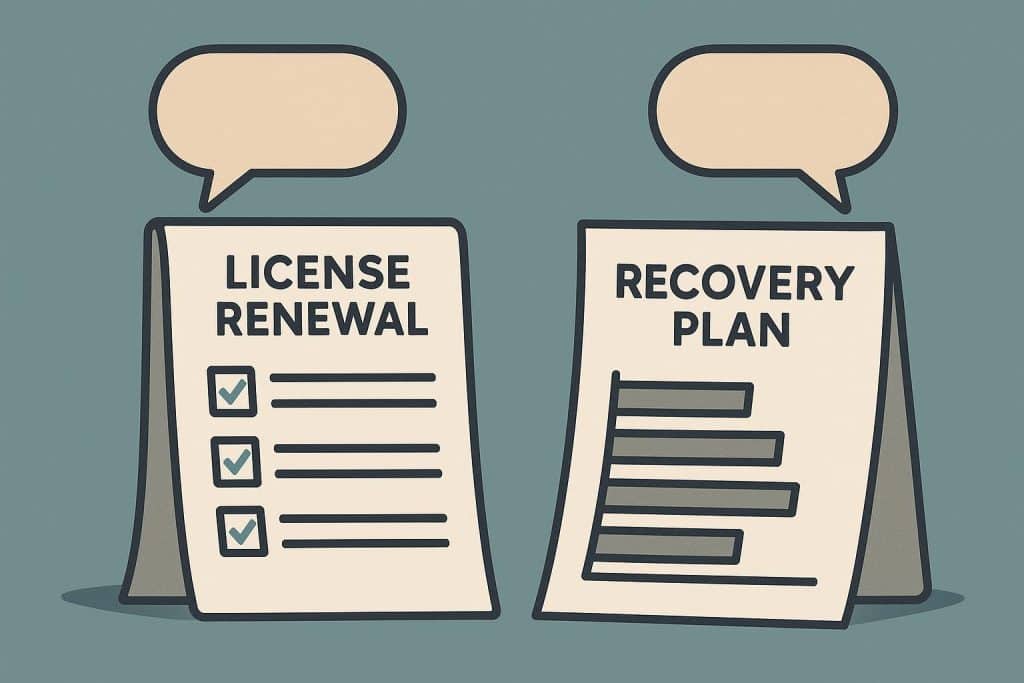
A SaaS company in Austin discovered, during what should have been a routine failover drill, that their disaster recovery environment couldn’t actually run their core application. Not because the backups were bad. Because the license they’d negotiated only covered production instances, and the DR environment, sitting idle in a secondary region, was violating the contract every day it existed. Legal had signed one deal. IT had built a recovery plan around a different assumption entirely. Nobody caught the mismatch until the drill forced the question, and by then the company had been out of compliance for over a year.
That kind of disconnect is more common than most executives realize, and it usually traces back to two teams making decisions in isolation.
Licensing Decisions Get Made Without Recovery in Mind
Procurement teams negotiate software contracts around cost per seat, cost per core, or cost per instance, almost always with production workloads as the reference point. Disaster recovery environments get treated as an afterthought in that conversation, if they get mentioned at all.
There are several examples of models for software licenses worth understanding before signing anything, because the differences matter more during a recovery scenario than during normal operations. Per-instance licensing charges for every running copy, which gets expensive fast if a DR environment needs duplicate instances on standby.
Per-core licensing scales with hardware, which can spike unexpectedly if a failover environment runs on different specs than production. Subscription-based SaaS licensing sometimes includes DR use implicitly, sometimes doesn’t, and the difference is buried in language most procurement teams skim past. A handful of vendors now offer dedicated DR licensing tiers, priced lower because the assumption is the environment sits idle most of the time. That option rarely gets negotiated because nobody on the buying side thought to ask.
The Contract Language Nobody Reads Until It’s Tested
Here’s the uncomfortable part. Most companies don’t discover a DR licensing gap through a contract review. They discover it during an actual test, or worse, during an actual disaster, which is the single worst time to find out a license doesn’t cover what you assumed it covered.
This is exactly why testing matters more than the paperwork itself.
Testing Exposes What Contracts Hide
Following best practices for disaster recovery testing means running failover scenarios regularly enough to catch problems like the Austin case before they become legal or operational emergencies. A quarterly test, at minimum, that actually spins up the DR environment rather than just reviewing documentation on paper.
Full failover tests, the kind that redirect real traffic temporarily, catch licensing gaps, configuration drift, and staff readiness problems that a tabletop exercise never will. Partial tests, isolating a single system or application, work well for catching narrower issues without the operational risk of a full cutover. Either approach beats what a surprising number of companies still do, which is nothing beyond an annual checkbox exercise that satisfies an auditor but proves nothing about actual recovery capability.
Companies that run genuine tests tend to find licensing problems within the first year. Companies that skip testing find them during an actual outage, usually paired with a compliance headache on top of the operational one.
Two Teams, One Plan
The fix here isn’t complicated, though it does require a meeting that most companies never schedule: procurement and IT operations reviewing DR requirements together before a contract gets signed, not after a test exposes the gap. A five-minute conversation about whether a license covers standby instances costs nothing. Discovering the answer during a real disaster costs considerably more.
The companies that get this right didn’t start with better contracts. They started by making sure the people negotiating the license and the people building the recovery plan were in the same room, asking each other questions neither had thought to ask alone.