

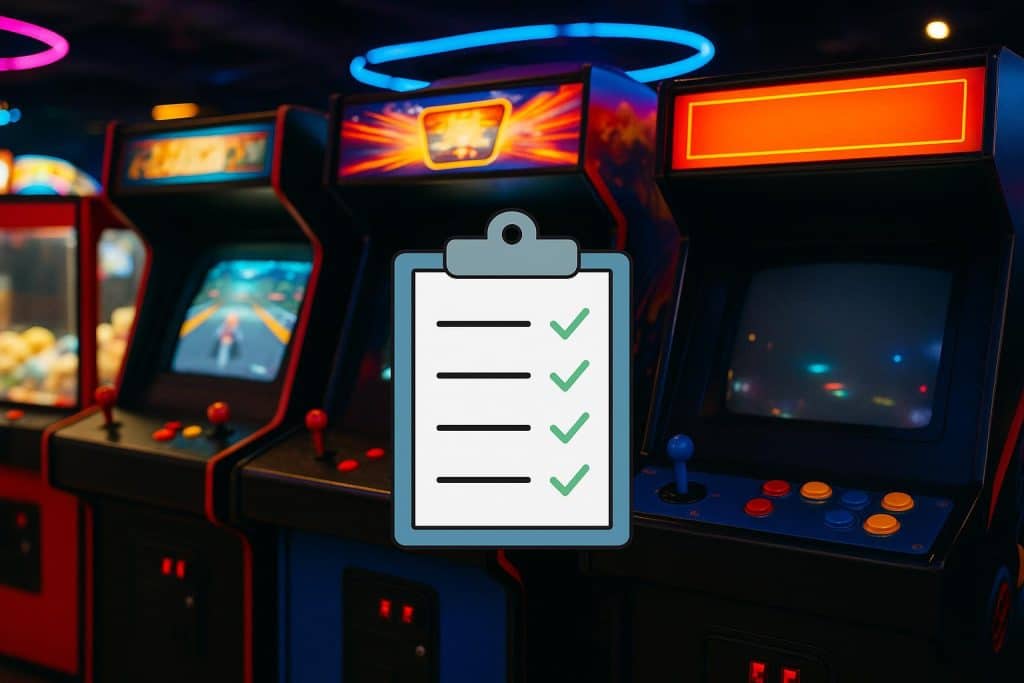
Expanding an arcade’s game lineup takes more than browsing a catalog and placing an order. Operators need to assess floor capacity, player preferences, and vendor terms before committing to new equipment. Skipping that groundwork often results in machines that underperform or disrupt venue flow. A structured evaluation process helps protect revenue, improve the player experience, and ensure every addition earns its spot on the floor.
1. Floor Space and Layout Planning
Available square footage shapes every expansion decision. Before approving a new machine, operators should map the floor and identify where the addition fits without creating congestion.
1.1 Traffic Flow Considerations
Machines placed without a flow strategy create crowding in high-demand areas. Popular, high-traffic games work best toward the center or back of the venue, pulling players through the space. Quieter or niche titles can occupy side walls or corners without affecting movement.
1.2 Machine Footprint vs. Usable Area
Cabinet size on a spec sheet rarely provides a complete picture. Racing simulators, rhythm games, and motion-based machines typically need extra clearance around them for players to operate comfortably. Taking precise measurements before delivery prevents costly rearrangements after the fact.
2. Player Demographics and Game Selection
Regular customer data should drive every acquisition decision. A venue built around families has different needs than one catering to competitive adult players, and the machine mix should reflect that clearly.
Operators considering expansion should research what comparable venues stock, then cross-reference it with their traffic patterns. Reviewing an indoor game machine arcade rental catalog gives operators a practical look at which machine categories are trending and what rental structures are available before any capital gets committed. That comparison step alone can prevent investing in equipment that does not match the existing audience.
3. Revenue Potential Per Machine
Square footage is a finite resource. Operators should estimate expected earnings per square foot for each machine type before approving a placement.
3.1 Token vs. Card-Based Systems
Card-based payment systems generally produce higher average spend per visit and generate usable data on player behavior. Token systems remain effective in certain venues but offer limited insight into how players interact with specific machines.
3.2 Redemption vs. Non-Redemption Machines
Redemption games drive repeat visits consistently; players return to earn tickets toward prizes. Non-redemption machines attract skilled players but tend to see lower average play frequency. A balanced mix of both across the floor tends to stabilize overall income across different visit types.
4. Maintenance Requirements and Parts Availability
A machine that earns well on paper but breaks down regularly becomes a drain on staff time and revenue. Before adding any model, operators should investigate its repair history and how readily replacement parts are available.
Older cabinets often carry lower upfront costs but generate higher long-term maintenance expenses. Machines from established manufacturers typically come with better support infrastructure and faster part fulfillment. Factoring in estimated downtime costs, not just the purchase or rental price, gives a more accurate picture of actual return.
5. Vendor Terms and Rental Agreements
Outright purchase is not always the right approach, particularly for operators testing a new machine category or managing tighter capital budgets. Rental agreements reduce financial exposure while allowing performance data to inform future decisions.
5.1 What to Review in a Rental Contract
The key terms worth scrutinizing include rental duration, maintenance responsibility allocation, and whether the vendor allows unit swaps if a machine underperforms. Swap clauses protect revenue without requiring operators to exit and re-enter a new contract entirely.
5.2 Revenue Share Models
Some vendors offer revenue-sharing arrangements in place of flat rental fees. These setups can benefit lower-traffic venues during off-peak periods but may limit earnings when foot traffic peaks. Modeling both payment structures against projected attendance before signing prevents surprises later.
6. Power and Infrastructure Requirements
Larger machines draw considerably more power than standard upright cabinets. Multi-player stations, projection-based games, and full-motion simulators may require dedicated circuits to operate safely. Operators should confirm the venue’s electrical capacity before scheduling delivery, as infrastructure upgrades after installation add unexpected cost and downtime.
Conclusion
Every machine added to an arcade floor carries financial, spatial, and operational implications. Operators who work through each evaluation layer, from layout and demographics to vendor contracts and power capacity, make decisions grounded in real data rather than assumptions. That disciplined approach reduces costly missteps, keeps players engaged with a well-curated lineup, and builds the kind of consistent revenue base that supports long-term venue growth.