

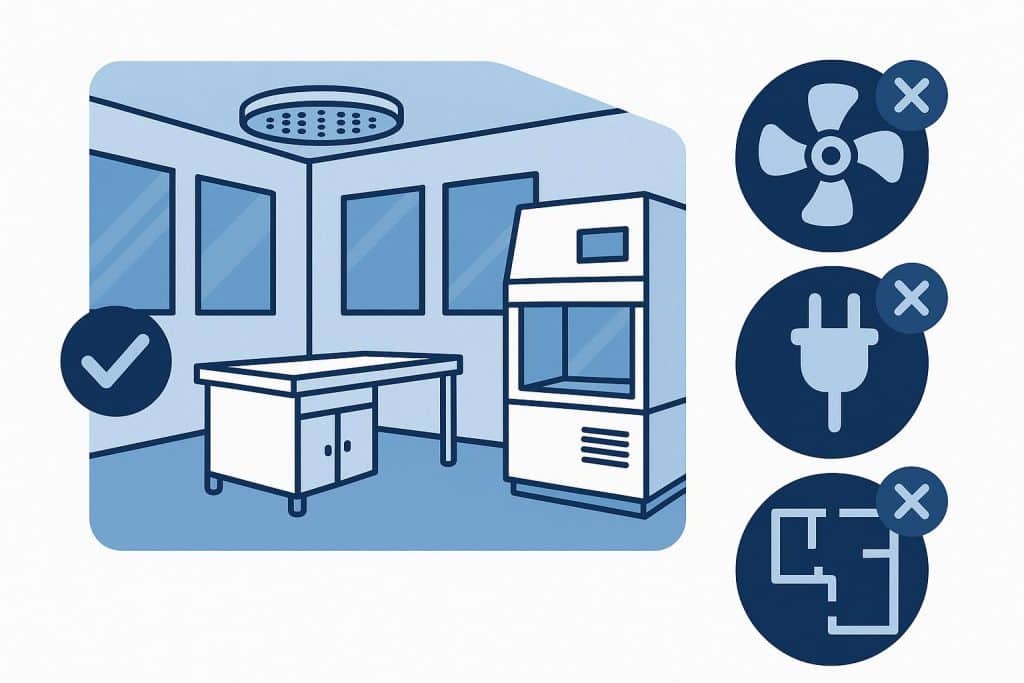
A pharmaceutical cleanroom project usually starts with a simple goal: create a cleaner, safer, and more controlled production environment. But in practice, many cleanroom problems are not caused by poor equipment alone. They often come from decisions made too early in the planning stage, before the production process, airflow strategy, pressure control, and future maintenance requirements are fully understood.
For pharmaceutical manufacturers, a cleanroom is not just a room with smooth walls and filtered air. It is a controlled system where architecture, HVAC, filtration, materials, personnel flow, and validation must work together. This is why choosing an experienced cleanroom construction supplier matters. A good supplier should not only provide panels, doors, filters, and installation, but also understand how the cleanroom will actually be used after handover.
One common mistake is designing the room around available space instead of production workflow. In pharmaceutical environments, people, raw materials, semi-finished products, finished goods, waste, and tools should not move through the same path randomly. If the cleanroom layout is not planned carefully, operators may need to cross clean and less-clean zones too often, increasing contamination risk. A better approach is to define the process flow first, then build the cleanroom layout around it.
Another frequent issue is poor pressure cascade planning. Pharmaceutical cleanrooms often need positive pressure to protect critical areas from outside contamination. However, pressure control is not simply a matter of adding more air supply. The system also needs proper return air design, door interlock logic, room leakage control, and stable HVAC balancing. If the pressure relationship between rooms is unstable, the cleanroom may look complete but fail to perform reliably during daily operation.
Air filtration is also sometimes misunderstood. Installing HEPA filters does not automatically guarantee a clean production environment. Filter grade, air change rate, installation position, sealing method, terminal housing quality, and leakage testing all affect performance. For critical pharmaceutical areas, filter integrity and airflow distribution should be considered from the beginning rather than treated as final-stage details.
Material selection is another area where short-term savings can create long-term problems. Cleanroom walls, ceilings, doors, windows, and flooring should be easy to clean, resistant to corrosion, and suitable for frequent disinfection. Poor-quality joints, exposed screws, difficult-to-clean corners, or unsuitable surface coatings can become contamination points over time. In pharmaceutical projects, the cleanroom must be designed not only for installation, but also for cleaning, inspection, and maintenance.
Many companies also underestimate the value of early-stage cleanroom design consulting. Before construction begins, a professional review can help clarify cleanroom classification, HVAC load, personnel capacity, process equipment layout, pressure zoning, airlock requirements, material transfer routes, and future expansion needs. This planning stage can prevent expensive changes after installation.
Commissioning and validation should also be included in the project mindset from day one. A pharmaceutical cleanroom should be tested for particle concentration, airflow volume, air velocity, pressure differential, temperature, humidity, and HEPA filter leakage. If these testing requirements are ignored during design, the project may face delays when the room cannot meet expected performance standards.
In the end, a pharmaceutical cleanroom is a long-term production asset. The best projects are not necessarily the ones with the most expensive equipment, but the ones where every part of the system supports the production process. By avoiding layout mistakes, weak pressure control, poor material choices, and late-stage validation problems, pharmaceutical manufacturers can build cleanrooms that are safer, easier to operate, and more reliable over time.