

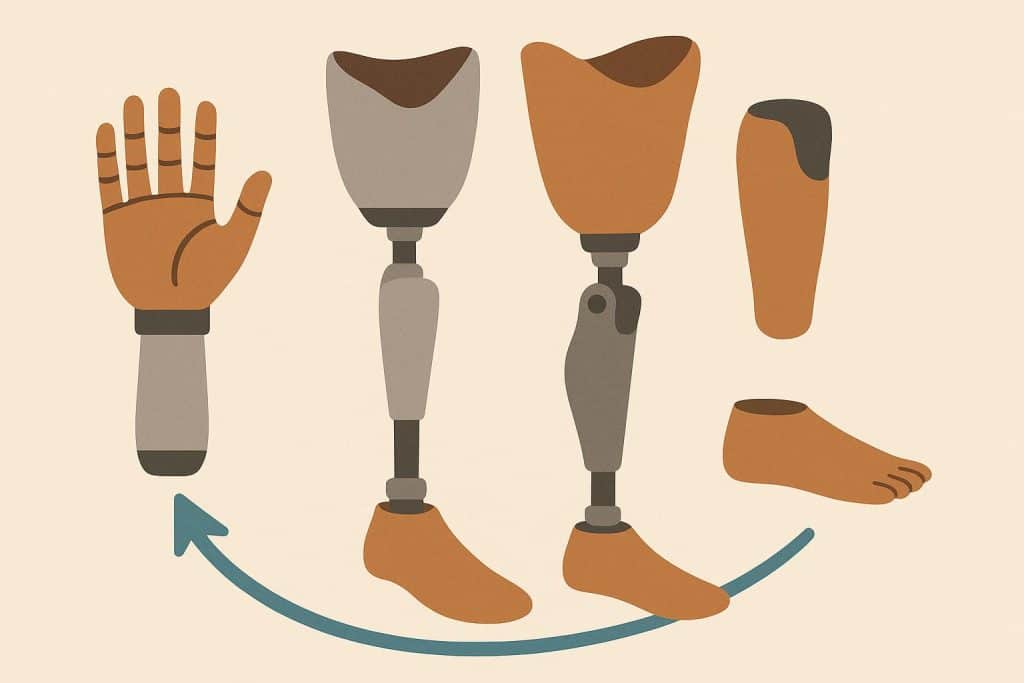
The process of getting a prosthetic limb — from the first consultation to the first day of walking or reaching with a new device — is not one that many people know much about before they need to go through it. Medical education on amputation focuses on surgical technique, wound care, and complication management. The prosthetics side of the story often arrives as a brochure or a referral rather than a detailed conversation about what the next six to eighteen months will actually look like.
That information gap matters, because the decisions made early in the prosthetic process have consequences that compound over time. A socket that fits poorly in the first month doesn't just cause discomfort — it shapes how the body compensates, influences what training looks like, and can affect long-term outcomes in ways that are harder to reverse than they are to prevent. An informed patient — one who understands the process, knows what questions to ask, and has realistic expectations about the timeline — consistently does better than one who comes to the process without context.
This guide covers what to expect at each stage of prosthetic care after amputation, across different levels of limb loss, with attention to the elements of the process that tend to be underexplained.
The Healing Phase: What Happens Before the Prosthetic Fitting
The period immediately after amputation is primarily a medical phase. The surgical wound heals, post-operative swelling gradually reduces, and the residual limb begins the process of taking on a more stable shape. For most lower limb amputees, this phase lasts at minimum several weeks and for many patients extends to several months, depending on the underlying health picture.
During this window, the care focus is on wound healing, pain management — including the complex phenomenon of phantom limb sensation that many amputees experience — and the beginning of physical rehabilitation aimed at preserving strength and range of motion in the proximal joints. Residual limb wrapping or shrinker socks are typically introduced to help shape the limb and reduce edema in preparation for prosthetic fitting.
The specific timeline for when prosthetic fitting begins varies considerably based on the amputation level, the underlying cause of amputation, the condition of the residual limb, and the person's overall health. Vascular amputees, whose limb loss typically results from diabetes or peripheral artery disease, often have slower healing timelines than trauma amputees. The healing assessment should be done by the surgical team and communicated clearly to the prosthetics team — the two need to be coordinating from early on, not operating independently.
Below-Elbow (Transradial) Amputation: What the Fitting Process Involves
Amputation below the elbow — transradial amputation — preserves the native elbow joint, which is a significant functional advantage. The elbow provides the primary lever for positioning the terminal device in space, and its preservation means the prosthetic system has fewer mechanical functions to replace than it does at higher levels.
A transradial prosthesis typically consists of a socket fitted to the residual limb, a wrist unit, and a terminal device — a prosthetic hand or an activity-specific hook or clamp. Control system options for this level include myoelectric systems, which capture muscle signals from the forearm or biceps to drive a powered hand, body-powered systems using a shoulder-and-cable harness, and passive devices that provide structure and cosmesis without active control. The evaluation for a transradial prosthetic should cover all three options and explain the trade-offs before any recommendation is made.
Socket fit at the transradial level is critical to comfort and function. The socket must distribute loading across the residual limb without creating pressure points over bony prominences, while providing enough suspension to keep the device stable during use. Most users require at least one socket adjustment within the first few months as the residual limb continues to change shape, and periodic revision over the longer term as weight fluctuates.
Below-Knee Amputation: The Prosthetic Options
Below-knee amputation — transtibial — is the most common level of lower limb amputation, and the prosthetic options at this level are well-developed. The preserved knee joint is the central mechanical advantage: it provides the primary lever for stance stability and propulsion, meaning the prosthetic system only has to replace ankle and foot function.
Among the range of available below knee artificial limbs, the choice of prosthetic foot is one of the most consequential component decisions for everyday function. Feet range from simple energy-absorbing SACH (solid ankle cushioned heel) designs suitable for low-activity users to multiaxial feet that accommodate uneven terrain to dynamic response carbon fiber feet that return energy during push-off and improve walking efficiency for active users. The right foot choice depends on activity level, body weight, the terrain the user regularly encounters, and budget.
At the transtibial level, users can typically achieve close-to-normal gait with proper fitting and training. The rehabilitation process focuses on gait mechanics, balance in challenging environments, and navigating the full range of daily activities — stairs, slopes, variable terrain, and eventually running or sport if those are goals. The transition back to full community ambulatory function is realistic for most below-knee amputees with appropriate prosthetic and rehabilitation care.
The Fitting Process Step by Step
The formal prosthetic fitting process typically begins with a comprehensive clinical evaluation. The prosthetist reviews the residual limb in detail — skin condition, wound status, volume and shape, muscle strength, joint mobility, and any structural features that will affect socket design. They also conduct a functional assessment, covering the person's ambulatory status, home environment, work demands, and activity goals. This evaluation, done thoroughly, takes time. It should not feel like a rushed intake form.
Casting or digital scanning follows, producing the data the prosthetist uses to fabricate the socket. A check socket — typically a clear thermoplastic diagnostic version — is usually fit before the final device is fabricated, allowing the prosthetist to assess fit under load and make adjustments before committing to final materials. Well-designed prosthetic solutions always include this diagnostic phase rather than moving directly from evaluation to final fabrication.
Delivery of the completed prosthetic is followed immediately by initial gait or functional training with the device. For lower limb amputees, this means physical therapy focused on gait mechanics, balance, and progressive loading. For upper limb amputees, occupational therapy focused on control development and task-specific function. Both processes take weeks to months, not days — and the quality of that training investment is a strong predictor of how well the device ultimately performs.
Common Challenges in the First Year
Volume change in the residual limb is one of the most consistent challenges of the first year. As the limb loses muscle mass and the post-operative swelling resolves, the shape and size change enough to affect socket fit. Users typically manage this with sock layering — adding prosthetic socks between the liner and socket to compensate for volume loss — but significant volume change eventually requires a socket revision. Expecting this and planning for it is part of sound prosthetic care.
Skin breakdown from socket pressure is another common early challenge. The interface between skin and socket creates friction and pressure that the skin has to adapt to over time. Minor abrasions and blisters are common in the first months of use and typically resolve as the skin toughens and the socket is adjusted. More significant skin problems — deep pressure injuries, wound breakdown — are warning signs that require prompt clinical attention.
Phantom limb sensation and, in some patients, phantom pain are realities that many new amputees aren't adequately prepared for. Sensation from the missing limb — ranging from mild tingling to vivid perceptions of the limb's position and movement — is nearly universal. Phantom pain, the experience of pain in the absent limb, occurs in a significant proportion of amputees and can range from mild to severe. Effective treatments exist and should be discussed with the medical team early rather than waited out.
Long-Term Prosthetic Care and Device Evolution
A well-fitted prosthetic is not a static solution. Components wear over time and require replacement on a schedule that depends on activity level and device type. Prosthetic feet typically last one to three years with regular use. Sockets, as noted, may require revision as the residual limb changes. Liner replacements, hardware adjustments, and the ongoing optimization of fit and function are part of the long-term prosthetic care relationship.
Technology in the prosthetics field advances at a meaningful pace. Microprocessor-controlled knees and ankles, advanced myoelectric hands with multiple grip patterns, lighter and stiffer carbon fiber structures — these are not hypothetical future developments but current clinical options whose accessibility continues to improve. A care team that stays current with the evidence and proactively identifies when a technology upgrade could meaningfully improve a patient's outcomes is a meaningful clinical asset.
The path from amputation to lasting independence through prosthetic use is one of the more demanding rehabilitation processes a person can go through. The effort required is real, and it doesn't follow a predictable timeline. But the outcomes available — in mobility, in independence, in the ability to return to work and to the activities that make life worthwhile — are correspondingly significant. The quality of the care team and the fit of the device matter enormously to those outcomes. Both deserve the time it takes to get them right.