

Choosing the right led wall depends heavily on where and how it will be used. In the U.S. market, businesses, event organizers, and advertisers often face the decision between indoor and outdoor LED displays. While both options rely on similar core technology, their performance, durability, and visual quality are designed for very different environments. Understanding these differences helps ensure better results, longer lifespan, and a more efficient investment.
What defines an indoor LED wall?
Indoor LED walls are specifically designed for controlled environments such as retail stores, corporate offices, conference rooms, shopping malls, and event venues. These displays prioritize image clarity and close viewing distances, making them ideal for audiences that interact with the screen at shorter ranges.
Higher resolution and pixel density
One of the most important features of indoor LED walls is their high pixel density. This means the distance between each LED (known as pixel pitch) is smaller, resulting in sharper images and smoother visuals. This is especially valuable in environments like showrooms or control rooms, where viewers are often just a few feet away from the screen.
For example, a retail store using an LED display for product promotions benefits from crisp images that highlight details, textures, and colors. This level of clarity enhances the customer experience and can influence purchasing decisions.
Controlled brightness levels
Indoor LED walls typically operate at lower brightness levels compared to outdoor displays. Since they are not exposed to direct sunlight, excessive brightness is unnecessary and can even be uncomfortable for viewers. Instead, these screens are calibrated to provide balanced lighting that fits indoor conditions.
Lightweight and sleek design
Another advantage of indoor LED solutions is their lighter structure and refined design. They are often integrated seamlessly into walls or mounted in ways that enhance the aesthetics of the space. This makes them a popular choice for modern architectural projects and branded environments.
What makes an outdoor LED wall different?
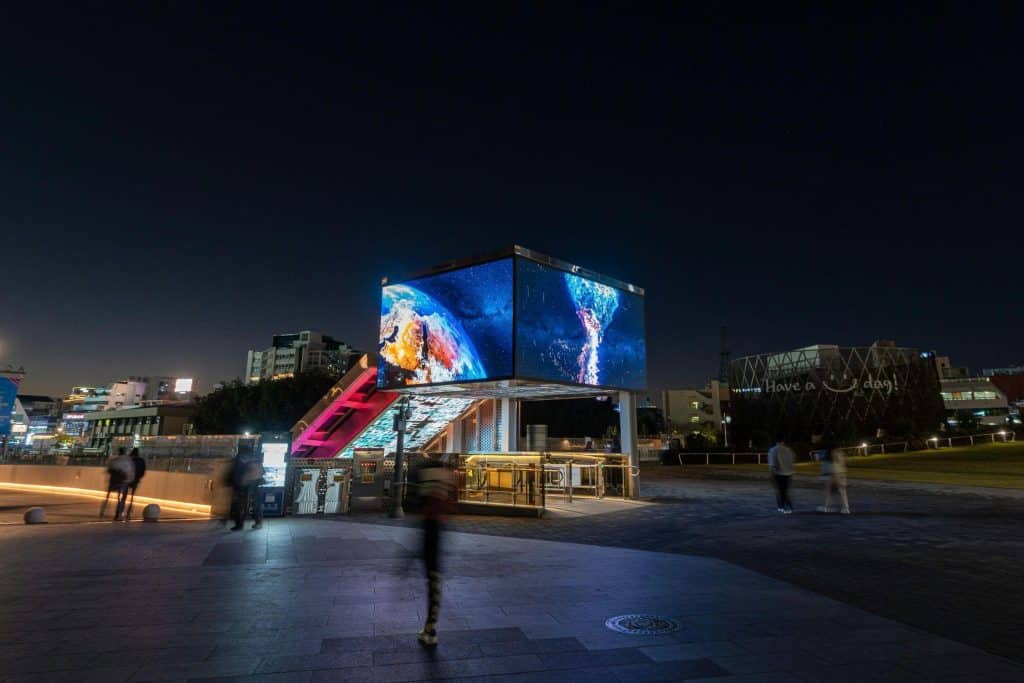
Outdoor LED walls are built to withstand challenging environmental conditions while maintaining visibility in bright daylight. They are commonly used for billboards, stadiums, public events, transportation hubs, and large-scale advertising.
High brightness for daylight visibility
A key characteristic of outdoor LED walls is their high brightness output. These displays are designed to remain clearly visible even under direct sunlight, which is essential for outdoor advertising and public communication.
In busy urban areas across the United States, outdoor LED billboards rely on this brightness to capture attention throughout the day. Without this capability, content would appear washed out and ineffective.
Weather resistance and durability
Outdoor LED walls are engineered with protective features that allow them to operate in rain, wind, dust, and extreme temperatures. They typically include weatherproof enclosures, proper sealing, and high IP ratings that ensure resistance to water and particles.
This durability ensures continuous operation, even in unpredictable climates, making them a reliable solution for long-term installations.
Larger pixel pitch for long-distance viewing
Unlike indoor displays, outdoor LED walls usually have a larger pixel pitch. This is because they are intended to be viewed from greater distances, such as across a street or from a passing vehicle. At those distances, ultra-high resolution is less critical, and the focus shifts to visibility and impact.
Key differences between indoor and outdoor LED walls
While both types of LED walls serve the purpose of displaying dynamic content, their differences go beyond just location. Choosing the wrong type can lead to poor performance or unnecessary costs.
Environment and installation
Indoor LED walls are optimized for controlled environments, while outdoor versions are built for exposure to the elements. This affects everything from materials to installation methods and overall system design.
Brightness and energy consumption
Outdoor displays require significantly higher brightness levels, which can also lead to increased energy consumption. Indoor displays, on the other hand, are more energy-efficient due to their lower brightness requirements.
Maintenance requirements
Outdoor LED walls often require more robust maintenance routines due to environmental exposure. Indoor displays typically experience less wear and tear, resulting in lower maintenance needs over time.
Best use cases for indoor LED walls
Indoor LED walls are highly versatile and can be adapted to a wide range of applications:
Retail and shopping centers
Brands use LED displays to showcase promotions, highlight products, and create immersive shopping experiences. The high resolution ensures that visuals look sharp and appealing at close distances.
Corporate environments
In offices and conference rooms, LED walls are used for presentations, video conferencing, and data visualization. Their seamless design creates a professional and modern look.
Events and exhibitions
Trade shows and indoor events benefit from LED walls that deliver vibrant visuals and dynamic content, helping exhibitors stand out in competitive environments.
Best use cases for outdoor LED walls
Outdoor LED walls are designed for maximum visibility and impact in public spaces:
Digital billboards
Advertising agencies use large LED billboards to display rotating content, reaching thousands of viewers daily. These installations are common along highways and in city centers.
Sports stadiums
LED walls in stadiums provide live replays, scores, and advertisements, enhancing the experience for large audiences.
Public events and concerts
Outdoor events rely on LED walls to ensure that audiences can clearly see performances, even from long distances. Their brightness and size make them essential for large gatherings.
Choosing the right option for your project
Selecting between indoor and outdoor LED walls depends on several factors, including location, audience distance, lighting conditions, and content type. In the U.S., where both indoor retail environments and large-scale outdoor advertising are highly competitive, making the right choice can significantly impact visibility and engagement.
Understanding how each type of LED wall performs in real-world conditions allows businesses to align their investment with their goals. Whether the priority is detailed visuals in a showroom or high-impact messaging in a public space, each solution offers distinct advantages tailored to specific needs.