

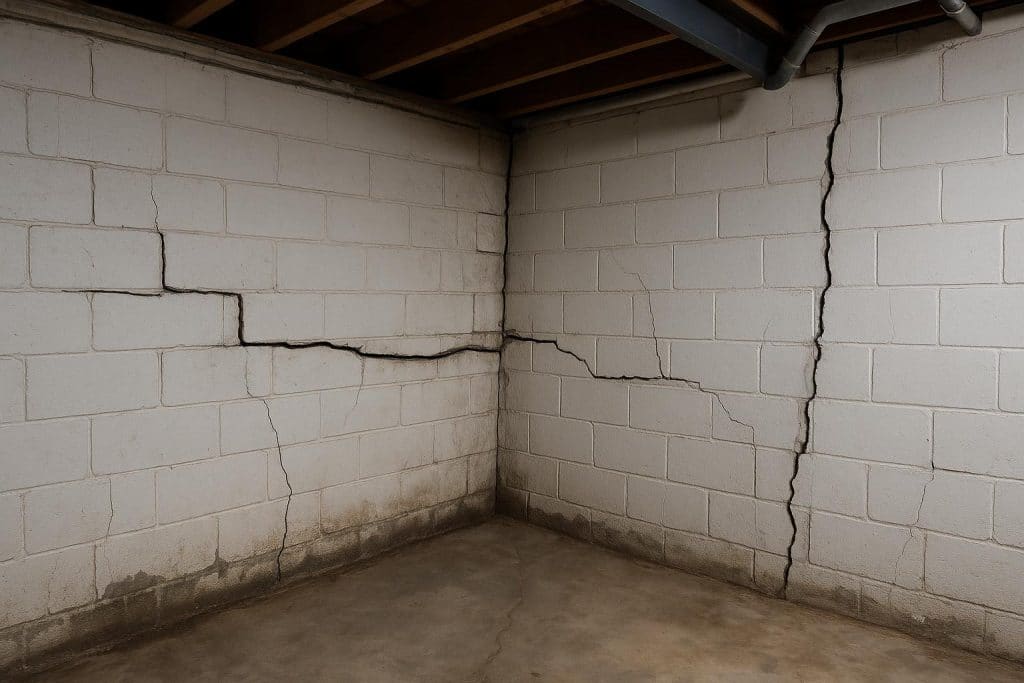
Your basement supports the structure of your home every day. It carries the weight of the house, from the living areas above down to the foundation beneath it.
The trouble is, many homeowners don’t pay much attention to it until something forces them to. A common and surprisingly serious problem is a bowing basement wall. You might notice a small crack at first and think it’s nothing major. But when that wall starts curving inward, it’s a clear sign that something’s not right.
The risks of ignoring it are real. What seems like a minor issue today can turn into major structural damage, high repair costs, and even safety concerns down the line.
What Causes Bowing Walls?
Bowing basement walls develop over time, not overnight. The main cause is continuous pressure from the surrounding soil.
The main offender is hydrostatic pressure from waterlogged soil. Heavy rain or rapid snowmelt makes the ground expand and press against your foundation walls with enormous force—often thousands of pounds per square foot.
If the home doesn’t have effective drainage or the waterproofing has failed, there’s nothing to relieve that pressure. The wall (usually concrete or block) starts to give way. You may notice horizontal cracks first. Eventually, the wall pushes inward.
Other common causes include bad backfilling during construction, pressure from tree roots, and frost heave in colder areas.
The Immediate Warning Signs
Recognizing the early symptoms of bowing walls is critical.
Look for:
- Horizontal or stair-step cracks (vertical cracks are less severe).
- A noticeable curve in the wall when viewed from the side.
- Doors or windows that stick on the main floor.
- Gaps between the wall and floor or between the wall and the ceiling joists.
- Leaning or tilting of basement wall columns.
If you notice any of these signs, don’t just patch the cracks and ignore the problem. The pressure behind the wall is still active and will keep pushing. In the Pittsburgh area, it’s important to act quickly. The clay-rich soil and frequent rain make these issues worse and faster to develop.
Many local experts, such as Matthews Wall Anchor & Waterproofing, specialize in diagnosing and correcting these exact structural failures before they lead to a total collapse.
The Hidden Risks You Can’t Afford to Ignore
While a visibly bowing wall is alarming, the hidden consequences are often worse. Here are five major risks that many homeowners don’t consider until it’s too late.
1. Progressive Structural Collapse
Even a one-inch bow in a basement wall puts it under heavy stress.
The failure isn’t gradual. Once the wall is compromised, bowing can accelerate fast. A wall moving a quarter-inch per year can suddenly shift an inch in one heavy rainstorm.
When the inward deflection reaches 2 to 3 inches, collapse becomes a real risk. The wall can buckle, dropping the floor joists above and potentially taking down the entire side of the house.
2. Toxic Mold and Mildew Infestation
Bowing basement walls almost always come with water leaking in. The same cracks that let the wall bend also let groundwater seep through.
Over time, this constant dampness creates ideal conditions for black mold (Stachybotrys chartarum) to grow. Once it starts, mold spores can spread through your HVAC system and affect air quality in the rest of the house.
Health risks are serious. Exposure often leads to:
- Severe asthma attacks;
- Long-term sinus problems;
- Brain fog and neurological symptoms;
- Breathing difficulties, particularly for kids and elderly family members.
On top of that, most insurance policies don’t cover mold damage. That can leave you paying thousands of dollars for professional remediation.
3. Dramatically Reduced Property Value
A bowing basement wall is a major red flag for buyers. In fact, 95% of them will walk away once it’s discovered during inspection.
Even if you’re not selling, your home’s value drops significantly — often by 20 to 40%. Buyers understand that fixing the issue typically costs $10,000 to $30,000 or more.
Failing to disclose the problem when selling can also expose you to lawsuits for fraudulent concealment.
4. Secondary Damage to Mechanical Systems
Your basement likely houses your furnace, water heater, electrical panel, and plumbing stacks. As the wall bows, it can crush conduit, break drain pipes, and shift gas lines. A shifted gas line can lead to a slow leak—an invisible and odorless (unless mercaptan is added) explosion hazard.
Similarly, crushed electrical lines can cause short circuits and house fires. The cost to relocate and repair these systems often exceeds the cost of the wall repair itself.
5. Complete Foundation Failure Under Lateral Load
Bowing walls mean your foundation can’t handle sideways pressure. Concrete is fine with vertical weight. Lateral soil pressure is the real problem.
When a wall fails laterally, the floor above loses support. The main floor sags. Upper drywall cracks. Doors won’t latch.
In multi-story homes, this causes uneven settlement across the whole foundation footprint.
Why Temporary Fixes Are Dangerous
Quick fixes like carbon fiber straps, hydraulic cement, or steel I-beams don’t address the real problem. That problem is external soil pressure. Worse, some of these solutions backfire. Steel beams shift the force to other wall sections and cause new cracks. Carbon fiber straps are only effective on small cracks that aren’t moving.
A lasting repair needs to stabilize the wall and stop further movement. In most cases, this involves anchoring it to the stable soil outside.
Professional solutions generally include:
- Wall anchors (connected from inside to buried external anchors);
- Helical tiebacks;
- Reinforced carbon fiber with epoxy injection.
These methods deal with the pressure permanently. They don’t just brace the wall from inside.
Conclusion
Bowing basement walls are a real problem for many homeowners who wait too long to fix them. Professional repairs usually cost much less than dealing with a collapsed wall, cleaning up mold, or fighting insurance claims later.
If you notice any curving in the wall, damp spots, or windows that stick and groan when you close them, call a structural specialist right away. It’s worth doing sooner rather than later.