

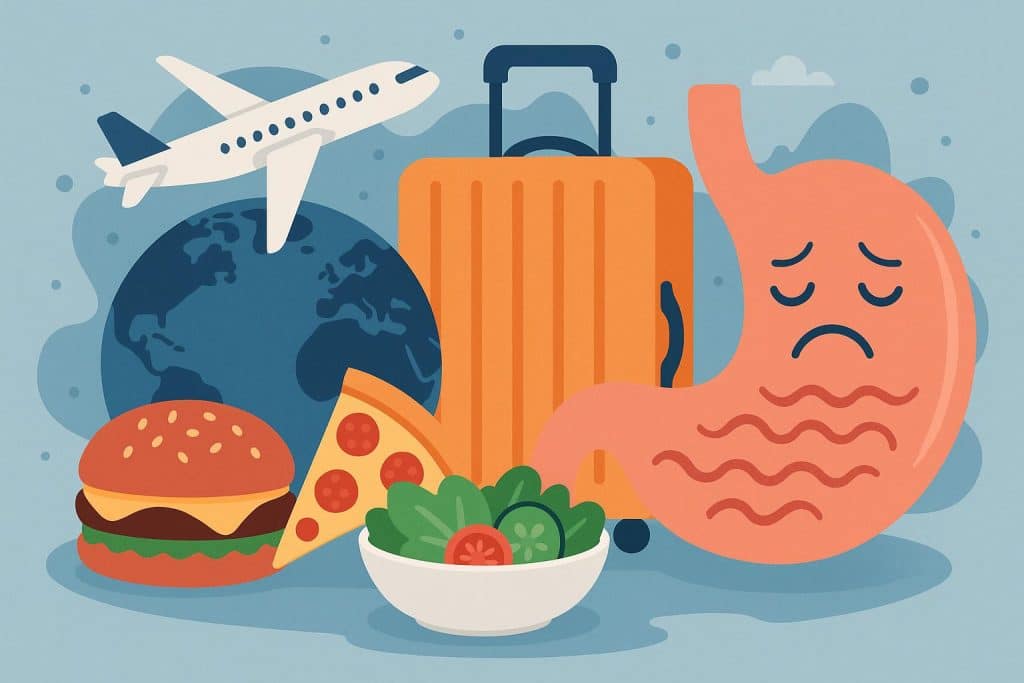
Travel can be exciting, but many people notice digestive discomfort while on the move. Changes in routine, unfamiliar foods, dehydration, and stress can all interfere with normal digestion. Combined with dietary shifts, travel often leads to bloating, constipation, or irregular bowel movements.
Understanding how travel and diet affect digestion can help you take practical steps to protect your gut health wherever you go.
How Travel Affects Your Digestive System
1. Disrupted Daily Routine
Your digestive system thrives on regularity. When you travel, your usual eating times, sleeping patterns, and bathroom habits often change. This disruption can confuse your body’s natural digestive rhythm, slowing bowel movements or causing discomfort.
2. Dehydration During Travel
Air travel, long drives, and busy sightseeing schedules often reduce water intake. Dehydration can make stool harder and more difficult to pass, contributing to constipation and bloating.
3. Reduced Physical Activity
Long flights, car journeys, and hotel stays usually mean less movement. Physical activity plays an important role in stimulating digestion. Reduced movement can slow intestinal contractions, leading to sluggish digestion.
4. Travel Stress and Anxiety
Stress activates the body’s “fight or flight” response, which can suppress digestive activity. Anxiety about schedules, delays, or unfamiliar surroundings can directly impact gut function and increase digestive discomfort.
How Diet Changes Disrupt Digestion
1. Unfamiliar Foods
Trying new cuisines is part of travel, but sudden changes in ingredients, spices, and preparation methods can challenge your digestive system. Foods that are richer, spicier, or more processed than usual can cause bloating or irregularity.
2. Low Fibre Intake
Travel diets often rely on fast food, snacks, or refined carbohydrates. These foods are typically low in fibre, which is essential for healthy bowel movements. A sudden drop in fibre intake can slow digestion and increase constipation risk.
3. Irregular Eating Patterns
Skipping meals or eating at unusual times can disrupt digestive enzyme release and gut motility. Large meals after long gaps may also strain digestion.
4. Increased Alcohol and Caffeine
Alcohol and caffeine can irritate the digestive tract and contribute to dehydration. Excessive consumption may worsen bloating, acid reflux, and bowel irregularity.
Common Digestive Symptoms While Traveling
Many people experience:
- Bloating and abdominal discomfort
- Constipation or irregular bowel movements
- Gas and indigestion
- Fatigue related to poor digestion
- Changes in appetite
These symptoms are usually temporary but can be uncomfortable and disruptive to travel plans.
Supporting Digestion During Travel
1. Stay Hydrated
Drink water regularly throughout the day, especially during flights or long journeys. Herbal teas and electrolyte drinks can also support hydration.
2. Prioritise Fibre
Include fruits, vegetables, and whole grains when possible. Even small additions of fibre-rich foods can help maintain regular bowel function.
3. Keep Moving
Walking, stretching, and light exercise help stimulate digestion and prevent sluggish bowel movements. Even short walks can make a difference.
4. Eat Smaller, Balanced Meals
Avoid heavy meals late at night. Smaller portions eaten more frequently can be easier for your digestive system to handle.
5. Manage Stress
Deep breathing, short breaks, and relaxation techniques can reduce stress-related digestive disruption.
When Digestive Issues Persist After Travel
For some individuals, digestive problems continue even after returning home. Lingering constipation, bloating, or discomfort may indicate that the digestive system needs extra support.
In such cases, professional digestive wellness services can help restore balance and comfort.
Professional Support for Digestive Wellness
Clinics such as Replena Health in London provide digestive wellness services designed to support comfort and regularity in a safe and hygienic environment.
Conclusion
Travel and dietary changes can significantly disrupt digestion due to altered routines, dehydration, stress, and unfamiliar foods. While these effects are often temporary, they can cause discomfort and interfere with daily life.
By staying hydrated, eating fibre-rich foods, remaining active, and managing stress, you can reduce the digestive impact of travel. When issues persist, professional digestive wellness support may help restore balance and comfort.
Understanding how travel and diet affect digestion empowers you to take better care of your gut — whether at home or abroad.