

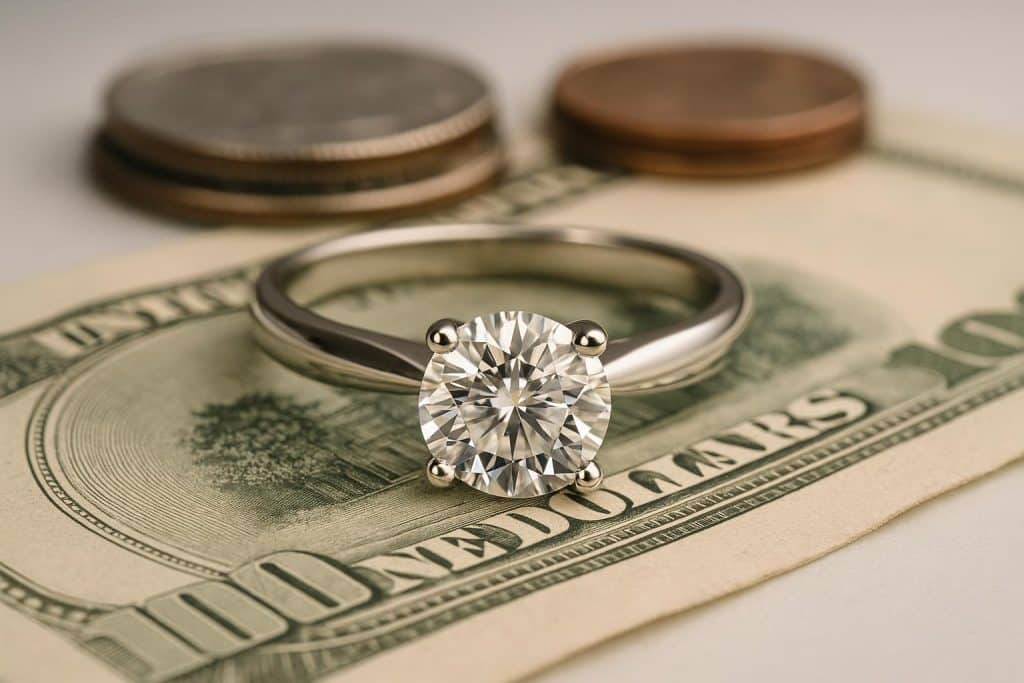
Let’s address the big question everyone Googles quietly and asks friends loudly: How much should you actually spend on an engagement ring? The short answer? There’s no fixed number. The better answer? Your budget should feel intentional, not stressful.
This listicle breaks down what really matters when planning your diamond engagement ring budget, without outdated rules or awkward pressure. Friendly, practical, and refreshingly honest.
1. Start With a Budget Range, Not a Number
Don’t limit yourself to just one number; set a flexible range instead.
That way, you can go ahead and try out different designs, shapes, and finishes without being too constrained. Before long, you will find out which way your instincts will most likely lead you.
2. Decide What Matters Most in the Ring
Every ring has multiple elements competing for attention. Knowing your priority helps control costs while keeping the look intentional. Ask yourself what you value most:
- A larger center diamond
- A distinctive cut like emerald or oval
- A refined setting with fine detailing
- A classic solitaire that ages well
Once you choose your “hero feature,” the rest of the design can support it gracefully.
3. Understand Why Diamond Prices Vary
Diamond pricing depends on a mix of cut, carat weight, clarity, and color. A well-cut lab diamond often looks more impressive than a heavier one with average proportions. Small, thoughtful adjustments can make a visible difference without pushing your budget higher.
4. The Setting Can Be a Smart Budget Tool
Your setting does more than hold the diamond—it defines the entire look. A solitaire setting puts full focus on the center stone and is often more cost-efficient. Halo or pavé settings add visual presence without needing a significantly larger diamond.
Metal choice also plays a role. Platinum, yellow gold, and rose gold all create distinct moods and price points.
5. Think Beyond the Ring Alone
An engagement ring doesn’t exist in isolation. Many couples plan future additions like wedding bands or anniversary pieces. Viewing the ring as part of a broader diamond jewelry story can help you allocate your budget more thoughtfully across milestones.
6. Emotional Value Beats Price Tags Every Time
The best rings aren’t defined by numbers; they’re defined by how well they reflect the person wearing them. A thoughtfully chosen ring, irrespective of budget, tends to feel more valuable.
7. Consider the Overall Buying Experience
When setting a budget, it’s also worth considering factors beyond the ring itself. Details like a clear jewelry return policy, engraving options, warranty coverage, and working with a reputable jeweler can all influence the overall buying experience. Reputable jewelers such as With Clarity provide clear information on all the factors, which helps customers make decisions with greater clarity and confidence.
The Bottom Line
There’s no “correct” amount to spend on an engagement ring. The right budget is one that aligns with your values, your plans, and your sense of style.