

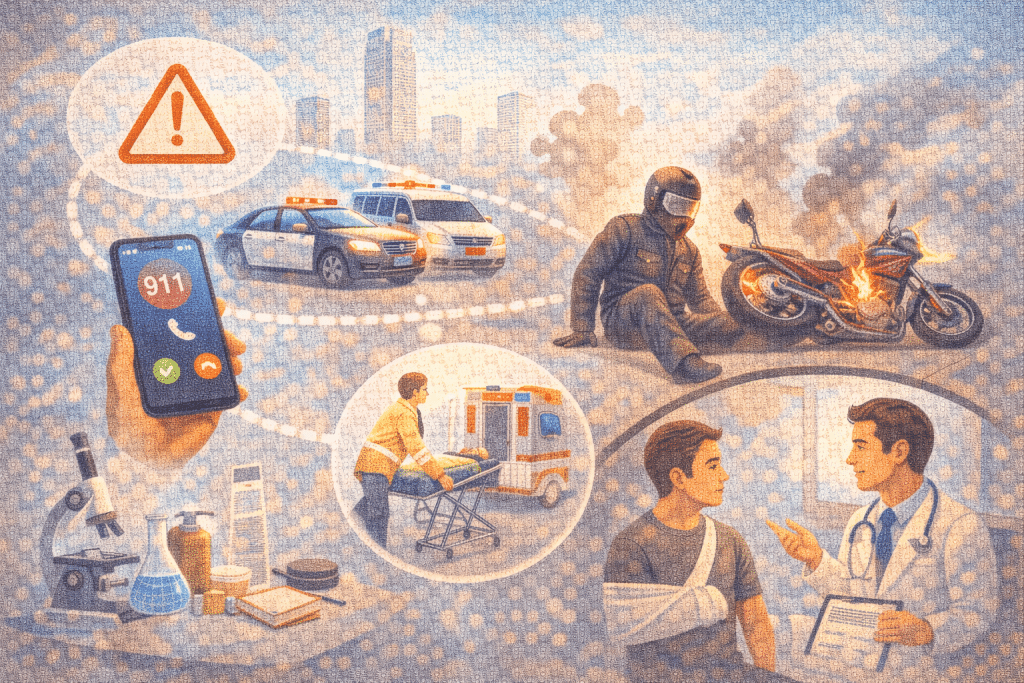
There’s a specific kind of thrill that comes with riding a motorcycle through Oklahoma City. It’s about that raw connection to the road and the wind. But as any local rider will tell you, that sense of freedom is balanced on a razor’s edge.
It only takes one distracted driver checking a text or a car pulling out of a side street without looking twice to turn a great day into a nightmare. When a crash happens, the consequences aren’t just mechanical—they are deeply personal and often permanent.
If you’ve been through the ringer of a motorcycle wreck, you know that the “after” is a chaotic mess of adrenaline, pain, and confusion. While sorting out the legal side of things is a massive part of getting your life back—Click here to read the entire article—it’s also worth looking at the bigger picture: what Oklahoma is doing to stop these crashes and how our community rallies around those who have been hurt.
Looking at the Numbers: What’s Actually Happening?
The statistics for Oklahoma aren’t just numbers on a page; they represent our friends, neighbors, and family members. On average, we see about 1,450 motorcycle-involved accidents every year in the state. The sobering reality is that about 5% of these end in a fatality. Because riders don’t have the luxury of a roll cage or crumple zones, the physical toll of even a “minor” clip from a car is usually severe.
Why is this happening? Most of the time, it boils down to visibility. Drivers are conditioned to look for the large silhouettes of trucks and cars, often looking right “through” a motorcyclist. Whether it’s a failure to yield at a left turn or a sudden lane change without a blinker, the motorist’s oversight becomes the rider’s emergency. Of course, riders have skin in the game too. State safety experts constantly emphasize that staying sharp and avoiding “over-riding” your skill level can make the difference between a close call and a trip to the ER.
Safety Education and the Gear Debate
Oklahoma tries to get ahead of the problem through the Oklahoma Highway Patrol and the Department of Transportation. They offer training courses that go way beyond the basics, teaching riders how to develop a “sixth sense” for traffic hazards.
Then there’s the helmet conversation. In Oklahoma, the law only requires riders under 18 to wear one. While that gives adults the freedom to choose, the medical data is pretty hard to ignore. Safety advocates push the “all the gear, all the time” philosophy because specialized jackets, boots, and helmets aren’t just accessories—they are your only line of defense when the pavement comes up to meet you.
Strength in the Biker Community
One of the best things about riding in Oklahoma is the community. Groups like ABATE of Oklahoma aren’t just about social rides; they are fierce advocates for rider rights and road safety. They work to make sure the “Look Twice for Motorcycles” message actually sticks with the general public.
Navigating the Aftermath
When a crash is caused by someone else’s negligence, the bills can pile up faster than most people can handle. Between specialized medical care and time missed at work, the financial stress is a heavy burden. This is where having someone in your corner matters. Legal teams like Cain Law have spent years helping Oklahoma City riders navigate the mess of insurance claims and medical liens, making sure they aren’t bullied into a lowball settlement.
At the end of the day, riding is part of who we are. By focusing on better education, looking out for one another, and knowing where to turn for help, we can keep the spirit of riding alive while making Oklahoma roads a lot safer for everyone.