

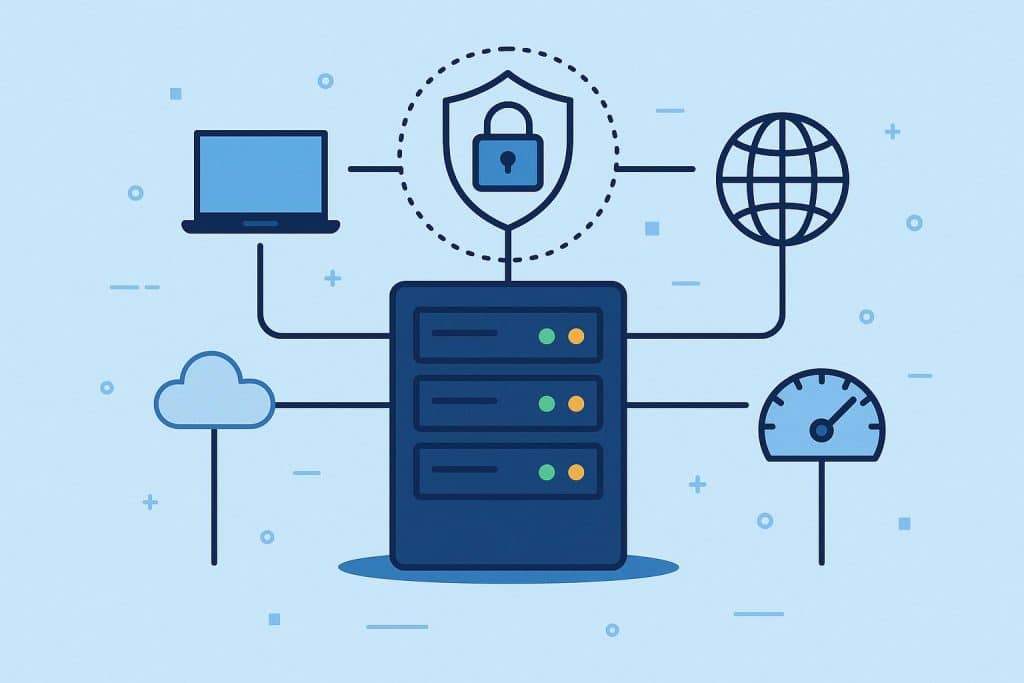
In 2025, over 5 billion internet users generate massive amounts of data daily, from search histories to browsing patterns. This information is increasingly targeted by companies and, at times, exploited by cybercriminals. Services like private residential proxies have become essential for individuals and organizations seeking to control who sees their data, secure networks, and manage online traffic efficiently.
What Is a Proxy Server and Why Is It Used?
A proxy server acts as an intermediary between a user and the internet. By routing requests through a proxy, a user can conceal personal information, change their IP address, and mask their location. However, the capabilities of proxy servers extend well beyond privacy protection. Depending on the type, a proxy can enhance security, regulate content, and optimize data traffic.
Key applications include:
- Data Monitoring: Employers or organizations may use proxies to track employee internet activity.
- Confidentiality: By masking IP addresses and locations, proxies make it significantly harder to trace online actions back to individual users.
- Access to Restricted Resources: Proxies can bypass geoblocking or censorship, allowing users to reach otherwise inaccessible content. Solutions like private residential proxies are often used in business environments for safe and reliable access.
- Content Filtering: Organizations can configure proxies to block adult content or other undesirable websites.
- Performance Optimization: Through caching and traffic distribution, proxies can accelerate file downloads and improve network efficiency.
How Do Proxy Servers Work?
According to Alexander Barinov, Director of Network Security Products at RTK-Solar Group, a proxy server receives a user’s request, forwards it to the internet, and returns the response. “It functions as a gateway,” Barinov explains, “enhancing security through privacy policies, advertisement blocking, content filtering, and antivirus scanning.”
Advanced proxies can also utilize the ICAP protocol to reroute traffic for in-depth scanning by external security systems or sandbox environments. ICAP (Internet Content Adaptation Protocol) allows proxies to filter ads, detect malware, and perform other content-processing tasks. Sandboxes, in turn, create isolated environments for safe program execution, restricting resources and controlling which applications can run.
Through these mechanisms, proxies manage how information is requested, received, and sometimes modified—for example, by filtering inappropriate content—before delivering it to the end user.
Types of Proxy Servers
Forward Proxy: Positioned between the user and the internet, forward proxies modify outgoing requests before directing them to target websites. They are commonly used by individual internet users or private organizations. Forward proxies can provide access to blocked resources, hide the user’s IP, and cache frequently requested data.
Reverse Proxy: In contrast, reverse proxies receive requests on behalf of a server and route them to internal storage systems. Websites with multiple data servers often rely on reverse proxies to manage traffic and balance loads efficiently. In essence, reverse proxies act as gatekeepers, regulating how user requests are processed and delivered.
Conclusion
Proxy servers have evolved into more than just tools for privacy. They now function as essential components of cybersecurity, content management, and network optimization. Whether shielding users from tracking, granting access to restricted resources, or enhancing data flow, solutions like private residential proxies play a crucial role in modern internet infrastructure.