

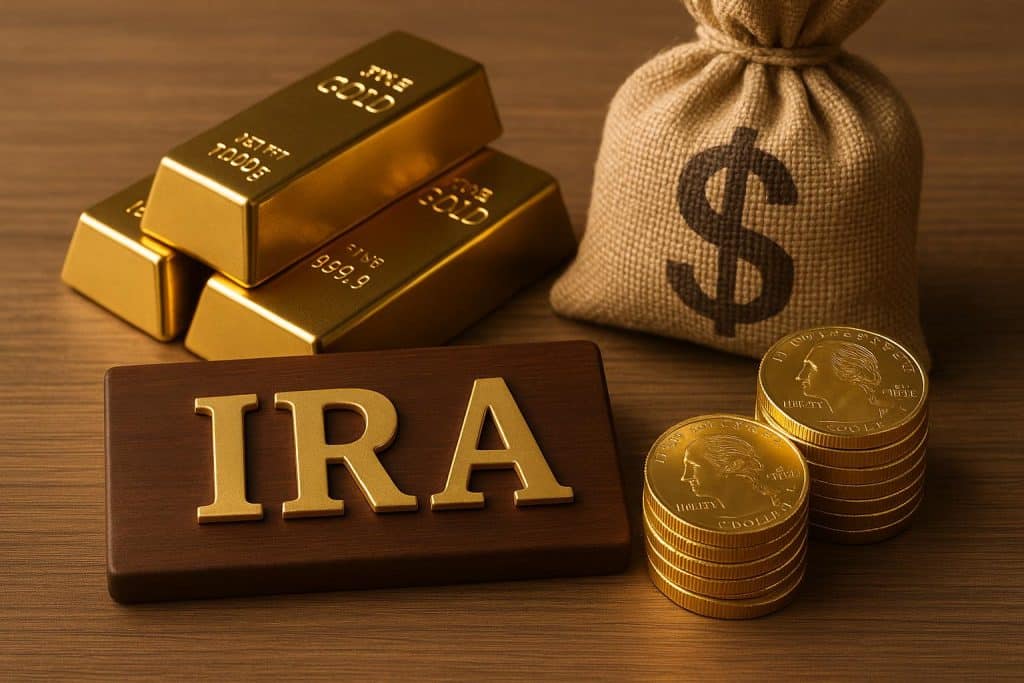
Know What A Gold IRA Is And Whether You Need One
How Gold IRAs Work
A Gold IRA, often called a precious metals IRA, is a self-directed IRA (traditional or Roth) that holds IRS-approved physical bullion: gold, silver, platinum, or palladium. Instead of mutual funds or stocks, the account owns coins and bars stored in an approved depository. A qualified custodian handles administration, reporting, and compliance.
- Custodian: An IRS-approved bank, trust company, or nonbank custodian administers the account.
- Dealer: The metals retailer sells the coins/bars to the IRA via the custodian.
- Depository: A third-party facility stores the metals: home storage isn’t allowed for IRAs.
To find a dealer, visit the Best Gold IRA Company official website and choose one of the vetted options by IRA specialist Tim Schmidt, Sr.
Funding options include transfers from another IRA, trustee-to-trustee rollovers from 401(k)/403(b)/TSP, or a 60-day rollover (riskier). Metals must meet fineness standards (gold 99.5%, silver 99.9%, platinum/palladium 99.95%), with specific exceptions like American Gold Eagles.
Benefits, Risks, And Alternatives
Benefits:
- Diversification: Physical metals often march to a different beat than equities and bonds.
- Inflation hedge potential: Gold has historically helped preserve purchasing power during inflationary spikes.
- Tail risk buffer: During market stress, metals can reduce portfolio drawdowns.
Risks:
- No yield: Metals don’t pay income: returns come from price movement.
- Costs: Custodial, storage, shipping, and dealer spreads can erode returns.
- Liquidity timing: Liquidations take days, not minutes.
- Volatility: Precious metals can swing sharply.
Alternatives:
- ETFs (e.g., gold-backed funds) inside a regular IRA for lower costs and faster liquidity.
- Mining stocks for leveraged exposure (with equity risk).
- Treasury Inflation-Protected Securities (TIPS) as an inflation hedge.
When A Gold IRA Makes Sense, And When It Doesn’t
It makes sense for investors who want long-term, tax-advantaged exposure to physical bullion as a diversifier, typically 5–10% of a total portfolio, sometimes higher for risk-aware investors. It’s less ideal for those seeking income, short-term trading, or unwilling to manage storage and custodian dynamics. If they prefer speed and low fees, a gold ETF inside a conventional IRA may be a better fit.
Key Criteria To Evaluate Gold IRA Companies
Custodian And Depository Credentials
A legitimate precious metals IRA has two core pillars: an IRS-approved custodian and a reputable depository. The best Gold IRA companies partner with custodians that are banks, trust companies, or IRS-approved nonbank custodians. Look for:
- Proper registrations, bonding, and insurance.
- Clean regulatory and legal history.
- Experience with self-directed IRAs and metals reporting (Forms 1099-R, 5498).
For storage, top depositories include Delaware Depository, Brink’s, and IDS. They should offer segregated or non-segregated storage, strong physical security, and insurance underwritten by A-rated carriers (often Lloyd’s of London).
Fees, Spreads, And Pricing Transparency
Costs come in layers. Demand clear, written disclosure of:
- Setup fee: Often $0–$100.
- Annual custodian/admin fee: Commonly $75–$250+, sometimes tiered.
- Storage: Flat ($100–$200+) or value-based (e.g., 0.5%–1.0%). Segregated storage typically costs more.
- Dealer spread: The difference between buy and sell price: for common bullion coins/bars, competitive spreads are often in the mid–single digits to low teens percentage. Numismatic items can carry 20–40%+, a red flag for IRAs.
- Shipping and insurance for transfers or distributions.
The best providers publish live pricing or provide locked quotes with timestamps. They never bury fees in the metal price.
Eligible Metals And Product Selection
Focus on IRA-eligible bullion:
- Gold: American Eagles, American Buffalo, Canadian Maple Leaf, Austrian Philharmonic, approved bars (usually .9999 or .9995+).
- Silver: American Eagles, Maple Leafs, Philharmonics, approved .999 bars/rounds.
- Platinum/Palladium: Select coins and .9995 bars.
Avoid collectibles and most numismatic coins: many aren’t IRA-eligible and often come with oversized markups. A strong provider offers a broad inventory of eligible bullion in common weights (1 oz coins, 10 oz/1 kg bars) and explains the trade-offs between coins and bars (liquidity, premiums, portability).
Storage Options, Insurance, And Audits
Review storage types and coverage:
- Segregated: Metals are stored separately by client, clean chain of custody.
- Non-segregated (commingled): Cheaper, but holdings are pooled by like-kind.
Insurance should cover the full replacement value against theft or loss, with clear policy limits. Ask about independent audits, inventory reconciliations, and frequency of statements. The best Gold IRA companies provide audit confirmations and let investors choose among multiple depositories.
Buyback Policies, Liquidity, And Order Execution
A strong buyback program matters for exit flexibility. Ask for:
- Written buyback policy with a clear formula tied to spot price.
- Typical settlement timeline (e.g., 1–3 business days to execute, plus time for funds to reach the IRA).
- Execution standards: price-lock procedures, recorded trade confirmations, and trade desk hours.
Remember: buyback policies are often non-binding. The real signal is a firm’s track record of honoring fair bids during volatile markets.
Education, Service Quality, And Reputation
Top-tier firms prioritize education over hype. Indicators:
- Plain-English guides on IRS rules, transfers vs. rollovers, and required minimum distributions (RMDs).
- No pushy sales: questions are answered with specifics, not scripts.
- Fast, documented responses via phone and email: dedicated account reps.
Reputation checks:
- Third-party reviews across multiple platforms (look for consistent themes, not just star ratings).
- Time in business and leadership bios.
- Any enforcement actions or lawsuits.
The best Gold IRA company for any individual is the one that pairs rock-solid compliance with transparent pricing and responsive support, every single time.
Tax And Compliance Rules You Can’t Ignore
IRS Eligibility And Storage Requirements
Metals must meet IRS fineness standards: gold 99.5%, silver 99.9%, platinum/palladium 99.95%. Specific coins, like American Gold Eagles, are permitted even though lower purity. Storage must be at an IRS-approved trustee or depository. Personal possession or home safes are not allowed for IRA assets.
Transfers, Rollovers, And The 60-Day Rule
- Trustee-to-trustee transfer: Custodian sends funds directly to another custodian. It’s nonreportable and avoids the 60-day clock.
- Rollover: Funds are paid to the individual, who then has 60 days to redeposit. Miss the deadline and it’s a taxable distribution. Only one IRA-to-IRA rollover is allowed per 12 months across all IRAs.
Moving a 401(k) from a former employer to a Gold IRA is typically done via direct rollover to avoid withholding and timing issues. You can read more about moving an IRA to gold on this website.
Prohibited Transactions, RMDs, And Recordkeeping
Disqualified persons (the account owner, spouse, lineal ascendants/descendants, their spouses) can’t use or benefit from IRA metals. No self-dealing, no pledging as collateral, no personal storage. Violations can disqualify the IRA.
RMDs apply to traditional Gold IRAs beginning at age 73 (under current law), with in-kind distributions allowed. Roth IRAs have no RMDs for the original owner. Keep meticulous records: invoices, confirmations, storage statements, and annual custodian reports.
Red Flags And Common Sales Tactics To Avoid
“Home Storage” And Checkbook LLC IRA Claims
Some marketers push “home storage” or checkbook LLC IRAs for bullion. This is risky. Courts and the IRS have signaled that personal possession violates IRA rules for metals. In 2021’s McNulty case, a taxpayer lost IRA status after storing coins at home. If a pitch hinges on keeping IRA metals in a safe at the house, walk away.
High-Pressure Pitches And “Free Silver” Offers
Limited-time bonuses and “free silver” often aren’t free: the cost gets buried in inflated spreads or overpriced coins. High-pressure scripts, “the dollar will collapse this month,” “only 5 spots left”, are a hallmark of poor providers. Reputable companies let investors think, compare, and come back with questions.
Numismatic Upsells And Excessive Spreads
Numismatic or semi-numismatic coins are usually ineligible or inappropriate for IRAs and carry steep markups. If a rep pushes rare coins over common bullion, asks for wire today, and won’t send a written, itemized quote, that’s a problem. The best Gold IRA companies lead with eligible bullion and transparent pricing.
Step-By-Step Process To Compare, Choose, And Open An Account
Build A Shortlist And Verify Registrations And Insurance
Start with 3–5 candidates. Confirm the custodian’s charter and approvals, the dealer’s years in business, and the depository’s insurance certificates and audit practices. Search for enforcement actions and complaints, but weigh patterns over one-off issues.
Request A Written, Itemized Fee Schedule
Insist on a complete breakdown: setup, admin, storage (segregated vs. non-segregated), shipping, wires, and buy/sell spreads by product. Ask for a sample trade ticket. If they won’t send it in writing, they haven’t earned the business.
Interview Providers And Test Support Responsiveness
Call. Email. Ask detailed questions about IRS rules, transfer timelines, and liquidation procedures. Note hold times, clarity of answers, and whether the rep educates or pressures.
Compare Storage Facilities And Coverage Limits
Choose the depository type and location that fit the risk tolerance and budget. Segregated storage costs more but simplifies chain-of-custody questions. Confirm per-account and aggregate insurance limits and how losses would be processed.
Review The Custodial Agreement And Place The Order
Read the custodial agreement and disclosures before funding. For rollovers, prefer direct trustee-to-trustee movement. Place the order only after receiving a locked quote, itemized fees, and a trade confirmation. Track settlement and confirm the storage receipt from the depository.
Pro tip: set a calendar reminder to re-check fees, holdings, and statements quarterly for the first year.
Ongoing Maintenance And When To Rebalance
Monitor Fees, Statements, And Metal Holdings
Review quarterly statements for accuracy: weights, serial numbers (for bars), storage type, and valuations. Compare admin and storage fees to the original schedule. Small discrepancies caught early prevent bigger headaches later.
Revisit Allocation And Product Mix Annually
If metals have drifted far from the target allocation, consider rebalancing. Within the Gold IRA, swapping high-premium coins for lower-premium bars can reduce drag. Outside the IRA, consider how equities, bonds, and cash balance the metals exposure.
Plan For RMDs And Exit Strategies
Traditional IRAs require RMDs starting at age 73. Investors can:
- Sell metals to raise cash for the RMD, or
- Take an in-kind distribution (the custodian ships metals), then handle taxes.
Also plan for liquidity needs ahead of time, large distributions may take days to execute. Keep beneficiary designations updated so heirs aren’t scrambling later.
Conclusion
The best Gold IRA company isn’t the loudest advertiser: it’s the one that pairs compliance rigor with transparent pricing and responsive service. By understanding how Gold IRAs work, checking credentials, demanding written fees, and steering clear of hype, investors can add physical metals to a retirement plan without inviting avoidable risk. Take time to compare, ask hard questions, and insist on clarity, that’s how to find the best Gold IRA company for the long run.